
Designing a sustainable bespoke kitchen
A sustainable bespoke kitchen is a project decision as well as a material decision. Quality plywood construction is a valuable starting point, but the layout, storage, finish and practical care also influence whether the furniture remains useful and worth keeping.
The aim is to develop a kitchen that fits your home and daily routine, with clear material evidence and purposeful details. These JS DECO projects show how that thinking can be expressed in real cabinetry, rather than relying on broad “eco-friendly” promises.
Start with what the kitchen needs to do
Before selecting every finish, identify what works in the existing room and what needs to change. Consider preparation space, storage, movement and the equipment you use. A well-fitting design gives the material investment a clear purpose; extra cabinetry is useful only when it serves the brief.
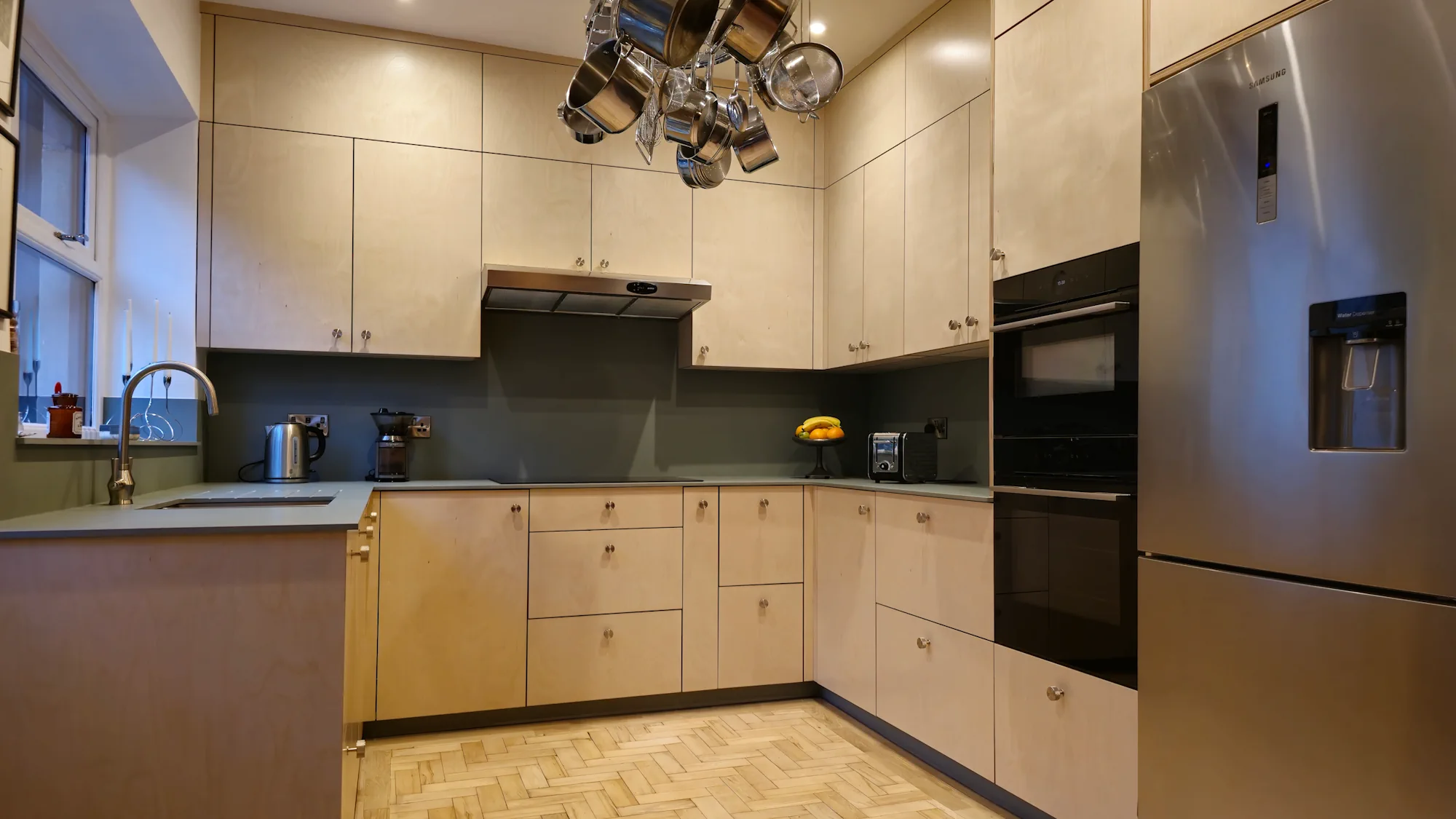
At Matlock, the existing room had uneven walls, floor and ceiling. The bespoke proposal coordinated the U-shaped layout, tall appliance housing and finishing details with those constraints. The design responded to an actual home, rather than treating an idealised drawing as the finished space.
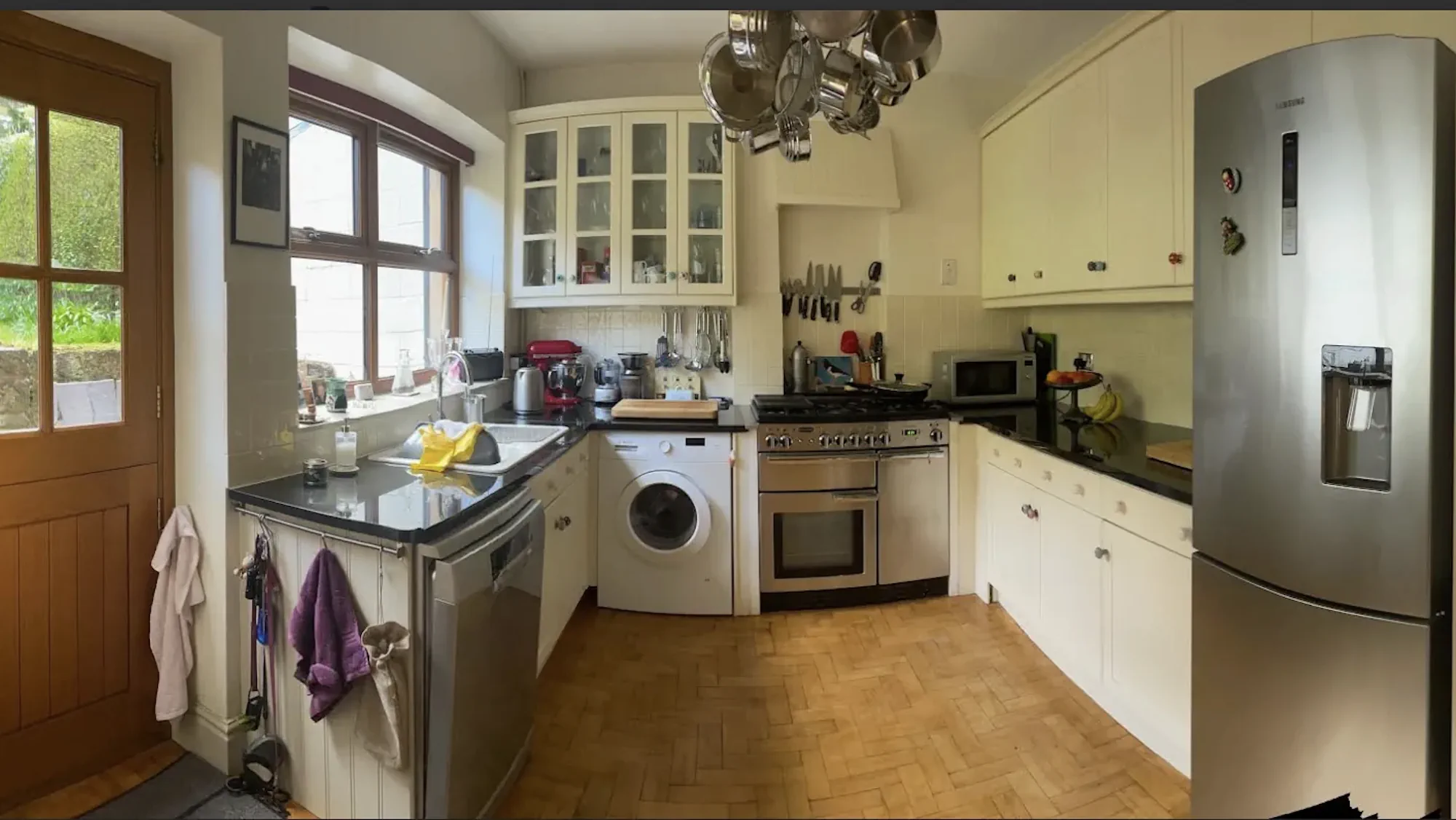
Our kitchen layout guide helps compare arrangements. Room planning and product selection should develop together, with final dimensions confirmed at the appropriate stage.
Choose construction you value beyond the front finish
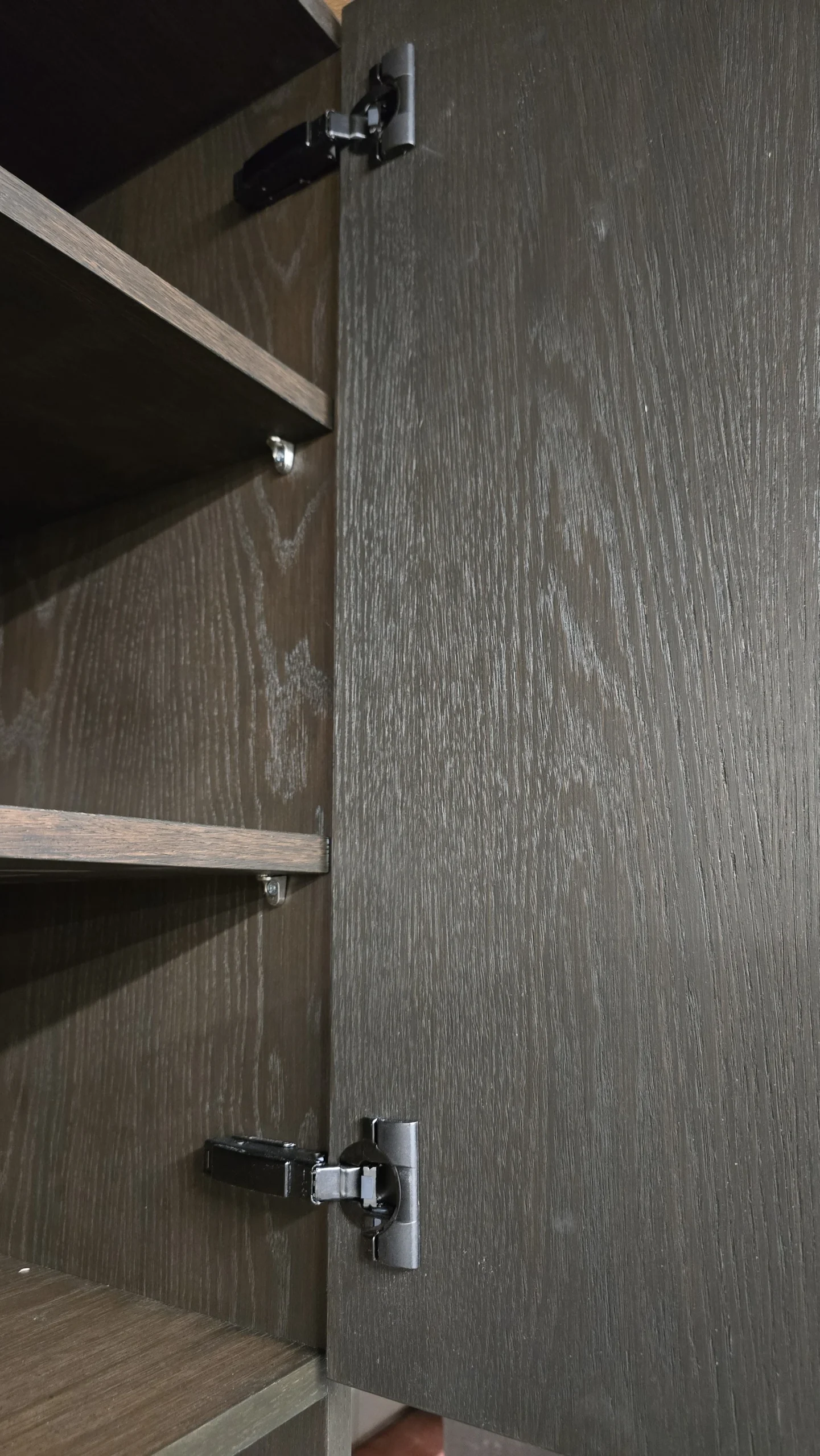
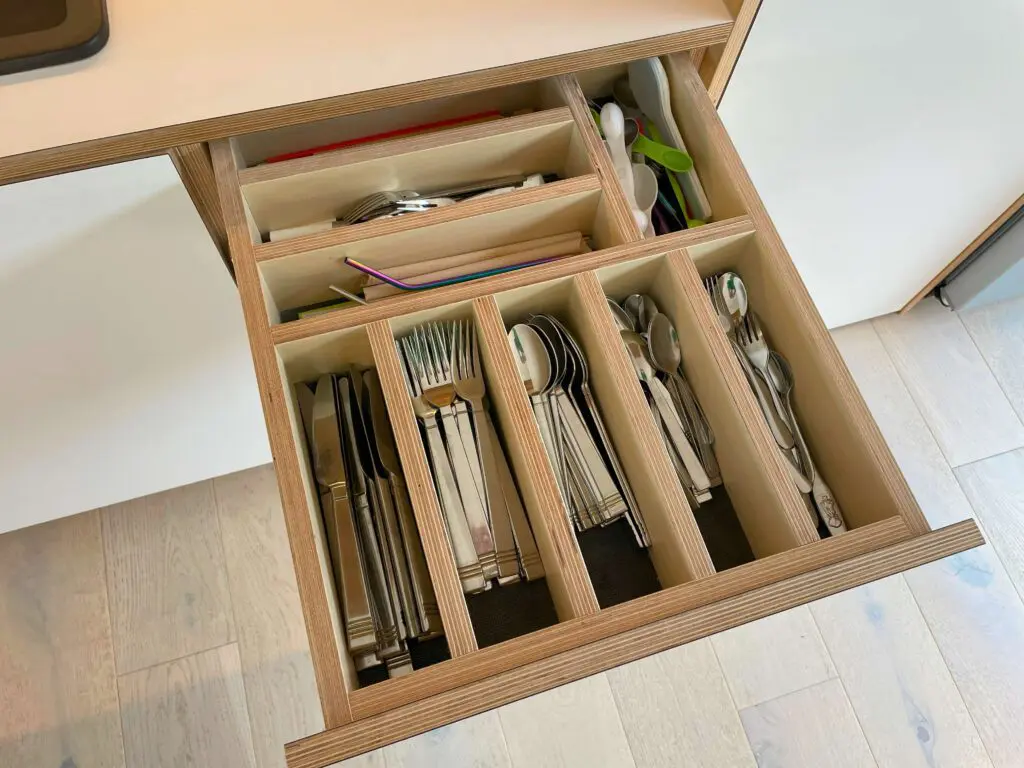
We favour high-quality plywood for premium cabinetry and avoid MFC in our preferred specification. Its timber-based construction, useful strength and stiffness, attractive interiors and edge details can contribute to furniture that deserves the same attention inside as outside.
The visible face remains a separate decision. Real wood veneer can bring warmth; FENIX can introduce matt colour; high-quality veneered MDF can be a deliberate door-only option paired with plywood carcases. Document the actual panel, sourcing and finish rather than assigning an environmental rating from the material name alone.
For the evidence to request, use our sustainable kitchen materials guide. It distinguishes certification, supplier documentation, local manufacture and the source of an individual product. Bamboo or reclaimed wood is not automatically a better environmental choice, nor a standard JS DECO cabinetry offer.
Make the kitchen easier to use every day
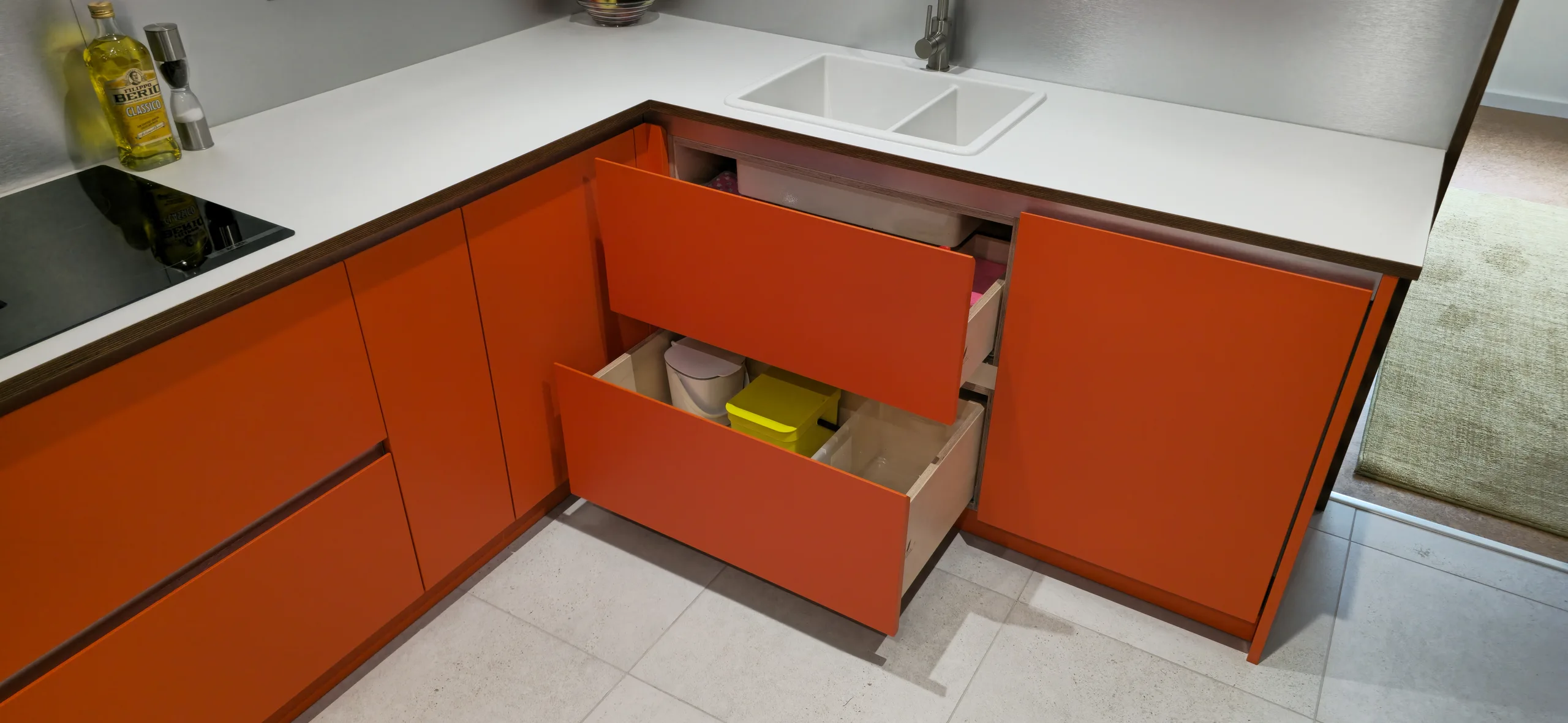
Useful storage supports the way you cook and keeps everyday items accessible. Allocate drawers around the preparation and cooking areas, give ingredients a clear place and plan the waste arrangement beside the tasks that generate it. The details should follow your household’s routine.
At Cawthorne, broad drawers and narrow pull-outs were developed around the hob. The separate sink drawers were shaped around plumbing, and the pantry provided additional shelving behind an olive-green entrance. Each part of the furniture answered a practical question.
- Ingredients in viewChoose storage that makes everyday supplies easy to see and reach. A clear arrangement can support your own food-planning routine.
- Waste in the working sequencePlan space for the waste and recycling containers you use, with practical access for emptying and cleaning.
- Equipment close to its taskPlace utensils, pans and plates where they will be handled, instead of filling cabinets without a contents plan.
- Space that earns its placeCompare additional furniture with the open floor area it uses. Keep the pieces that improve preparation, storage or daily movement.
The most useful arrangement is one you can put into practice in your daily routine. The kitchen storage guide develops the cabinet choices, while plywood and home design explores how the construction can support the room’s appearance.
Choose useful appliances and technology
Select appliances for the cooking and washing you actually do. Compare the relevant product information, energy label, capacity and installation needs, then make sure the furniture accommodates access, ventilation and services. A feature is worthwhile when you expect to use it.
Integrated appliances can simplify an elevation, but “smart” does not by itself establish lower energy or water use. Automated lighting or connected functions need to be assessed on their actual operation. Discuss equipment with the appropriate supplier and coordinate it with the kitchen design.
Plan for care, fitting and continued use
Agree the finish and its maintenance before manufacture. A lacquered timber surface, natural oil and a decorative laminate need different care. The plywood furniture care guide helps you understand those distinctions and avoid treating every visible timber surface alike.
Clear responsibility for manufacture, delivery and installation also matters. Some JS DECO projects include fitting; others are supplied for a customer-appointed installer. Accurate measurements, appliance details and communication with the fitter help the agreed furniture arrive as a coherent project.
Bring these decisions into the final specification: the supplied products, material allowance, practical design and intended care. Product-specific environmental documentation can support the discussion where it is available.
Frequently asked questions
Does sustainable kitchen design mean choosing one “green” material?
No. Prioritise quality cabinetry, documented sourcing and finishes, then develop a layout and storage arrangement suited to continued daily use.
Why does JS DECO favour plywood cabinetry?
High-quality plywood supports a premium timber-based construction with attractive interiors and visible edge options. We specify the fronts and finish separately so the appearance can follow the brief.
Do smart appliances automatically save resources?
No. Compare the actual model, capacity, relevant product information and the way you will use it. Connected features alone do not establish energy or water savings.
Can sustainability and a distinctive appearance work together?
Yes. Plywood, real wood veneer, coloured fronts and purposeful storage can be coordinated in a bespoke design. Evaluate the actual specification and care alongside the appearance.
Develop a kitchen worth keeping
Bring the practical brief, quality construction and material evidence together before fixing the final furniture specification.
Explore bespoke kitchen design
See how JS DECO develops room-specific cabinetry, storage and finishes for different homes and working routines.
Explore bespoke kitchens