
Why plywood matters in bespoke furniture

Look beneath the finished fronts
The quality of a bespoke cabinet is often most apparent when you open it. The interior, drawer boxes, joints and protected edges tell you more about its construction than the door colour alone. At JS DECO, high-quality plywood is our preferred premium material for cabinet bodies; the visible fronts can then be developed around the room and your taste.
Plywood earns its place through the way it is specified and made into furniture. This guide explains its strength, design possibilities, sourcing, cost and appearance, alongside the practical limits that a good cabinet specification must address.
Strength comes from the complete construction
Plywood is made from bonded timber veneers, commonly arranged with grain directions across successive layers. This construction can provide a strong, stable panel for cabinetry. The chosen species, grade, thickness, joints, supports and fittings still determine how a cabinet performs; the material name is not a load rating.
WISA describes birch plywood as suitable for furniture, with technical values tied to the specific product. See WISA-Birch product guidance for that manufacturer’s board information. This does not mean every JS DECO cabinet uses that particular product.
Plywood and its finishes still need protection from prolonged water exposure and excessive heat. Discuss edges, joints and care around sinks and appliances rather than treating plywood as universally waterproof or free from movement.

Design the cabinet around its task
Bespoke manufacture allows the cabinet dimensions and internal arrangement to develop around the room, stored items and chosen fittings. A shallow drawer for utensils and a deeper drawer for pans need different proportions; an awkward corner may need a different access solution again.
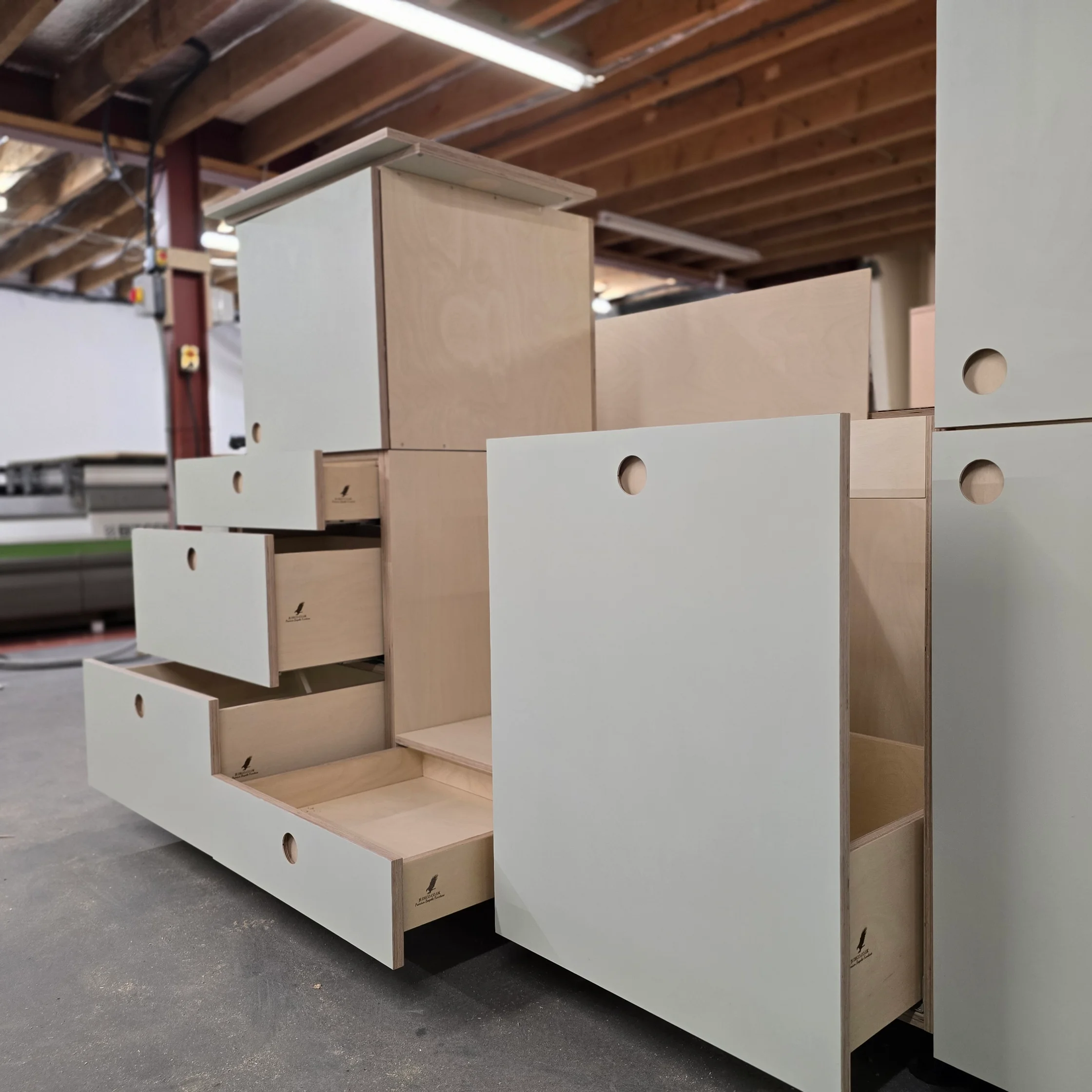
The workshop photograph shows cabinetry and open drawers before the finished room. This stage matters to us because storage, clearances and the small details of everyday use have to work together before the kitchen is installed.
Assess sourcing and environmental evidence
Responsible sourcing is one part of a plywood specification. Ask which board is proposed and what current supplier documentation supports its origin and any sourcing claim. FSC distinguishes certification and licensing requirements; a supplier’s certified board should not be turned into an unsupported certification claim for finished JS DECO furniture.
Environmental impact also depends on resin, manufacture, transport, finishes, service life and the eventual disposal route. Plywood uses timber veneers, rather than being inherently made from recycled wood fibres. It cannot be described as automatically lower-impact than every other material or as guaranteeing healthier indoor air.
A useful design aim is furniture you want to keep and can care for, with a specification that supports its intended use. Our sustainable kitchen planning guide explores those wider decisions.

Compare value through the specification
Premium plywood is a deliberate construction choice, not a promise of the lowest price. Board quality, veneers, machining, drawer construction, hardware, finish and installation scope all contribute to the quotation. Compare those components before deciding what represents value for your project.
Real wood veneer is a thin layer of actual timber; it is not simply an imitation of a more expensive wood. JS DECO can also consider high-quality real-wood-veneered MDF for premium doors, alongside plywood cabinet bodies. That door option does not make MDF or MFC an equivalent preferred cabinet core.
Decide how much of the material to show
A layered edge can become a visible design detail, while a veneer, painted finish or suitable decorative surface changes the character of the front. Decide which surfaces should show natural grain, which should be quieter, and how the edge will be finished. Grain and colour vary; a photograph sets a direction rather than defining every sheet.
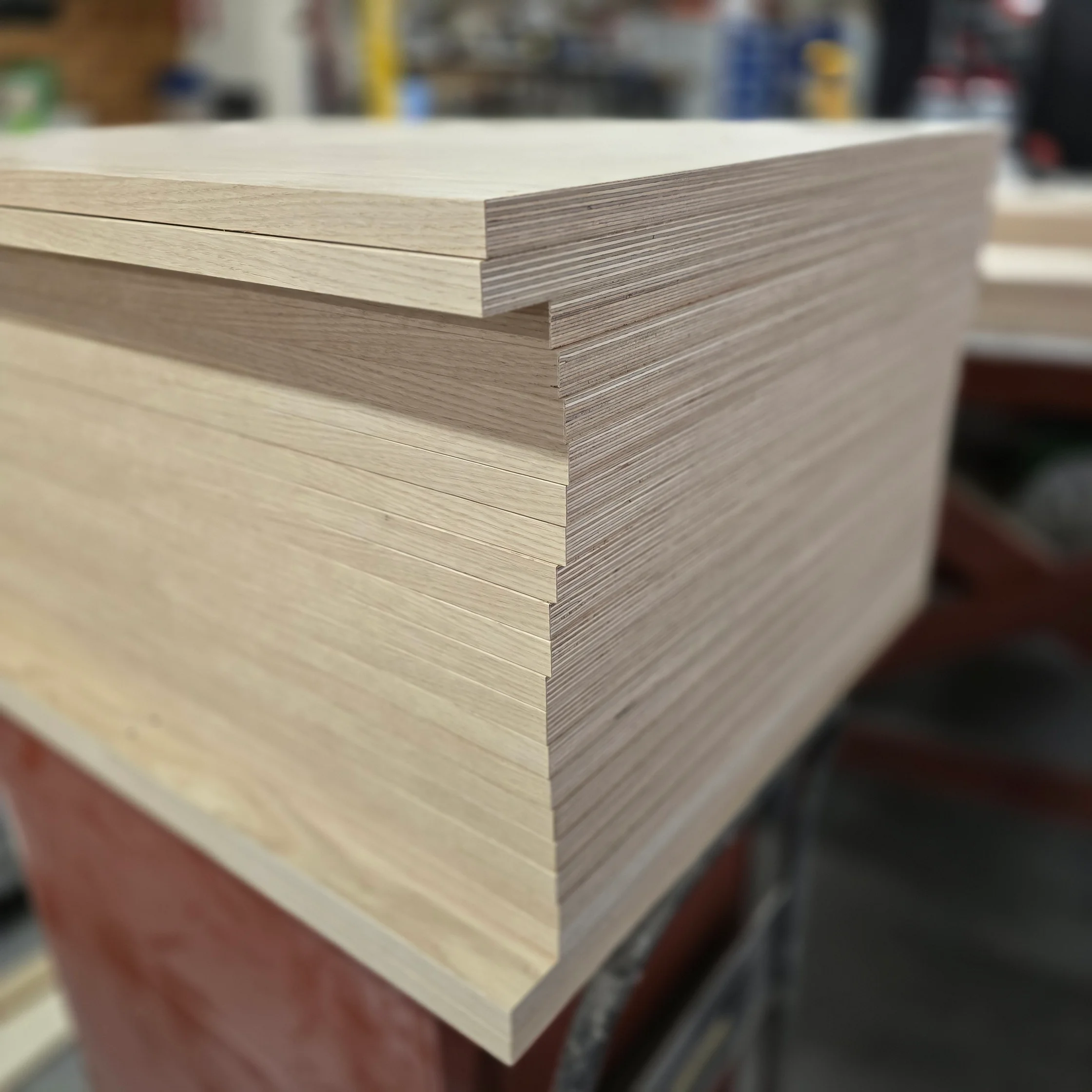
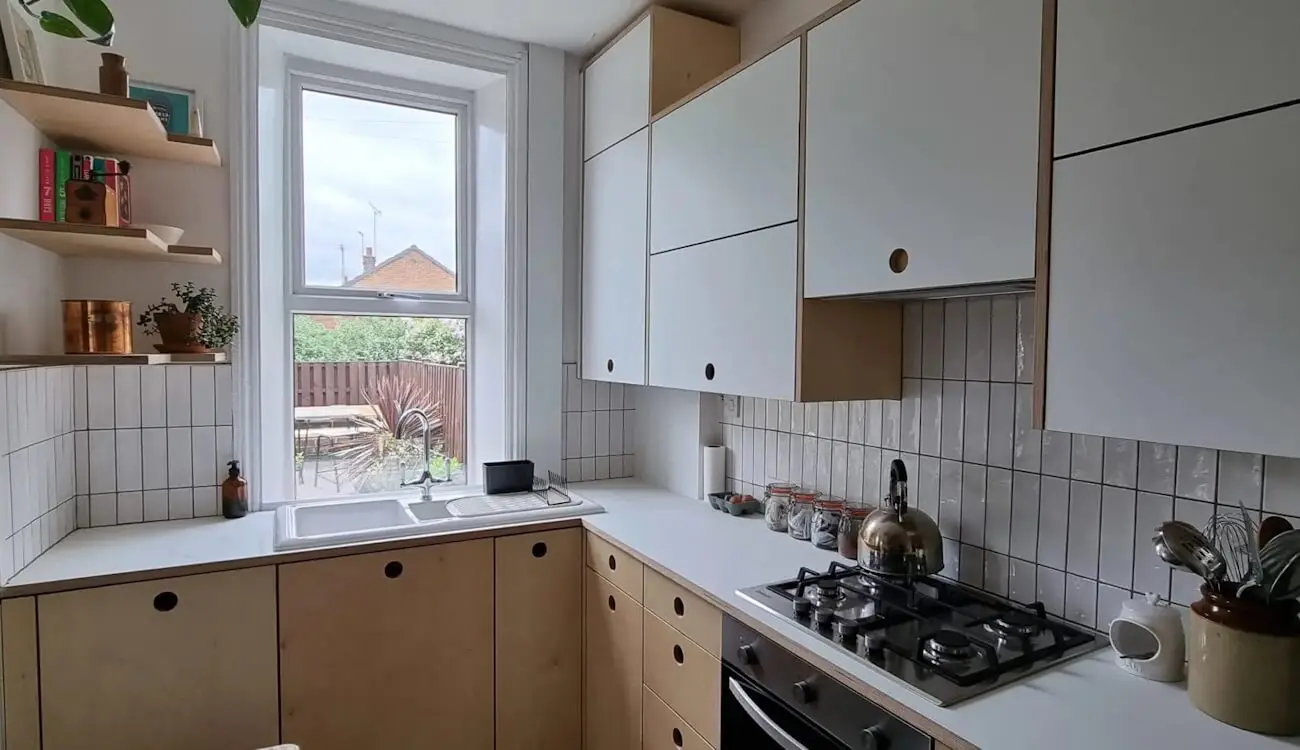
The layered panels below show the material itself. For its application in a room, the Bianco Alaska Leeds kitchen combines visible plywood base fronts with white FENIX wall cabinetry. The contrast is a specific design choice, supported by that project’s actual specification.
Precision supports useful everyday storage
Accurate design and machining help coordinate cabinet sizes, joins and fittings. They do not remove the need for suitable room information, agreed details and final checks before manufacture. We develop those decisions with the customer so the finished furniture follows an understood brief.
You can begin remotely with your existing plans, photographs and priorities. Any physical samples, final dimensions or site requirements are agreed around the individual project; you do not need to arrive with every material or storage choice resolved.

The Dover birch plywood wardrobe project applies these decisions beyond a kitchen: full-height hanging and shelving, six drawers and lower furniture beneath the window form a coordinated fitted scheme, finished with satin water-based lacquer. Its room-specific layout is a useful reference when considering bespoke wardrobes. For a cooking space, our wider bespoke kitchen range connects construction with the fronts and finishes.
Bring construction and appearance together
Plywood deserves attention because it can contribute to both the cabinet interior and the room’s appearance. The strongest proposal explains the board, fronts, edges, storage, fittings and finish together. That gives you a clearer basis for choosing bespoke furniture—and gives us a clearer brief to manufacture.
From plywood construction to your own kitchen
The quality of plywood furniture depends on the board, joinery and finish working together. If you are considering it for your kitchen, explore how we bring those choices into a complete cabinet specification.
Bespoke plywood kitchens
Explore cabinet construction, finishes and completed kitchens made in our Wakefield workshop.