EGGER decorative surfaces and premium cabinet construction
A decorative finish and the board beneath it are separate choices. EGGER supplies several types of furniture and interior surfaces, including decorative boards, laminates, worktops and edging. Understanding which product is proposed helps you compare the visible appearance with the actual cabinet construction. At JS DECO, high-quality plywood is our preferred premium cabinet material; MFC is not our preferred cabinet specification.
Separate the decor from the substrate
A wood-effect decor is a decorative surface, rather than natural timber veneer. A laminate can be bonded to a suitable specified substrate, while melamine-faced chipboard has a particleboard core. The name of a decor does not tell you which construction is being supplied.
The current EGGER Decorative Collection separates its product ranges and provides tools for exploring surfaces. Availability and the chosen product format should be confirmed for the project rather than assumed from an older colour count.
- SurfaceIdentify the decor, texture and sheen, then compare a physical sample with the surrounding finishes.
- CoreSpecify the actual material beneath the surface, separately for cabinet bodies, doors and worktops.
- EdgesAgree whether the edge is exposed, edged or finished, and how it relates to the face.
- ApplicationCheck the selected product's suitability and processing requirements for its intended use.
Keep premium plywood at the centre of the cabinet specification
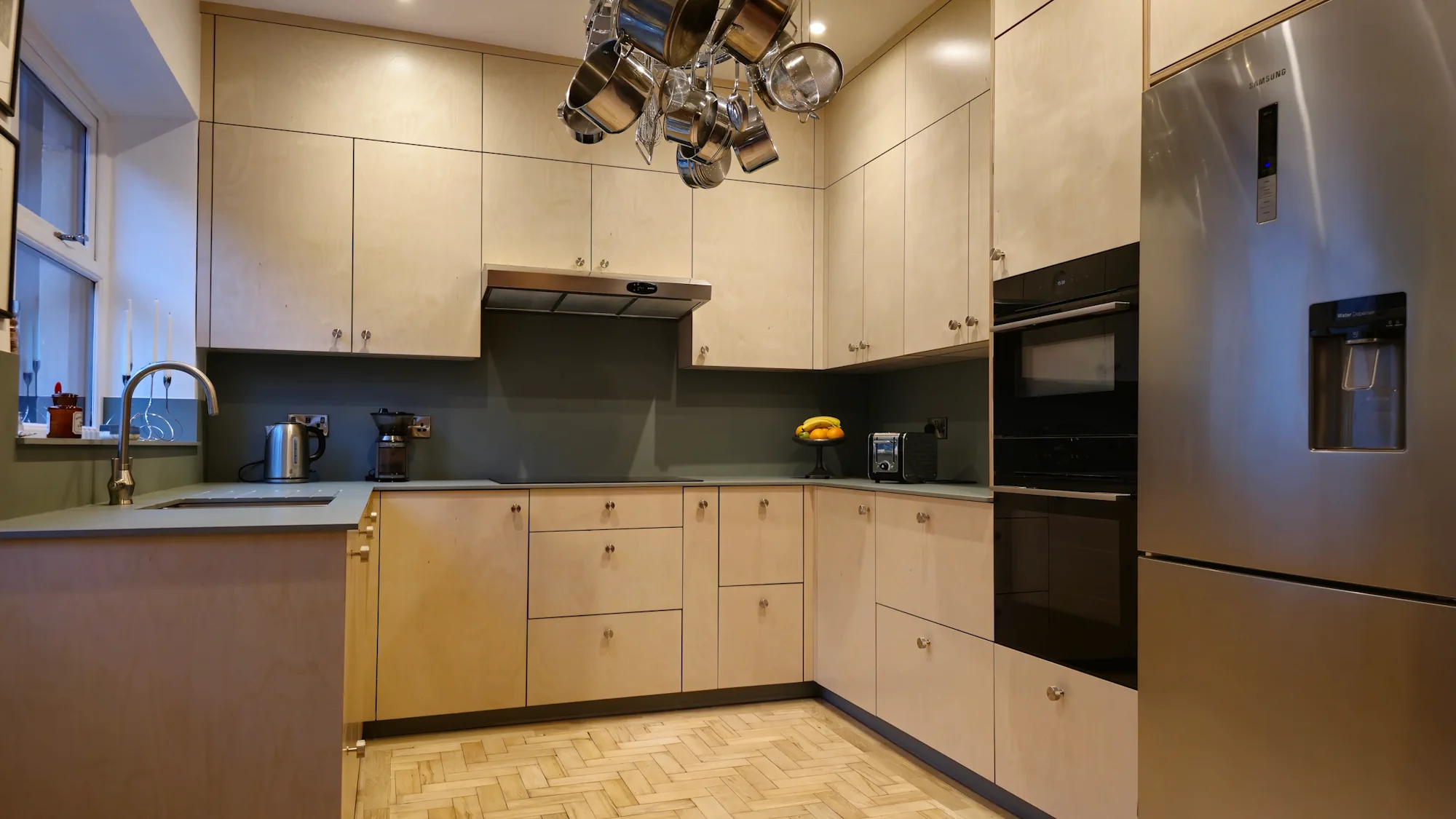
High-quality plywood provides the construction we prefer for premium cabinetry, with layered edges available as a deliberate visible detail. The outer finish can then be chosen for the room, rather than allowing a decorative catalogue to determine the cabinet core.
EGGER's laminate explanation describes a decorative product bonded to a suitable substrate. A laminate-faced plywood component and a melamine-faced chipboard component should therefore not be described as the same material. The proposed board, bonding, edge treatment and finish form the actual specification.
High-quality real-wood-veneered MDF is another premium door-only option where natural timber character is wanted alongside plywood carcases. Natural veneer and wood-effect decor give different results; use accurate material names when comparing them.
Coordinate worktops and fronts without assuming an identical core
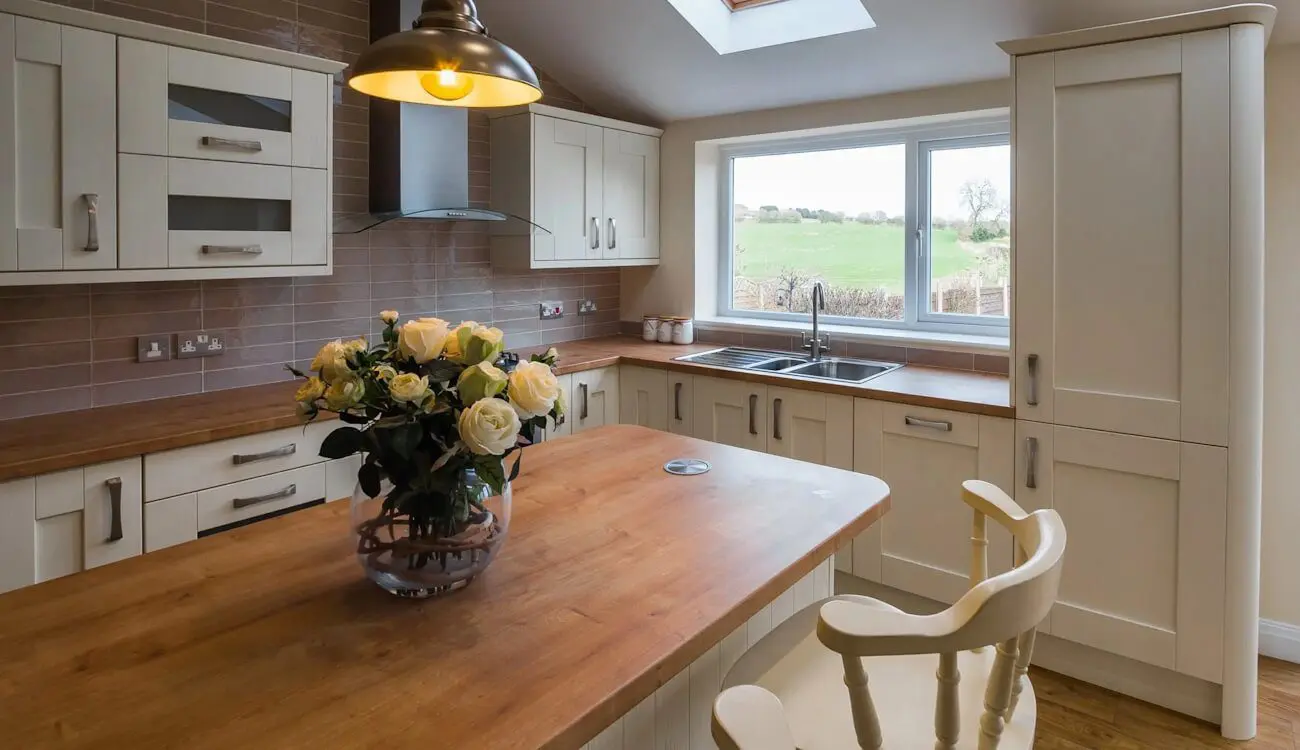
The classic Pudsey kitchen uses Egger laminate worktops with spray-painted oak doors. This historical project shows how a decorative working surface can sit alongside a different visible door material. That kitchen was built with oak-veneered MDF carcases; for new commissions, high-quality plywood is our preferred cabinet construction.
The photograph is useful for the palette and cabinet proportions. A new project is specified individually around our preferred plywood cabinet construction and the desired fronts, worktop and fittings.
Use digital tools to shortlist, then compare real samples
Online visualisers can help you narrow a colour or wood-effect direction. They cannot show exactly how a sample will appear in your room's light or beside another material. Compare the intended front, worktop, handles and splashback together before settling the palette.
Our splashback guide examines the relationship between the working surface and the wall finish. The plywood kitchen page explains the wider cabinet approach, while grain planning distinguishes coordinated natural timber from planned decorative patterns.
A phone or video discussion can connect your plans, photographs and preferred decors to the cabinet details. Digital references help establish a direction; physical samples or a workshop appointment can be agreed where useful as the specification develops. You do not need to choose every finish before asking.
Questions about decorative furniture surfaces
Does an EGGER decor mean the cabinet is made from chipboard?
Not necessarily. The exact product matters: laminate and a factory-faced board are different specifications. Ask what substrate is proposed.
Is a wood-effect finish the same as oak veneer?
No. A wood-effect decor reproduces an appearance; oak veneer uses a thin layer of natural timber.
Do matching fronts and worktops need the same core?
No. Coordinate their appearance while specifying each component for its intended role.
Explore the construction beneath your chosen finish
Explore plywood kitchens
Consider the decor, edges and internal arrangement alongside premium plywood cabinetry rather than selecting only from a surface photograph.
Explore plywood kitchens