Hettich fittings: choosing movement for your furniture
Furniture fittings connect the visible design with the movement you use every day. Hettich manufactures hinges, drawer systems and sliding or folding door fittings, with different products for different applications. A brand name is a starting point; the useful specification identifies the actual system and how it will work within the furniture.
Decide what each part needs to do
A kitchen drawer, a tall door and a sliding wardrobe front have different movement and installation requirements. Start with the intended use and the furniture dimensions. Then select the suitable fittings, cabinet construction and front material together.
Hettich's hinge range and drawer system overview show separate product families. Capacity, extension and opening functions are product-specific, so they should be confirmed for the proposed configuration.
- Hinged doorsConsider the door size, material, fixing and opening clearance alongside the closing action.
- DrawersChoose the dimensions, extension, load class and internal organisation for their intended contents.
- Sliding or folding frontsCheck the available movement space, front dimensions and access behind the opening.
- Opening and closingAgree handles, push-to-open or assisted opening separately from the soft-close function.
Assess storage with the furniture open
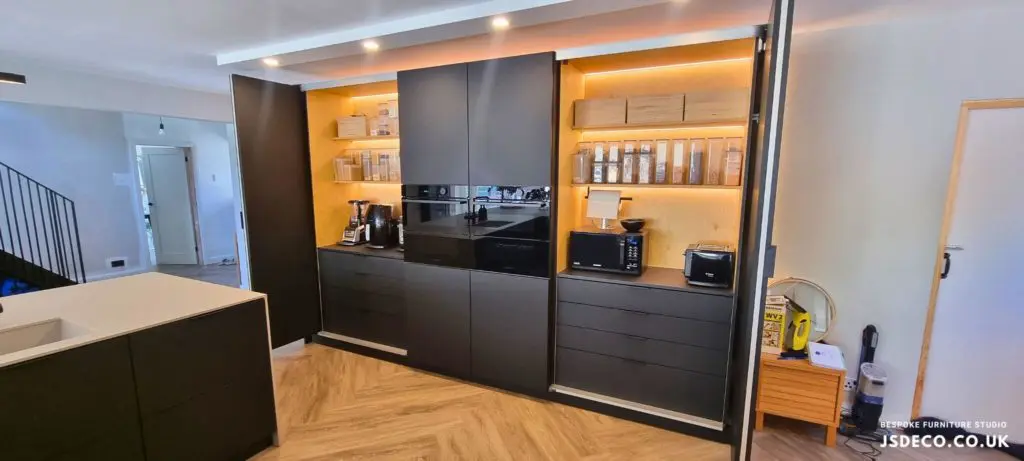
A photograph of closed fronts tells you little about the contents or access. Look at how the cabinet works when its doors and drawers are open. Consider whether frequently used items remain within convenient reach and whether nearby handles or appliances obstruct the movement.
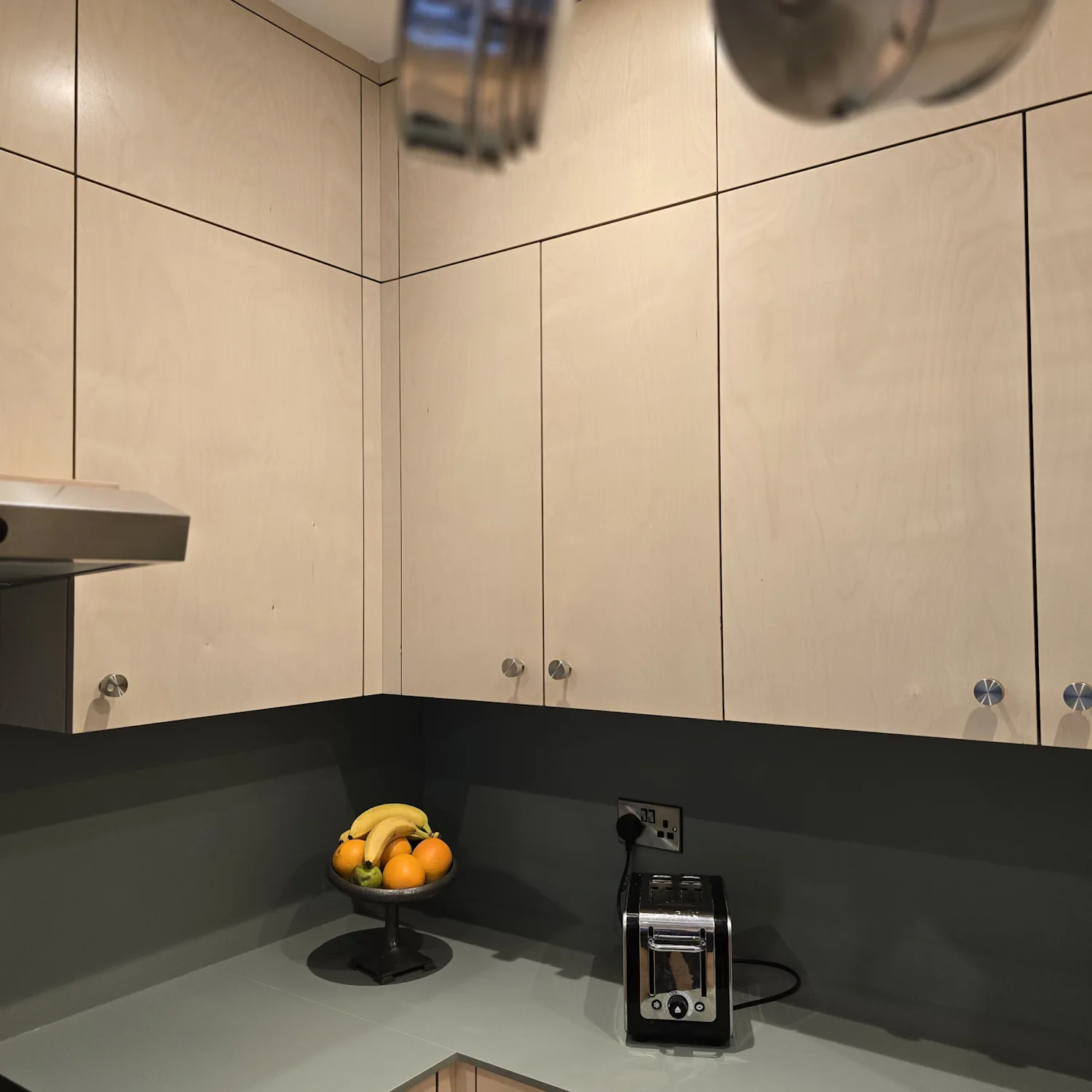
The Matlock project shows natural plywood fronts and a green FENIX worktop around a U-shaped kitchen. It is useful evidence for the relationship between the room and its cabinetry. Our storage guide discusses the different jobs assigned to cabinets and drawers.
Match premium hardware to premium cabinet construction
The fittings need suitable fixing positions and a cabinet assembly designed for their use. High-quality plywood is our preferred premium cabinet material. Fronts may use another specified finish, including high-quality real-wood-veneered MDF for door-only applications. The visible surface does not determine the hardware automatically.
Drawer boxes, runners, hinge positions and the front alignment are planned together. A higher-capacity runner does not make an unspecified cabinet assembly suitable for any load; the complete specification still matters.
Compare functions before choosing a range
The original Hettich demonstration video offers a visual introduction. For a new project, current product information and the intended furniture specification determine the selection.
A demonstration can help explain a movement, but it cannot confirm the load class, dimensions or compatible fronts for a different product. Compare the desired action with the alternatives and ask for the system to be identified in the specification. Our Blum hinge article explains soft closing and push-to-open in another manufacturer's range.
Questions about furniture fittings
Does specifying Hettich mean every drawer has the same capacity?
No. The actual drawer system, runner and configuration determine the stated capacity.
Is soft closing the same as assisted opening?
No. They describe different parts of the movement and need to be specified separately.
Should the fittings be chosen after the cabinets are made?
They should be considered during design, because the fixing positions, clearances and dimensions affect the furniture construction.
Coordinate the fittings with the finished kitchen
Explore bespoke kitchens
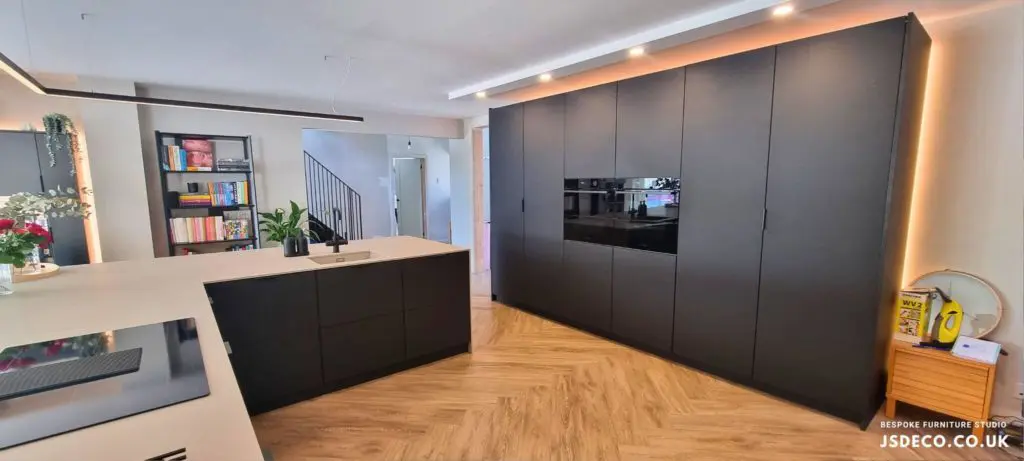
Develop the front design, storage arrangement and premium plywood cabinet construction together, with the actual hardware agreed for your project.
Explore bespoke kitchens