
Kitchen layout ideas: choosing a plan that works for your room
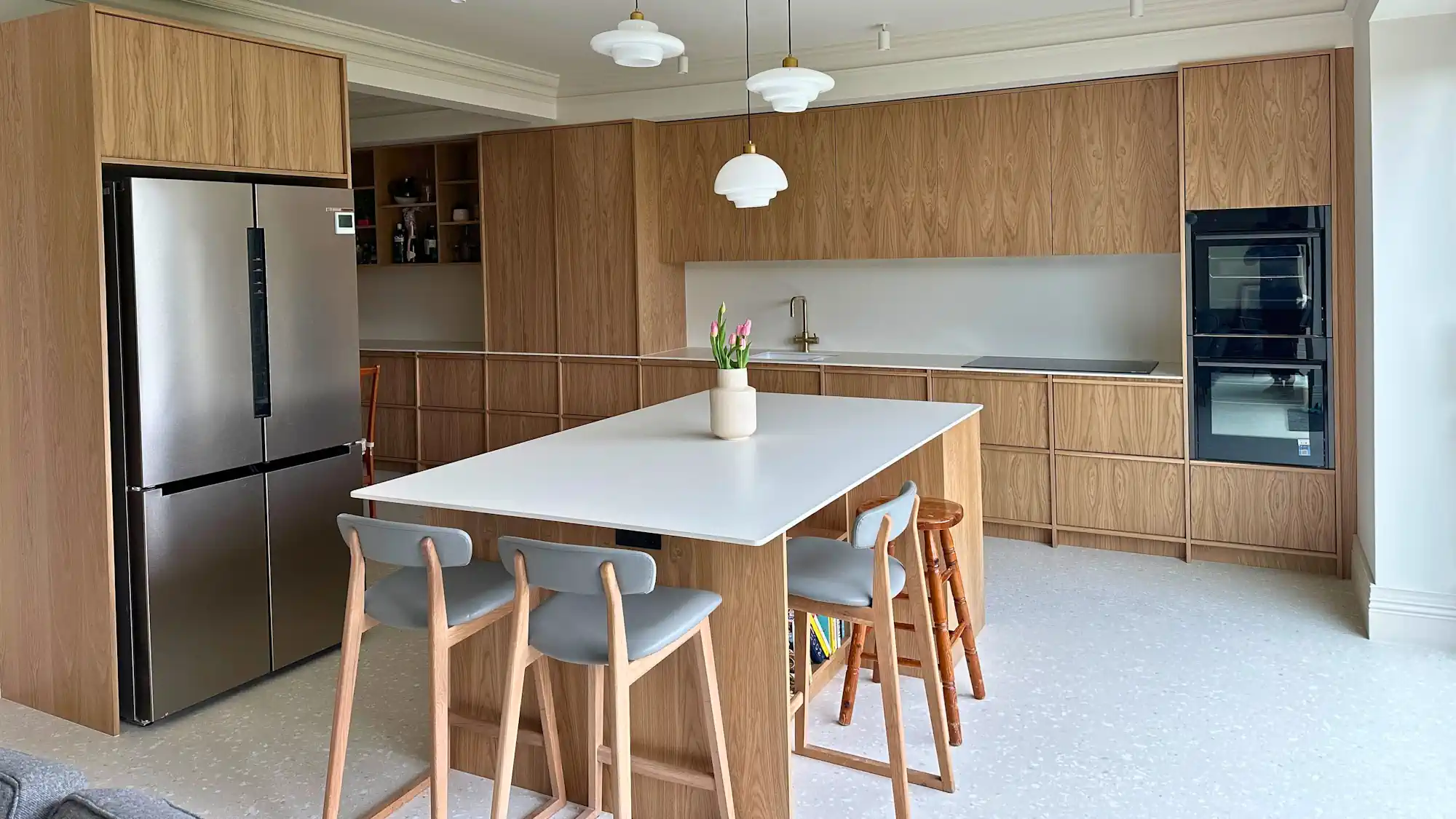
The best kitchen layout is the one that fits your room and the way you use it. Cabinet shape matters, but so do the routes through the space, open appliance doors, preparation surfaces and where everyday equipment is stored.
Use these kitchen layout ideas to compare the main arrangements before choosing finishes. Real JS DECO projects show how a single wall, a U-shaped kitchen, a peninsula or an island can respond to a particular room.
Start with the finished room and its routes
Record doors, windows, fixed services, radiators and any building work that will alter the usable space. Include adjoining rooms and the routes used for shopping, dining and access to the garden. Then identify how many people cook and what needs to happen at the same time.
A layout drawn around unfinished dimensions may need revisiting after plaster, insulation or flooring changes. Confirm the survey and final measurement stage with the project team. The cabinet plan needs to fit the room that will actually receive the furniture.
Compare the main kitchen arrangements
- Single-wall kitchenKeeps the working furniture along one wall and leaves the surrounding room open. Plan the appliances, storage and continuous preparation space together.
- Galley kitchenUses one or two facing runs in a narrower space. Check the shared aisle with drawers and appliances open, including any through traffic.
- L-shaped kitchenUses two adjoining walls and can leave space for a table or island. Decide how the corner, working surface and taller storage will be used.
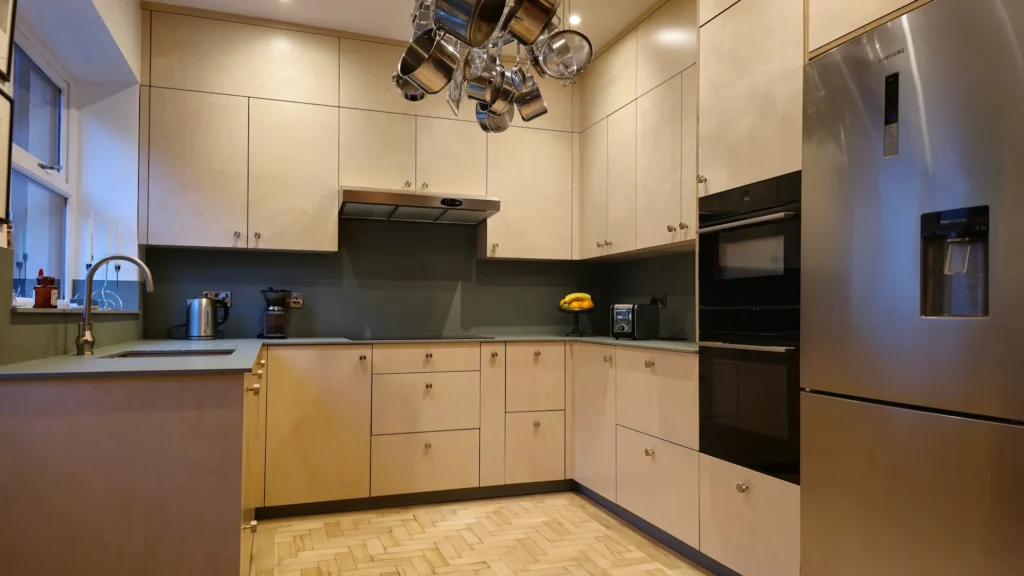
- U-shaped kitchenBrings three working sides together. Check the internal floor area, corner access and the relationship between sink, cooking and preparation.
- Kitchen with a peninsulaExtends a run into the room while remaining attached at one end. It can add a working face or seating where a detached island would not suit.
- Kitchen with an islandCreates a separate surface and storage area. Give it a clear purpose and plan access around every working or seating side.
The Sheffield single-wall kitchen keeps the sink, hob, oven and storage within one continuous run. Its finished photographs show how integrated appliances and planned drawers can serve an open-plan flat without adding another cabinet return.
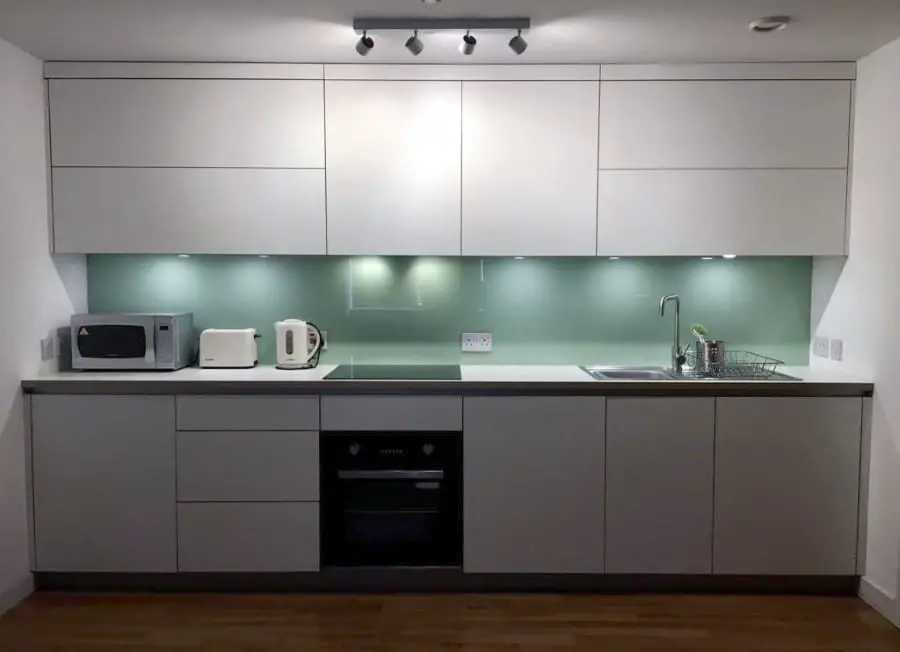
For a facing-run arrangement, our small galley kitchen guide develops the aisle, storage and finish choices further. A narrow room does not automatically benefit from an island.
Plan working zones alongside everyday movement
The traditional work triangle can help you consider movement between cooking, refrigeration and washing, but it is not a universal dimension rule. Include preparation, food storage, dishwasher unloading and the number of users. A working zone should have the surface and storage it needs without repeatedly crossing a busy walkway.
Check the plan with appliances and drawers open. Seating needs to remain comfortable when someone walks behind it, and the route through the kitchen should be considered separately from the cook’s immediate workspace. Test the proposed furniture footprint in the actual room before committing to a large island.
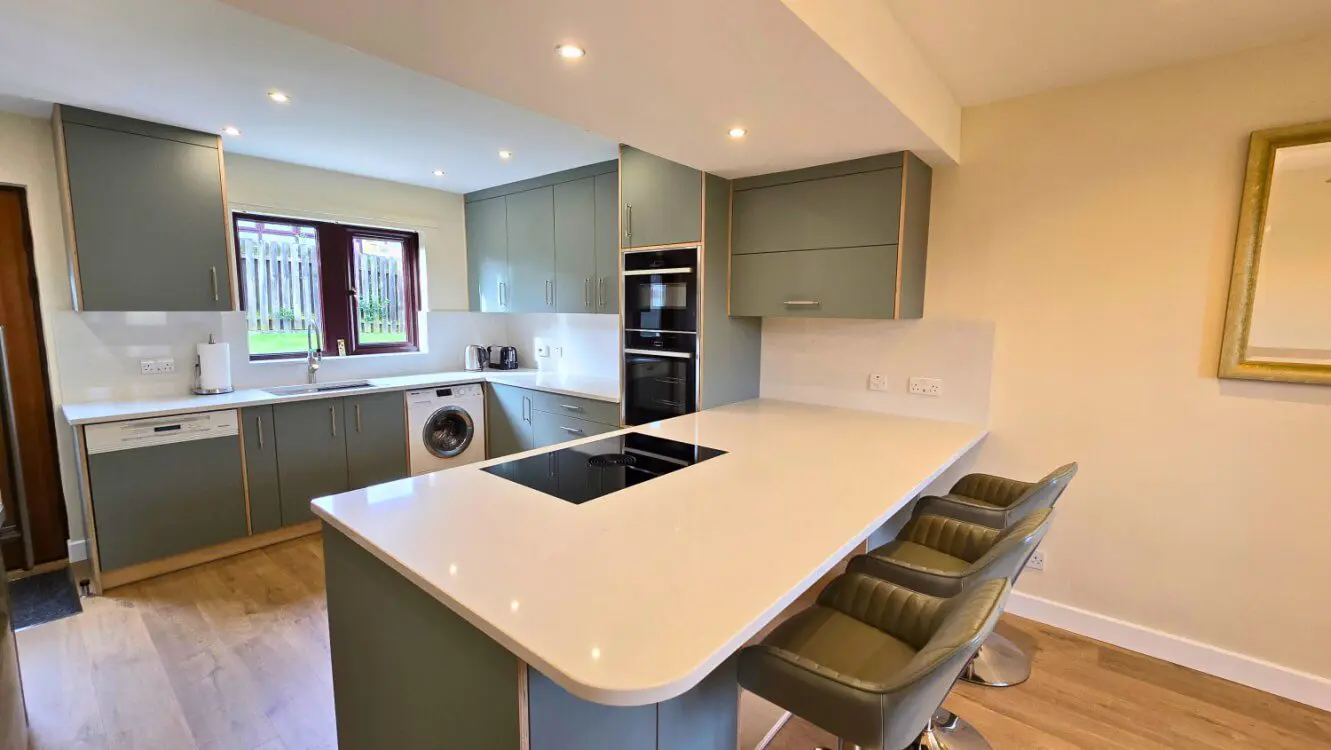
The Huddersfield Verde Kitami kitchen uses a U-shaped arrangement with a peninsula: the sink sits beneath the window, cooking is on the peninsula and the ovens occupy tall housing. The customer’s appointed fitter installed furniture designed, manufactured and supplied by JS DECO.
Coordinate the sink, cooking and services early
The sink needs workable preparation space and a sensible relationship to dishwashing, waste and plumbing. The hob needs the appropriate surrounding surfaces and extraction arrangement. A cooker does not have to sit on an exterior wall in every kitchen; the actual appliance, duct route and installation requirements determine the options.
Agree appliance models before finalising bespoke housings. Their dimensions, ventilation requirements, door swings and access for maintenance belong in the plan. Coordinate electrical, plumbing and extraction work with the relevant installer rather than assuming furniture drawings settle every service detail.
Use storage and lighting to support the plan
Assign contents to cabinets before deciding all the widths. Everyday equipment should be easy to reach where it is used; taller storage can consolidate supplies, while a carefully placed open shelf can keep the working surface clear. Avoid adding cupboards simply because an unused wall is available.
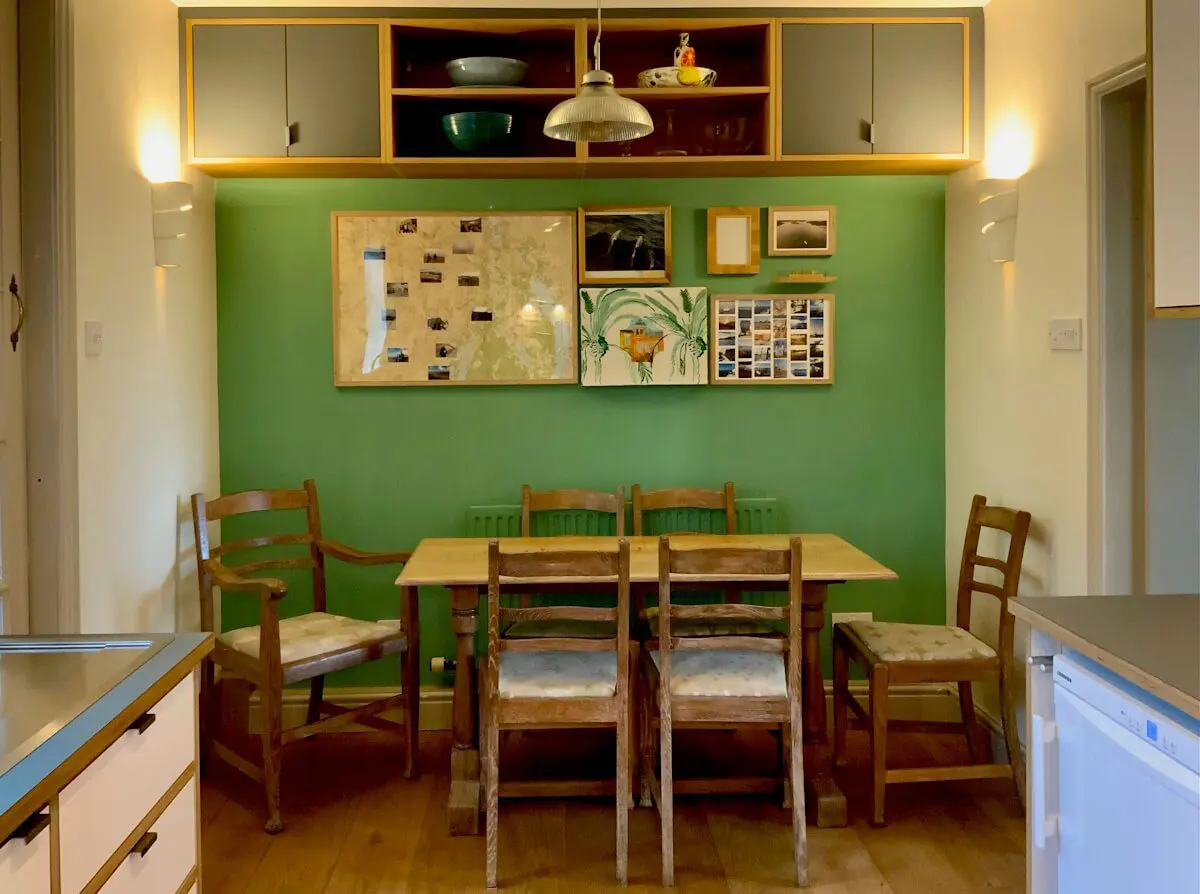
Plan task lighting over preparation areas, alongside general room lighting and any softer lighting for dining. The positions of wall cupboards, open shelves and tall units affect where fittings can sit. Our kitchen storage guide considers the internal arrangements.
Once the plan works, coordinate the cabinet construction, fronts and worktops. Plywood cabinetry provides our premium construction direction; FENIX finishes and painted kitchen options offer different appearances without deciding the layout for you.
Prepare a layout brief before choosing the final look
- Share the roomProvide photographs, available dimensions or drawings, plus the doors, windows and features that will remain.
- Describe daily useExplain cooking, dining, storage and the busiest routes. Include who uses the kitchen and what happens at the same time.
- Identify the equipmentList the planned appliances and practical requirements so their housing, access and services can be coordinated.
- Agree the prioritiesChoose what matters most: open space, preparation surface, seating, particular storage or a clear visual direction.
Frequently asked questions
Which layout is best for a small kitchen?
It depends on the room’s width, openings and requirements. Compare a single run, facing runs and a compact L or U shape with the actual appliance and storage plan.
Do I need to follow a fixed work-triangle size?
Use the triangle as a way to consider movement, then test the actual tasks and users. Preparation, dishwashing, storage and through traffic also affect the plan.
When is a peninsula more useful than an island?
A peninsula may provide a working surface or seating while staying connected to the main run. Compare its access and circulation with the space required around a detached island.
Should finishes be chosen before the layout?
Discuss the intended appearance early, but develop it alongside a usable plan. The final cabinet proportions, appliance arrangement and services need to work together.
Develop the arrangement around your room
A clear room brief makes it easier to compare layouts and understand the decisions behind the furniture.
Start with your room and your priorities
See what to share at the first conversation, how we develop the brief and which stages follow as your kitchen plans take shape.
See how to start your project