
Choosing wood for bespoke furniture
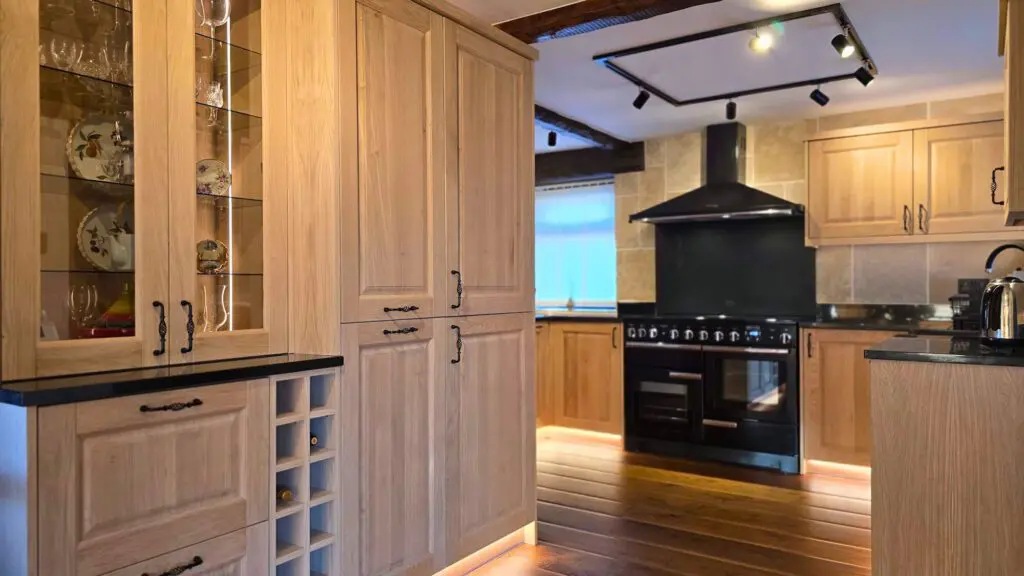
Choosing wood for bespoke furniture involves more than deciding whether you like oak or walnut. The visible species, the way it is used, the substrate and the protective finish all affect the result. Solid timber, real wood veneer and plywood serve different roles within a premium piece of furniture; a wood-effect decorative surface is a separate material.
Start with the visible character
Oak often has a pronounced grain and can suit both framed traditional doors and quieter contemporary elevations. Walnut typically brings a darker appearance; maple is commonly associated with a lighter, finer-grained direction. Colour and pattern vary within a species, so compare the actual sample and proposed finish rather than expecting every board to match a photograph.
A timber name alone does not establish hardness, durability or suitability for every application. The particular stock, construction, finish and intended use matter. Ask what is available for your project instead of assuming that a general wood guide is a current JS DECO stock list.
Separate solid wood and real veneer
Solid wood uses timber through the component. Real wood veneer places a thin timber surface over a specified substrate. Both can create premium results when used deliberately; they should be described accurately rather than ranked only by the amount of visible timber.
The Leeds Japandi kitchen combines oak-veneered fronts with solid oak details. Its long elevation demonstrates coordinated grain and proportions, while the particular materials each have their own function.
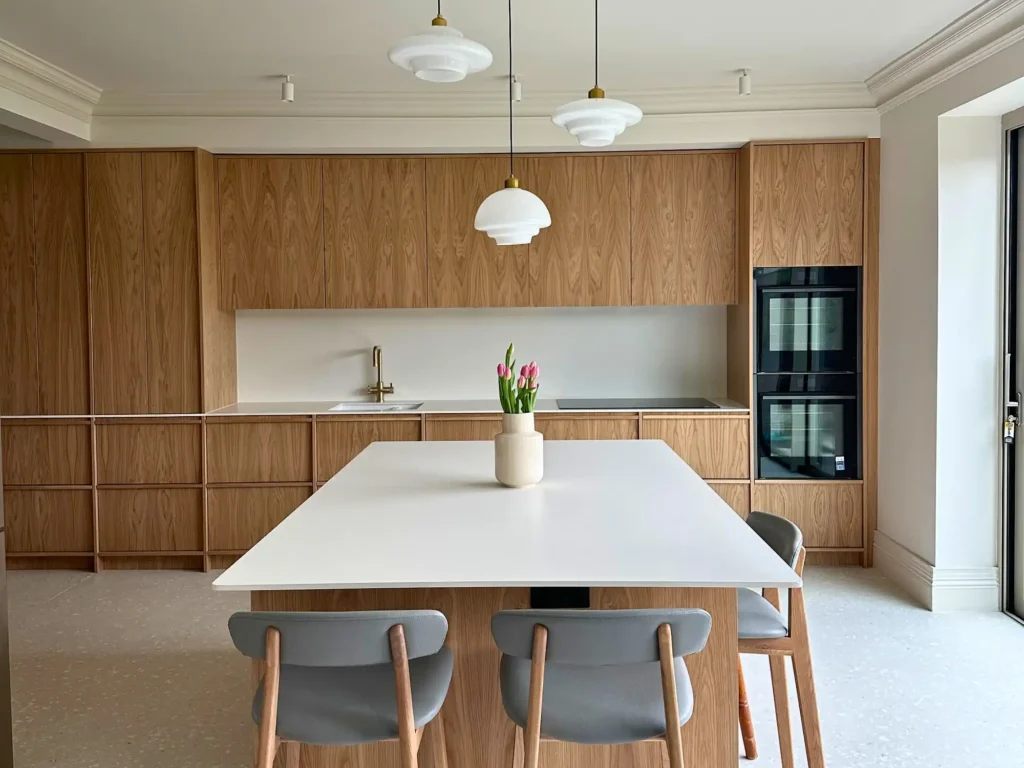
The grain-matching guide explains why grain direction, coordinated selection and pattern continuity are different decisions. A veneer does not automatically mean the adjacent fronts are matched.
Specify the cabinet core as well as the door
High-quality plywood is our preferred premium material for cabinet construction. Its structural role, interior appearance and possible exposed-edge detail belong in the specification even where the outside is painted or laminated.
High-quality real-wood-veneered MDF can be a deliberate premium option for doors only, alongside plywood carcases. The veneer, substrate, edge treatment and finish are specified together for the door, while the plywood core provides the cabinet construction behind it.
- Visible timberChoose the species, grain character and tone you want to see, with a real sample of the proposed finish.
- Component typeState whether each visible part is solid timber, real veneer, exposed plywood or a decorative wood effect.
- Cabinet constructionName the actual core and edge treatment rather than inferring them from the door appearance.
- Protective finishConfirm the lacquer, oil, paint or other specified finish and its intended care routine.
Match the material to the furniture's job
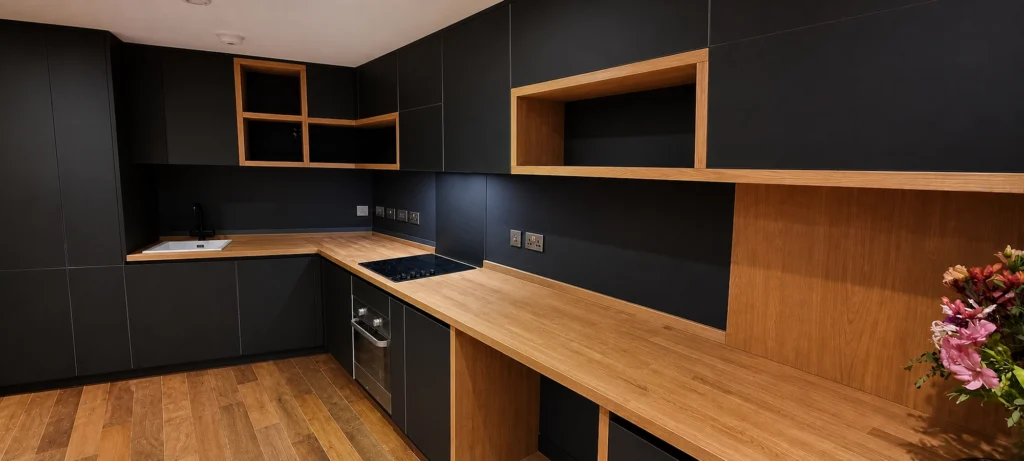
A cabinet door, shelf, drawer box and worktop have different uses and construction requirements. A material selected for a broad door elevation may not be the same as the one chosen for a working surface or internal drawer. Dimensions, supporting details and the finish need to suit each component.
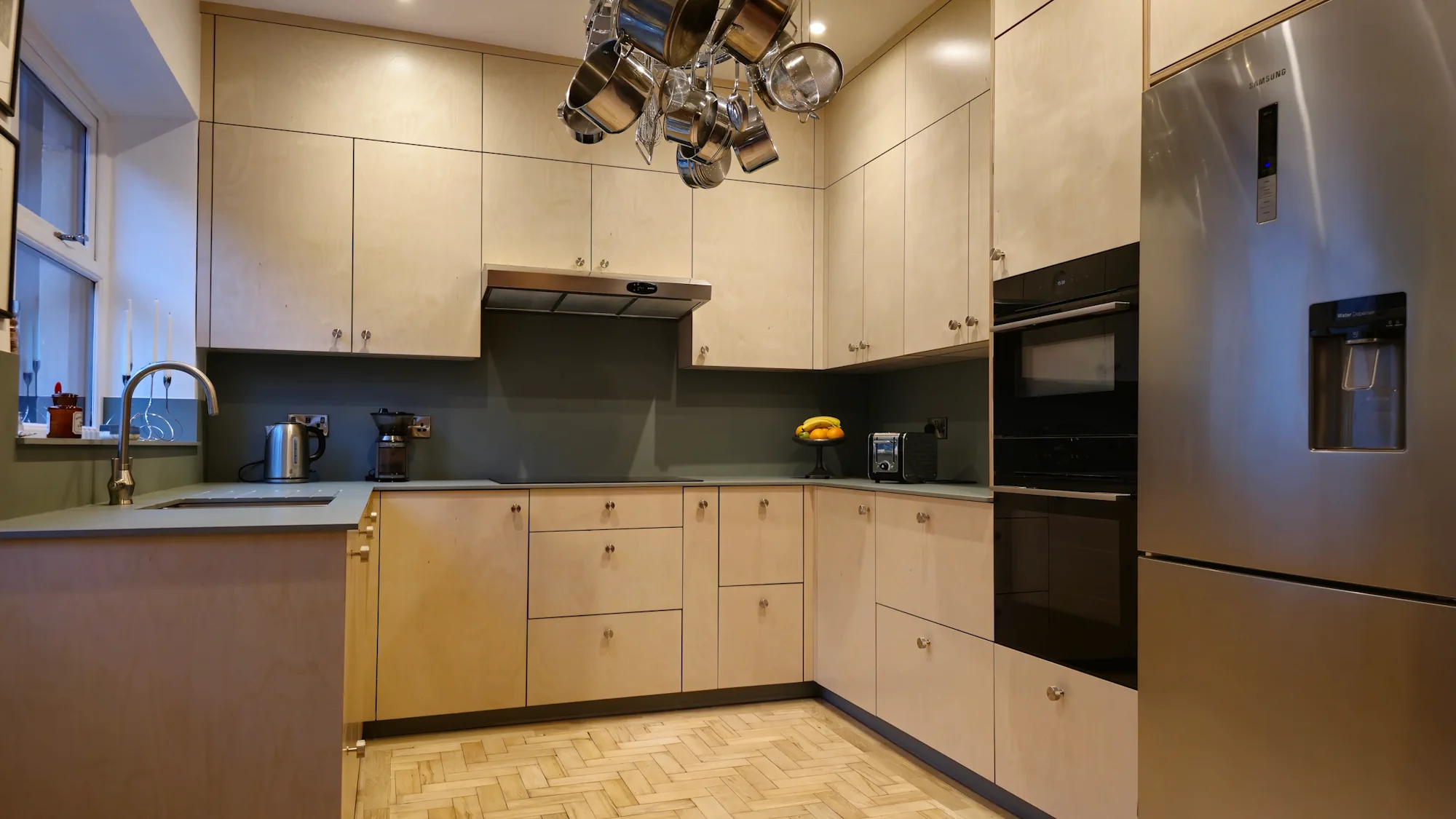
In Lambarde Square, birch plywood cabinetry is combined with FENIX fronts and oiled solid oak worktops and shelves. It is a practical example of a kitchen using several material roles together rather than insisting on one timber throughout.
Consider sourcing, cost and availability
Ask what documentation is available for the proposed material and sourcing. A rare or exotic timber is not automatically a better choice for your project; availability, selection, maintenance and the quantity required also matter.
Compare quotations on the same specification. Grain matching, special finishes and particular board selections can affect material allowance and work, so agree those priorities before manufacture. The sustainable material guide helps assess sourcing and environmental statements without treating every natural material as automatically sustainable.
Plan the care for the actual finish
Use the instructions for the specified surface. Oiled timber and lacquered furniture need different maintenance approaches; strong cleaners, excess water and direct heat should not be assumed suitable because the underlying material is wood.
The plywood and timber-finish care guide explains how to distinguish the visible finish before choosing a cleaning or maintenance routine.
Questions about wood selection
Does oak furniture always use solid oak?
No. It may use solid oak, real oak veneer or a decorative wood-effect surface. Ask for the actual construction.
Can veneer be a premium choice?
Yes. Real wood veneer over an appropriate substrate can provide a considered premium surface. Identify the substrate, finish and grain planning.
Should every component use the same material?
No. The door, cabinet core, drawer and worktop can have different materials selected for their jobs, with the complete specification made clear.
Understand the premium cabinet construction
Explore plywood kitchens
Explore how quality plywood can contribute to the cabinet interior, visible edge detail and overall kitchen specification.
Explore plywood kitchens