
Grain Matched Kitchens and Wardrobes by JS DECO
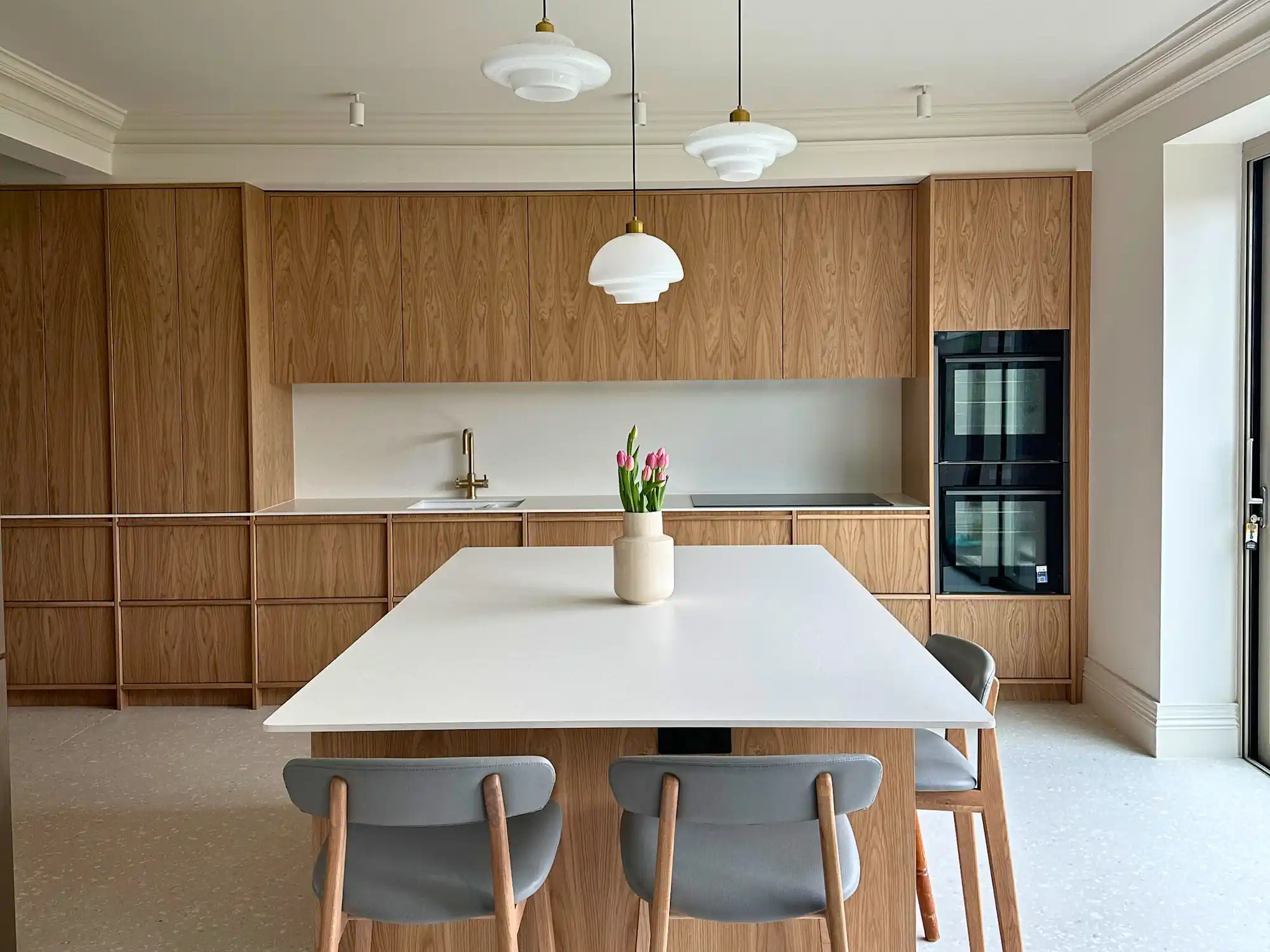
Grain matching is the planning of visible wood grain or a wood-effect pattern across doors, drawer fronts and panels. It can help a kitchen or wardrobe read as one considered piece of furniture, especially where large, handleless surfaces make every division visible.
This guide explains the difference between consistent grain direction and a continuous pattern, shows real JS DECO kitchen and bedroom projects, and sets out the cost and practical questions to resolve before manufacture.
What does grain matching actually mean?
The term can describe different levels of planning. Agreeing the intended result is more useful than simply adding “grain matched” to a quotation.
- Consistent direction:the grain runs in the agreed direction across a furniture elevation. Neighbouring panels may still have different patterns.
- Coordinated selection:visible panels are chosen and arranged for a compatible tone and character, so one particularly strong pattern does not unintentionally dominate the run.
- Grain continuity:a recognisable pattern continues across neighbouring fronts, with the door and drawer gaps dividing it. This needs the material and cutting sequence to suit the layout.
These outcomes are related, but they are not interchangeable. Vertical grain on every door does not automatically mean that the pattern continues between those doors.
For JS DECO, the emphasis is on controlled direction, visual consistency and sensible panel sequencing. Specialist decorative veneer arrangements, such as mirrored bookmatching, are a separate specification and should not be assumed from the phrase “grain matched”.
Where grain matching has the biggest visual impact
Start with the surfaces seen together: a long drawer run, tall cabinet bank, kitchen island, wardrobe doors or exposed end panel. Door proportions, appliance openings and plinth lines all affect how the pattern is read. Grain direction may be vertical or horizontal; the useful choice depends on the elevation and the intended appearance.
Kitchen islands
Large visible surface, often the centrepiece of the room
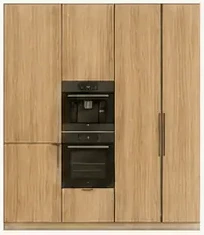
Tall cabinet banks
Strong vertical mass, highly visible from a distance
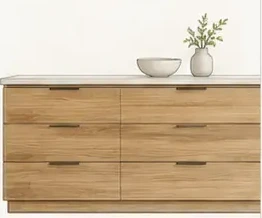
Drawer runs
Horizontal grain can flow across multiple fronts
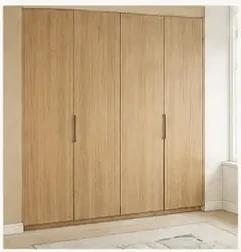
Wardrobe doors
Large flat surfaces reveal inconsistency quickly
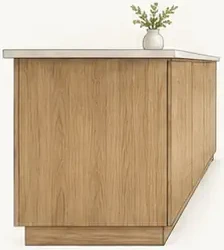
End panels
Poorly selected panels can interrupt an otherwise clean design
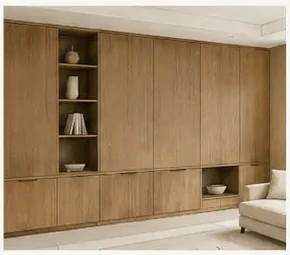
Veneered wall units / feature furniture walls
Often read as architectural elements
Grain matching is most valuable where the eye reads large continuous surfaces.
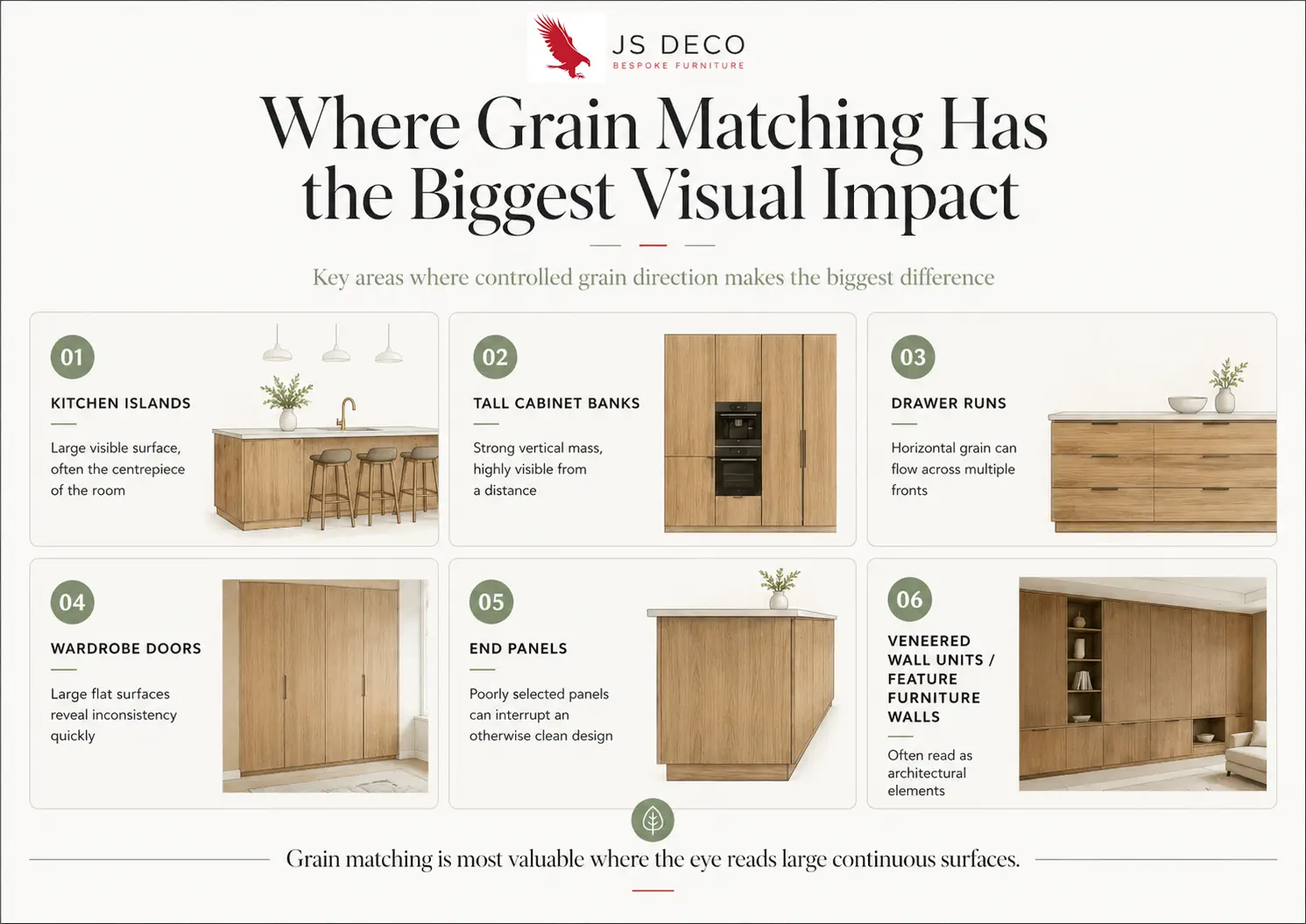
A long oak elevation in Leeds
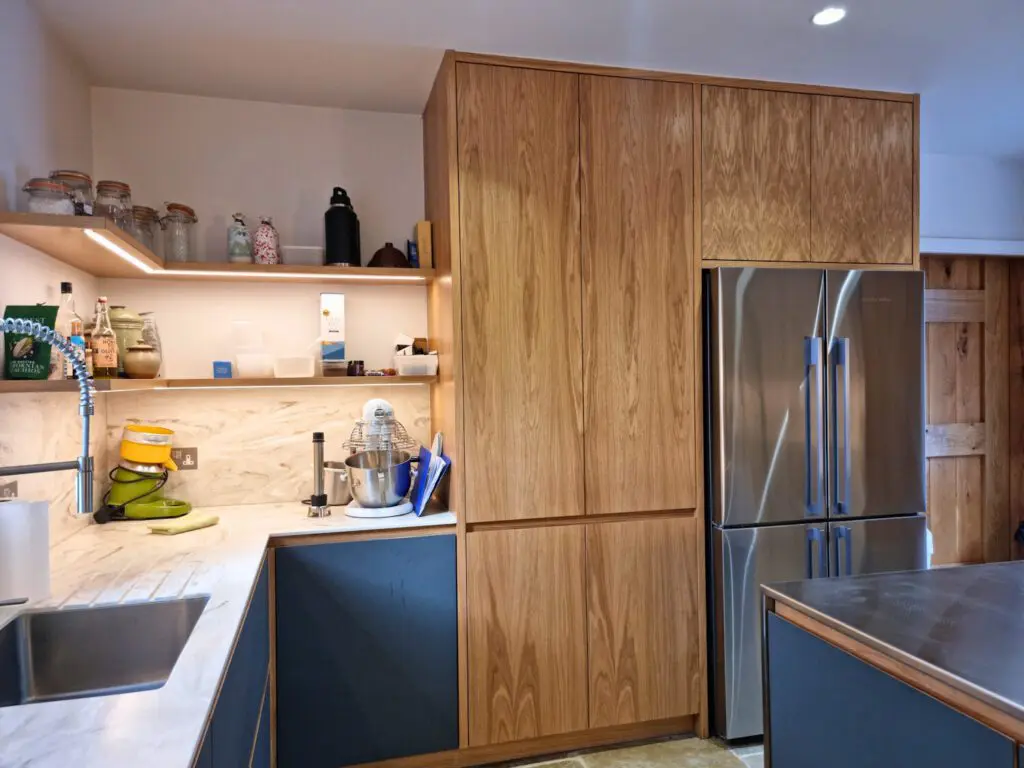
In the Japandi kitchen in Leeds, grain matching continues across the doors and plinth lines. The oak-veneered fronts and solid oak routed handles work with aligned neighbouring panels to give the long run a coordinated appearance.
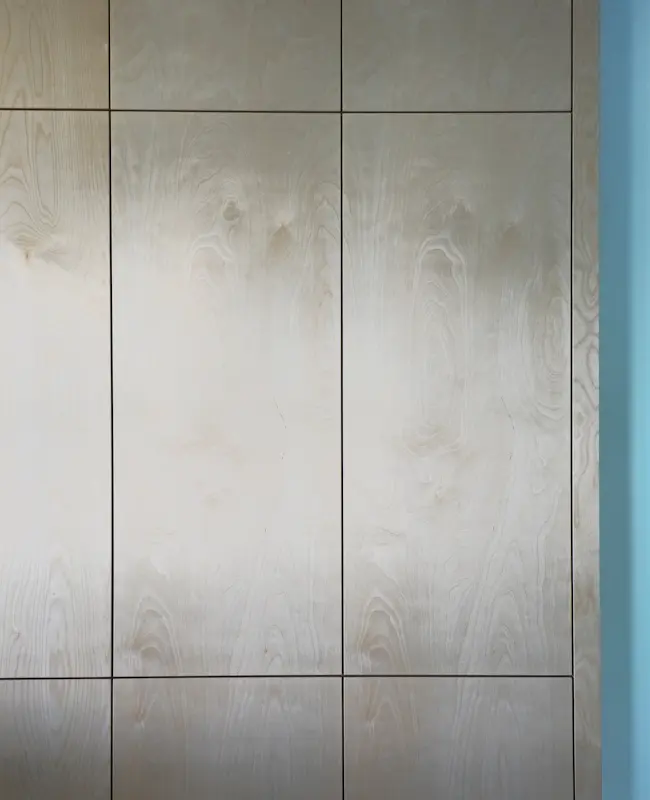
The detail photograph makes the relationship between grain, panel edges and storage easier to examine than a room view alone. It also shows why openings and changes in level need to be considered as part of the design.
An island has more than one visible face
An island is often seen from the dining or living area as well as the working side. Include its drawer fronts, seating-side panels and exposed ends in the discussion. A coordinated island does not require a promise that every grain line will turn continuously around every corner.
For the wider kitchen specification and service options, explore our bespoke kitchen furniture. Grain planning is one part of that specification, alongside construction, storage, hardware and fitting.
Grain matching in wardrobes and drawer chests
Large wardrobe doors make changes in pattern particularly noticeable. Handleless fronts leave the grain and panel divisions prominent, while lower drawers can introduce additional breaks within the same elevation.
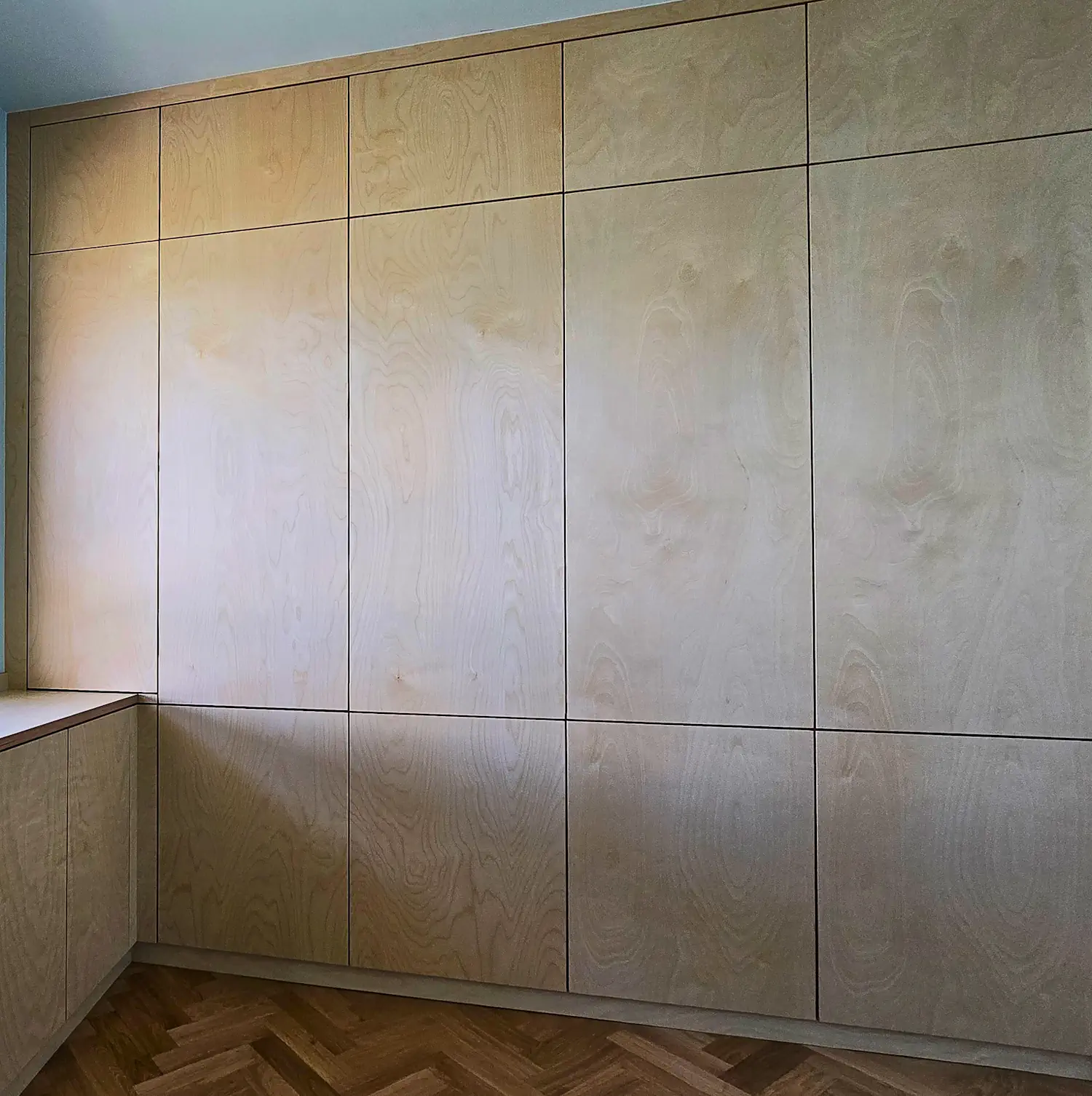
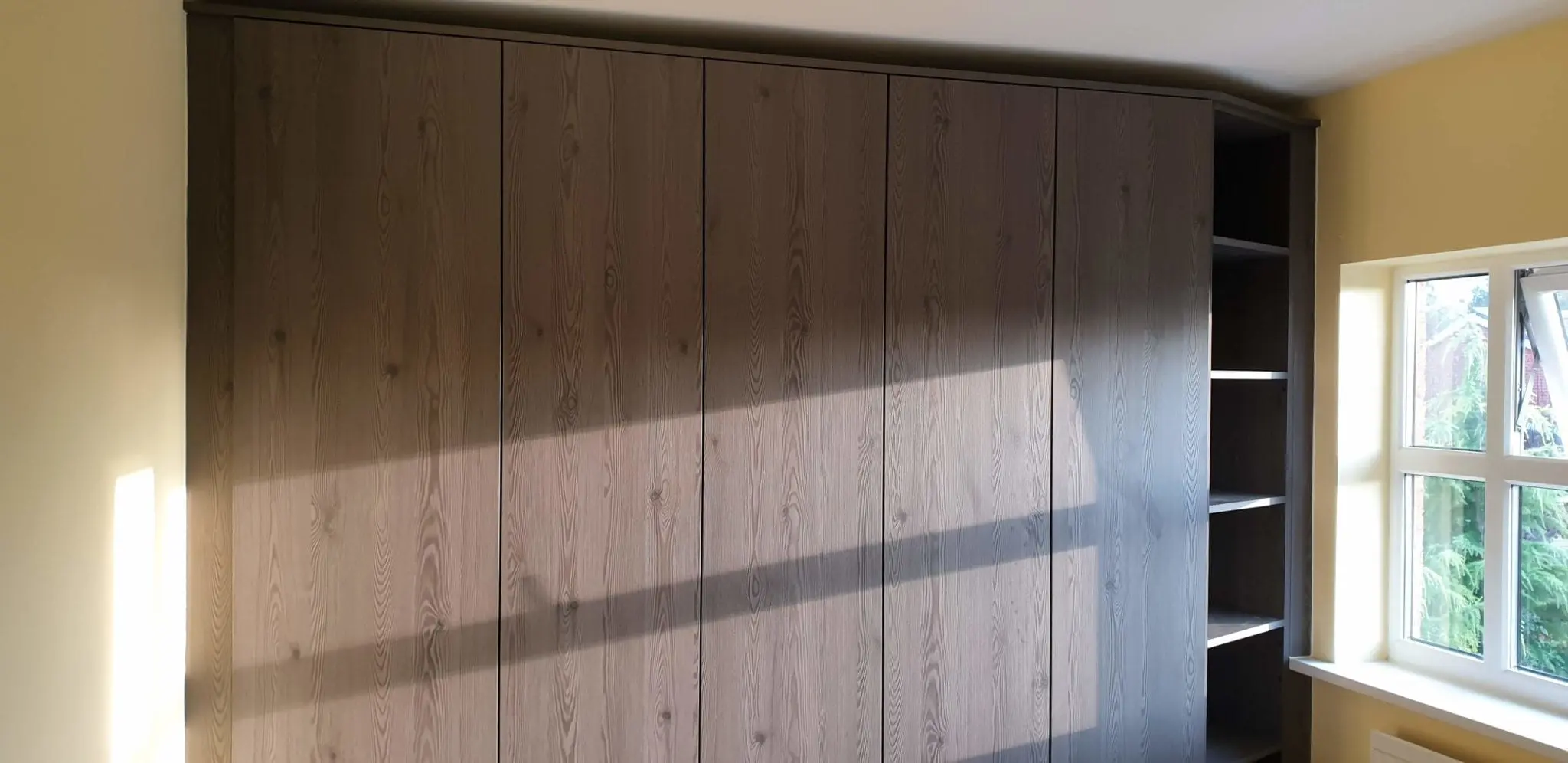
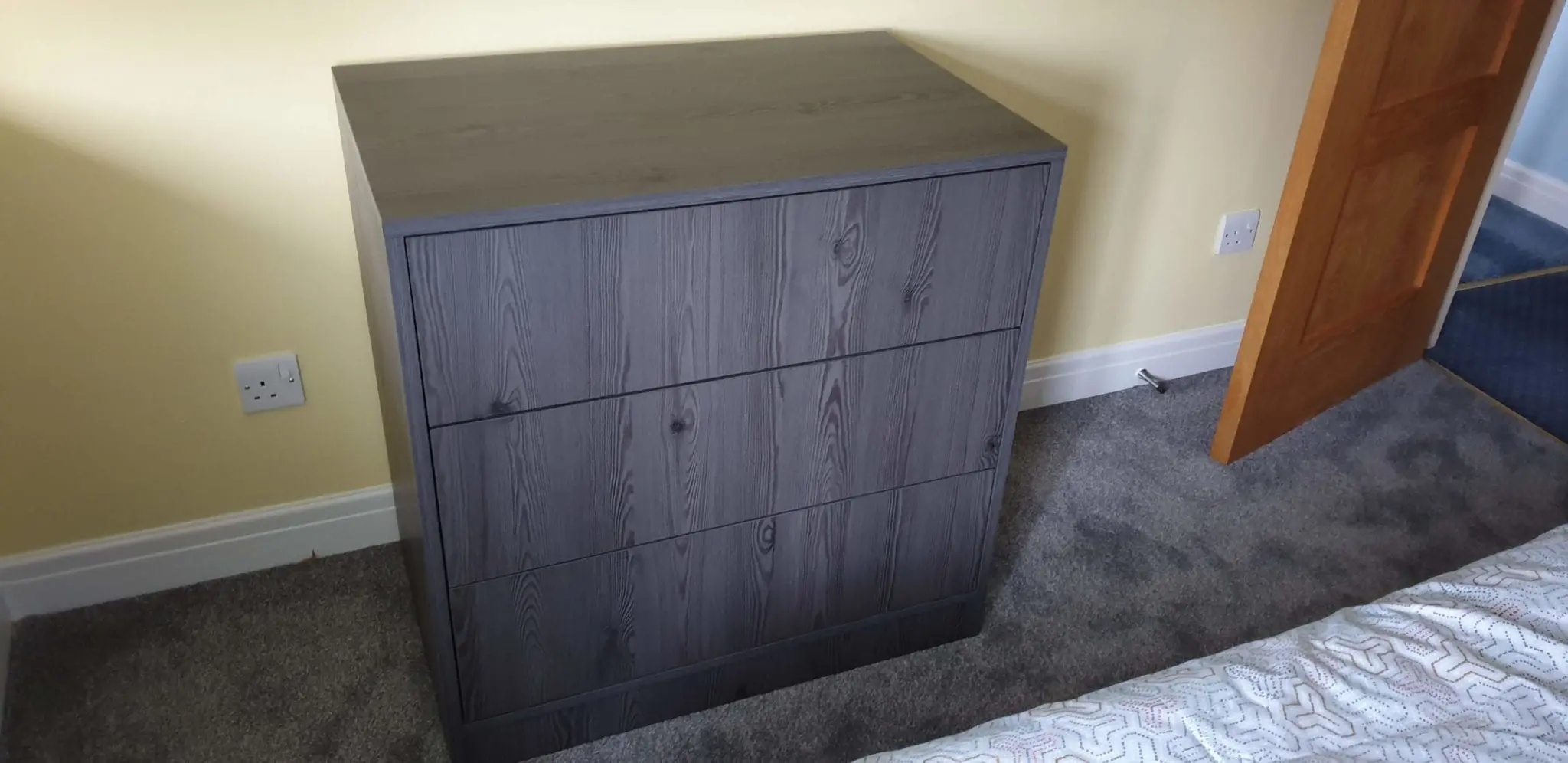
The Pontefract bedroom project combines a fitted wardrobe with a matching 800 mm-wide chest. JS DECO designed, manufactured and installed both pieces, with grain continuity planned across their fronts.
Follow the pattern across the drawer gaps
On the matching chest, the vertical pattern continues across three separate drawer fronts. The photograph gives a clear example of the difference between simply choosing the same grain direction and preserving a recognisable pattern through the furniture divisions.
For a whole-room scheme, our bespoke wardrobes and bedroom furniture guidance helps place this visual detail alongside hanging space, shelves, drawers and access.
Which materials can be grain matched?
Grain planning concerns the visible face. It does not tell you what the cabinet core is made from, and it is not a durability rating.
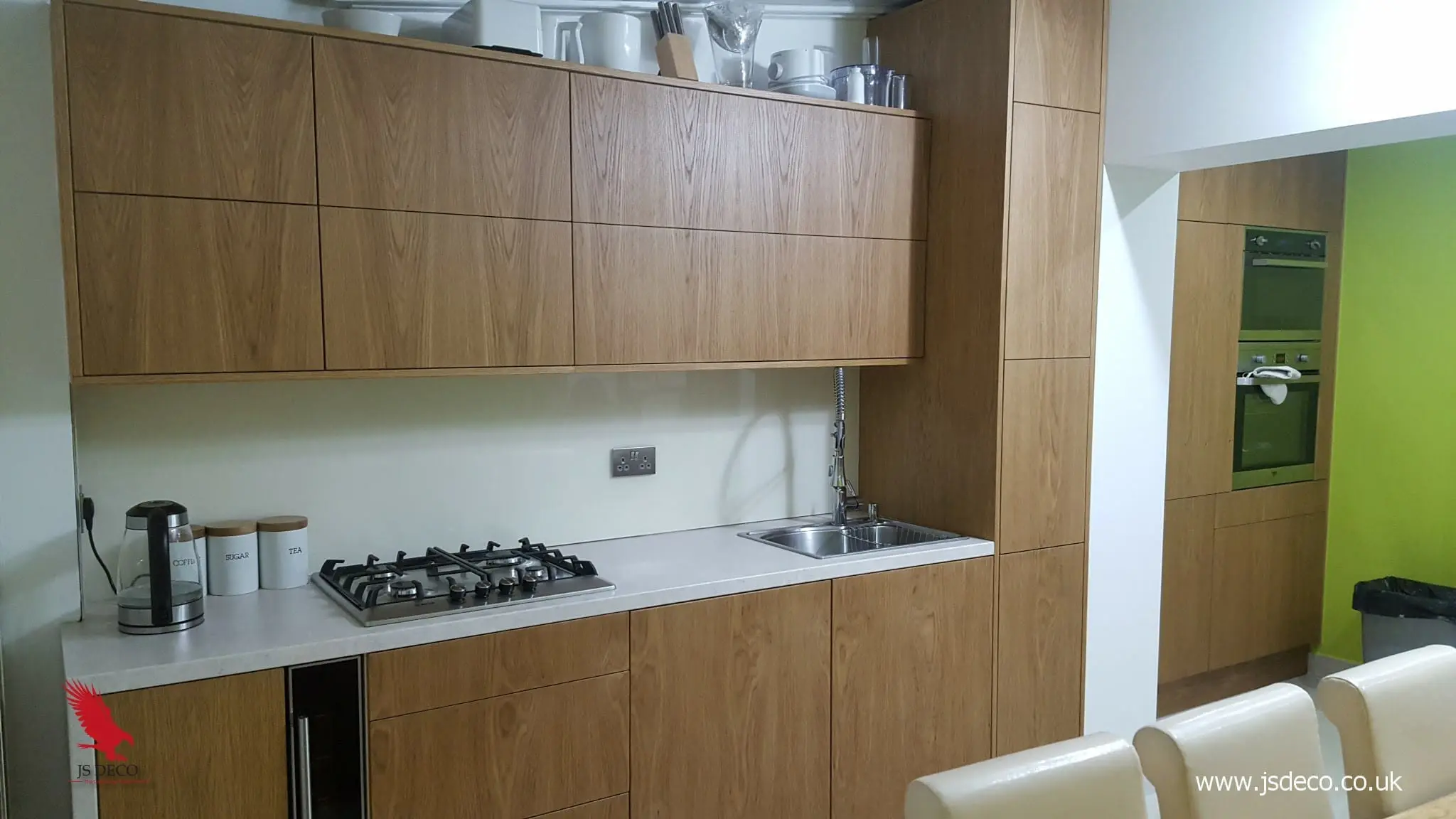
- Natural wood veneer:the timber face can be selected and arranged for its pattern. The Wakefield example uses oak veneer on MDF; the visible grain does not make those fronts plywood.
- Visible plywood faces:suitable birch plywood or veneered plywood can form part of the visible design. Face grade, sheet size and the actual board pattern affect the possibilities.
- Wood-effect decorative boards:a printed or textured pattern can also be planned across fronts, as the Pontefract MFC example shows. Its material identity should remain clear.
- Solid timber:it has its own grain and movement characteristics. Large flat fronts need a construction and finish appropriate to the material.

In the chef’s kitchen shown below, much of the cabinetry uses 18 mm oak-veneered plywood with a satin lacquer finish, alongside Verde Comodoro FENIX fronts. The visible oak and solid-colour surfaces have different visual roles.
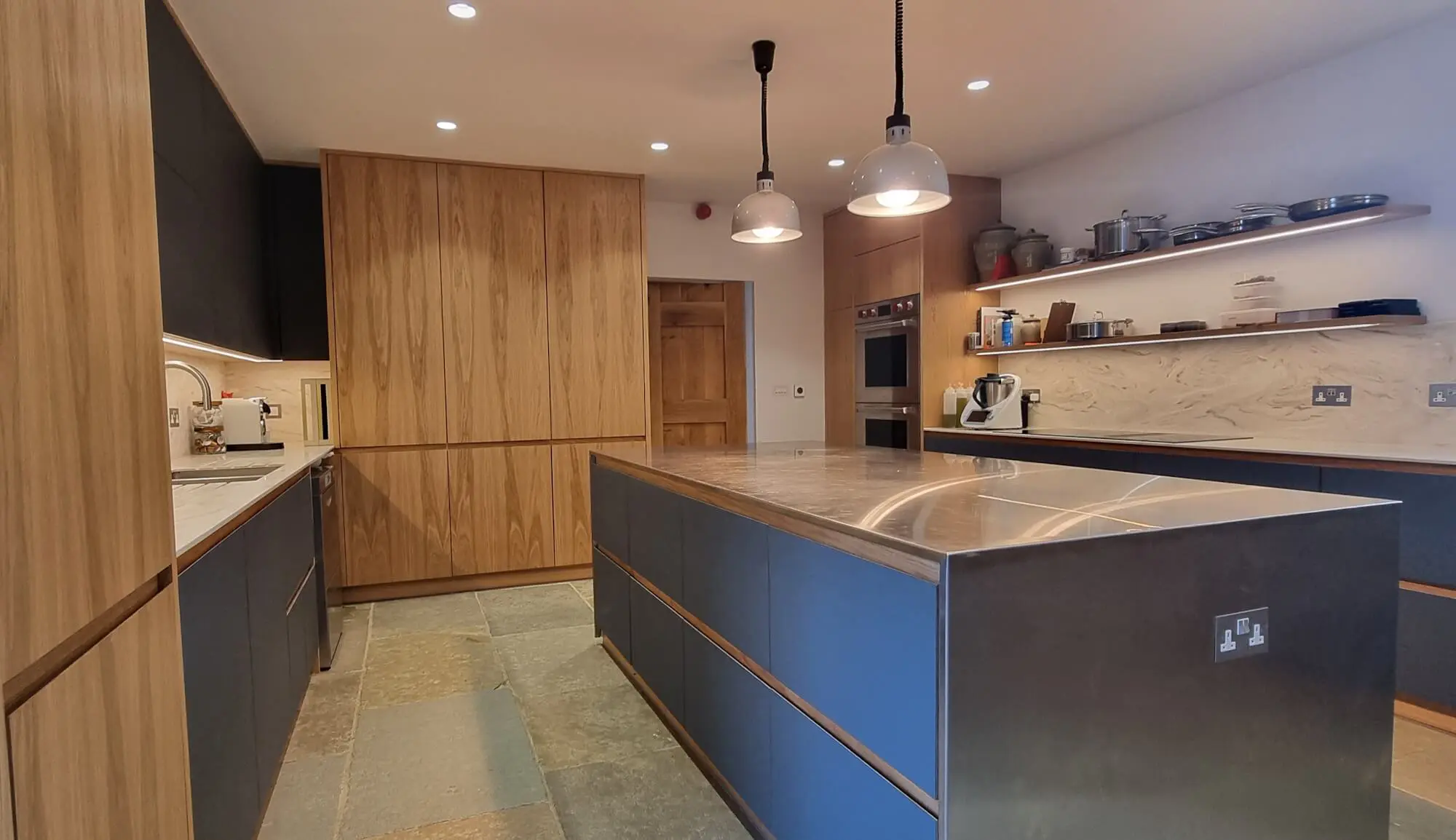
If plywood is used internally while the doors have a solid-colour FENIX or painted finish, there is no visible timber grain on those fronts to match. Clear lacquer over wood, however, can preserve visible grain. Our plywood kitchen guide explains cabinet construction, while our FENIX kitchen guide covers that surface choice.
Why grain planning happens before cutting
Useful grain control begins with the furniture elevation and the material selection. Visible components need to be planned together, with an agreed direction, sequence and level of continuity. Cutting parts solely for maximum sheet efficiency can conflict with the intended visual arrangement.
Depending on the specification, the workshop may need additional board selection, a controlled cutting order and clear component identification. Cabinet dimensions and door proportions also matter: a bespoke layout gives more scope to coordinate these decisions, but it does not remove sheet-size or material constraints.
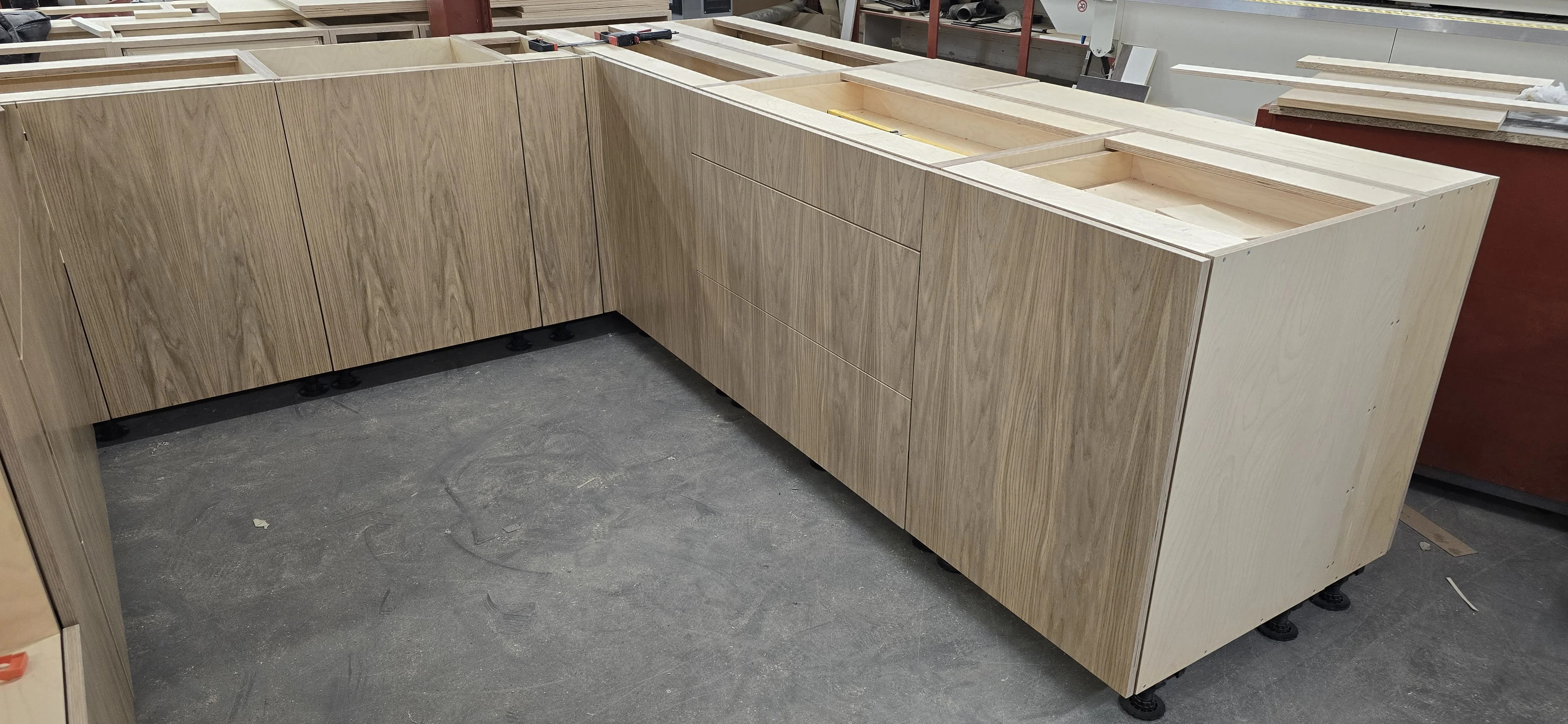
Consider the end panels, island faces and plinths alongside the doors. Leaving them until the end can interrupt an otherwise coordinated elevation. Unplanned direction changes, unrelated drawer fronts or competing strong patterns are the practical issues to discuss. Natural variation can also be a deliberate design choice.
Our guide to how bespoke furniture works explains the wider relationship between room measurements, material selection and workshop manufacture.
Cost, waste and the limits of continuity
Grain matching can add cost through selection, design time, material allowance, cutting, labelling and workshop handling. It can reduce the freedom to optimise a sheet purely for efficiency. The extra allowance depends on the actual layout and material; there is no useful universal percentage.
Sheet size, veneer availability, panel divisions and the budget can limit where a pattern continues. Agree which surfaces should form a matched group and where a change is acceptable. A promise of perfect continuity across an entire kitchen needs more explanation than the term “grain matched” alone.
Replacement is another consideration. If a matched component is damaged, a new piece may not reproduce the original pattern or tone exactly. Ask how that risk will be handled before the material is ordered.
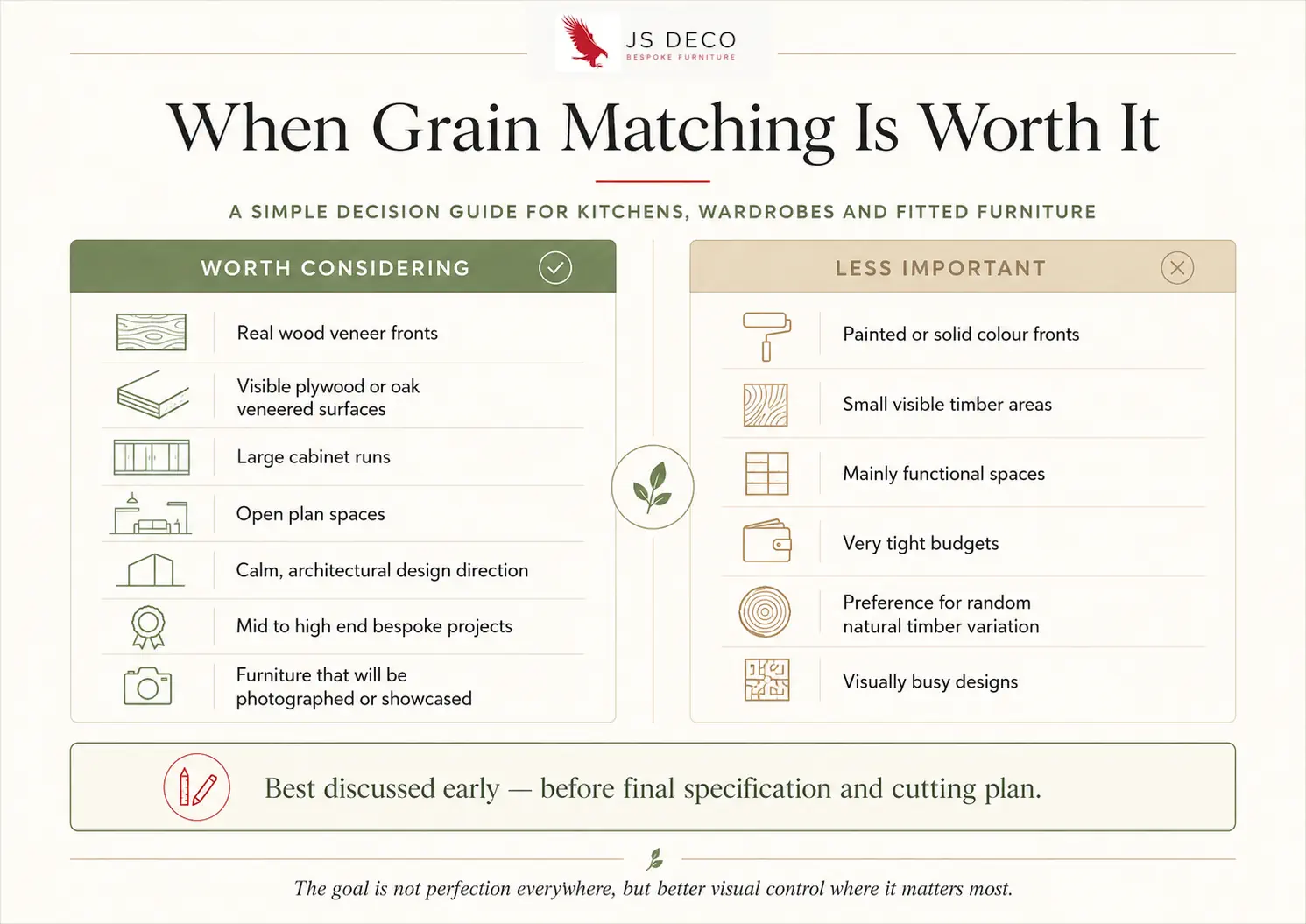
When grain matching is worth it
Prioritise the surfaces that define the room: a prominent island, a long exposed drawer run, tall veneer doors or a main wardrobe elevation. Hidden components and small timber accents may not justify the same intensity of visual control.
Grain matching may be less relevant where fronts are painted or solid-colour, or where a varied natural pattern is part of the brief. A functional kitchen can still benefit from coordinated grain; the decision is about visibility, preference and budget, rather than whether the furniture will be photographed.
Worth considering
- Wood veneer and visible plywood
Prioritise fronts where natural grain forms part of the design.
- Long cabinet and drawer runs
Plan surfaces seen together so the grain reads consistently.
- Open-plan kitchens and living spaces
Coordinate prominent elevations seen across the same room.
- Calm architectural interiors
Consistent grain can help large surfaces feel visually ordered.
- Bespoke projects with an allowance
Agree extra planning and material needs within the budget.
- Prominent furniture and feature walls
Focus on everyday views; photography is not a requirement.
Less important
- Painted or solid-colour fronts
Matching is usually unnecessary where no wood grain is visible.
- Small or hidden timber surfaces
Limited exposure may justify a lighter degree of coordination.
- Mainly functional or enclosed spaces
Give matching less priority where visible grain is secondary.
- Designs celebrating natural variation
A varied pattern may suit the brief better than close matching.
- Projects with very tight budgets
Prioritise visible areas and agree where matching can be simplified.
- Visually busy or mixed-finish designs
Focus on grain that remains prominent in the overall design.
Best discussed early — before final specification and cutting plan.
The goal is not perfection everywhere, but better visual control where it matters most.
Questions to resolve before ordering
Scope and continuity
Which doors, drawers, end panels and plinths are included in the grain planning?
Is the intended result consistent direction, coordinated selection or actual pattern continuity?
Direction and elevations
Which way will the grain run, and how will it relate to the cabinet proportions?
Are the island and wardrobe elevations treated as separate matched groups?
Material, breaks and budget
Where do sheet size, openings or material availability require a break?
How does the specification affect material allowance, waste and the quotation?
Agreeing the finished look
How will we review and agree the grain direction and panel layout before manufacture?
These points should be agreed before the final cutting plan. At JS DECO, grain planning sits within the wider discussion of dimensions, materials, durability, visual priorities and budget; some projects need close sequencing, while others need a lighter degree of coordination.
Frequently asked questions
Does vertical grain on every door mean the doors are grain matched?
It confirms a consistent direction. It does not, by itself, confirm that a recognisable pattern continues across adjacent fronts. Ask what the supplier means by matching and which components are included.
Can plywood kitchen fronts be grain matched?
Yes, where the visible plywood face or veneer and the panel layout allow it. Plywood used only inside cabinets does not make grain matching relevant to solid-colour doors.
Can wood-effect wardrobes also have a continuous pattern?
Yes. The Pontefract wardrobe and chest show planned continuity in a decorative MFC finish. That should be described as wood-effect material, rather than natural timber veneer.
Does grain matching make furniture more durable?
Not directly. It is a visual planning detail. Durability depends on the cabinet construction, substrate, finish, hardware and installation.
Will every panel continue perfectly, and will matching create more waste?
Not necessarily every panel: the result depends on sheet size, material and the agreed matched groups. Matching can require extra material because cutting must respect the pattern rather than only sheet efficiency.
Is it only worthwhile on expensive projects?
No. Concentrating the planning on a few prominent surfaces can be more useful than applying strict continuity everywhere. Discuss the visual priorities and cost before manufacture.
Plan the visible grain before manufacture
Bring the room layout, storage needs and preferred material into the same conversation. Mark the surfaces that matter most to you, so the intended grain direction and continuity can be considered before the specification is finalised.
Start with your room and priorities
Room dimensions, drawings or sketches, photographs and a few material references are useful starting points. Include your preferred timber tone, grain character and approximate budget direction, and whether you need supply only or installation.
Read the project-start guide