Plywood kitchens: practical benefits, materials and design considerations
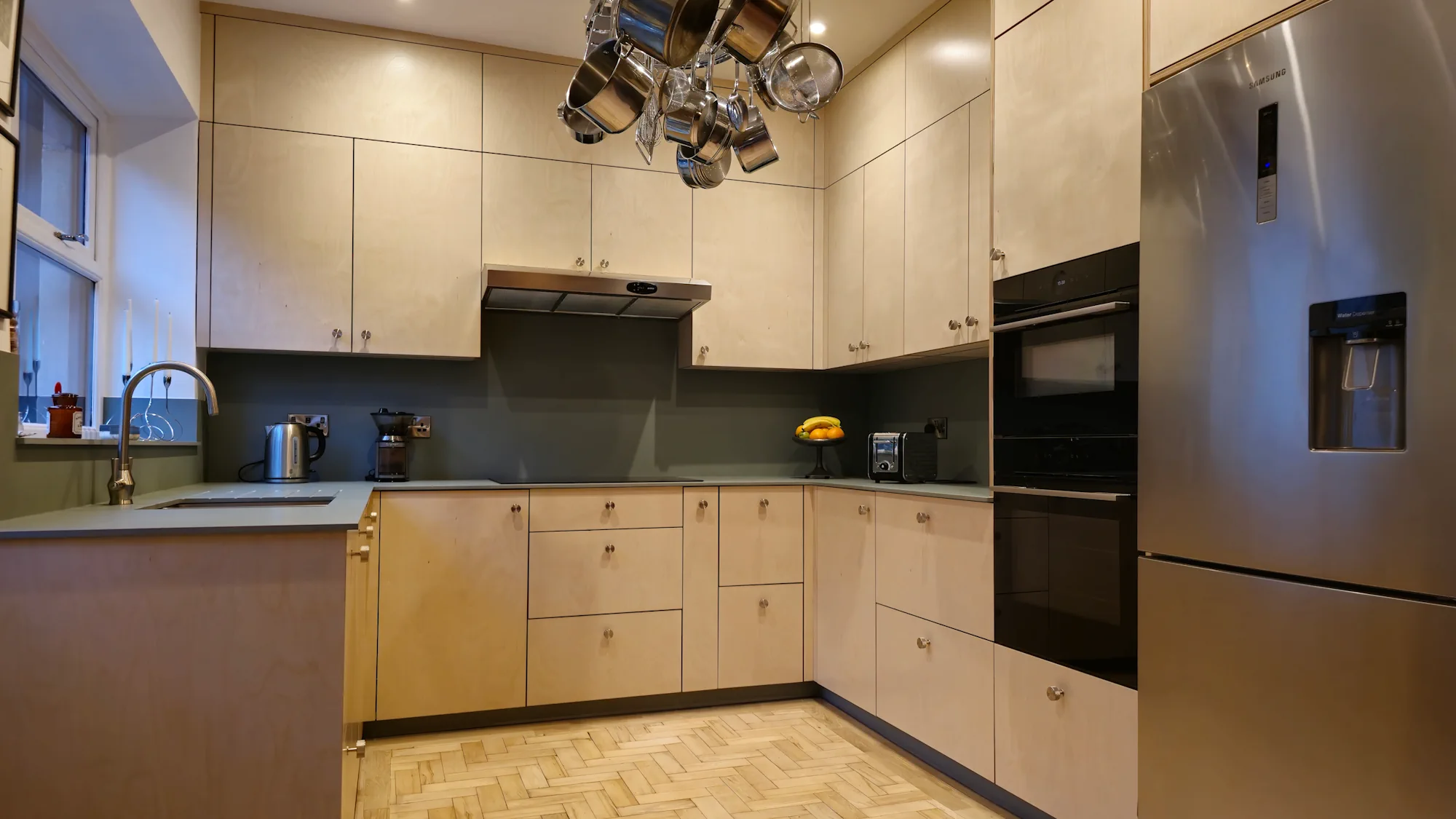
High-quality birch plywood is our preferred premium material for kitchen cabinetry. Its layered veneer construction supports strong, stable cabinet boxes, reliable fixings and carefully finished exposed edges. The board grade, finish and furniture design work together to give the finished kitchen its quality.
This guide weighs the practical benefits against the limitations, and explains what to check before choosing a plywood kitchen for your home.
Understanding Plywood Kitchens
What is plywood and how is it made?
Plywood is made from thin layers of wood veneer bonded together, usually with the grain direction alternating between layers. This construction helps provide strength and stability, but it does not make the board impossible to bend or immune to moisture.
A “plywood kitchen” may describe the cabinet boxes, the fronts, or both. The finished surface might be clear-coated plywood, timber veneer, paint or laminate. Ask which parts of the proposed kitchen are plywood and what will cover the exposed faces and edges.
Advantages of plywood as a building material
Suitable furniture-grade plywood can provide a strong base for cabinets, shelves and fitted storage. Manufacturers such as Metsä Wood describe birch plywood as strong and stiff, with a good strength-to-weight ratio. That does not mean every plywood board is equivalent or particularly light: species, grade and thickness vary.
Wood-based construction also raises questions about sourcing. If environmental performance matters to you, ask for product-specific evidence rather than treating all plywood as automatically sustainable. Our guide to the environmental benefits of plywood kitchens explains what to check.
Benefits of a Plywood Kitchen
The main advantages are the scope for durable construction, a choice of finishes, practical everyday care and a design made around the room. Each depends on the finished kitchen’s specification.
Durability and longevity
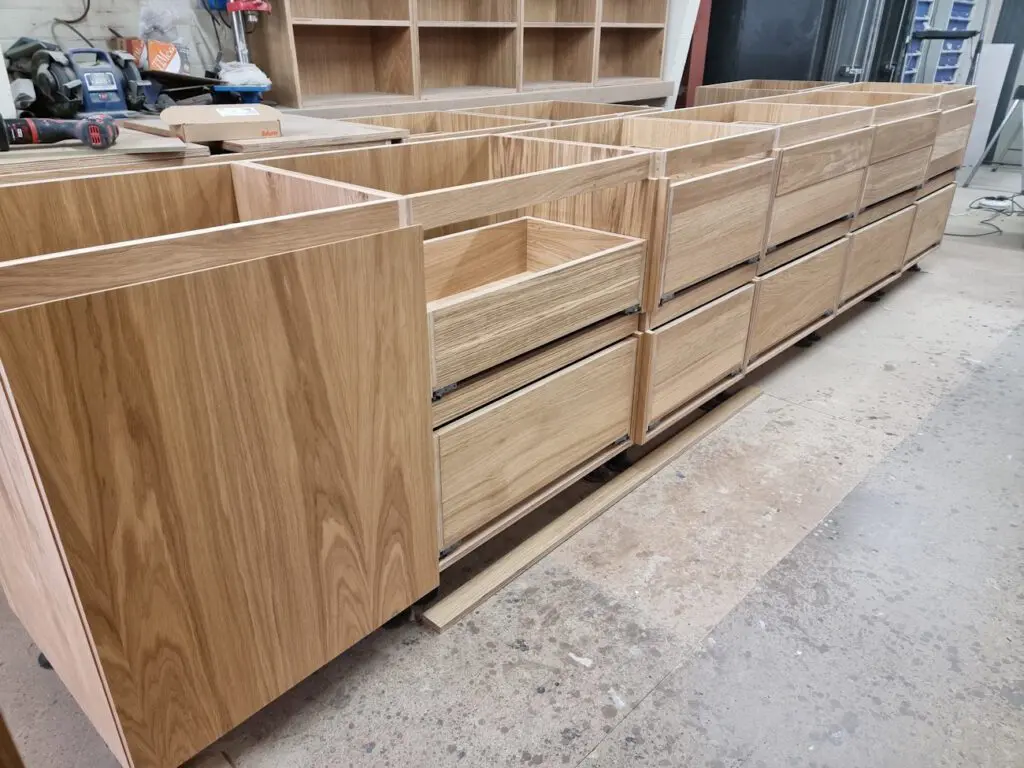
Good-quality plywood, suitable joints and appropriate hardware can form cabinetry built for daily use. The board is one part of that system: doors, hinges, drawer runners, shelf supports and installation all affect how the kitchen performs over time.
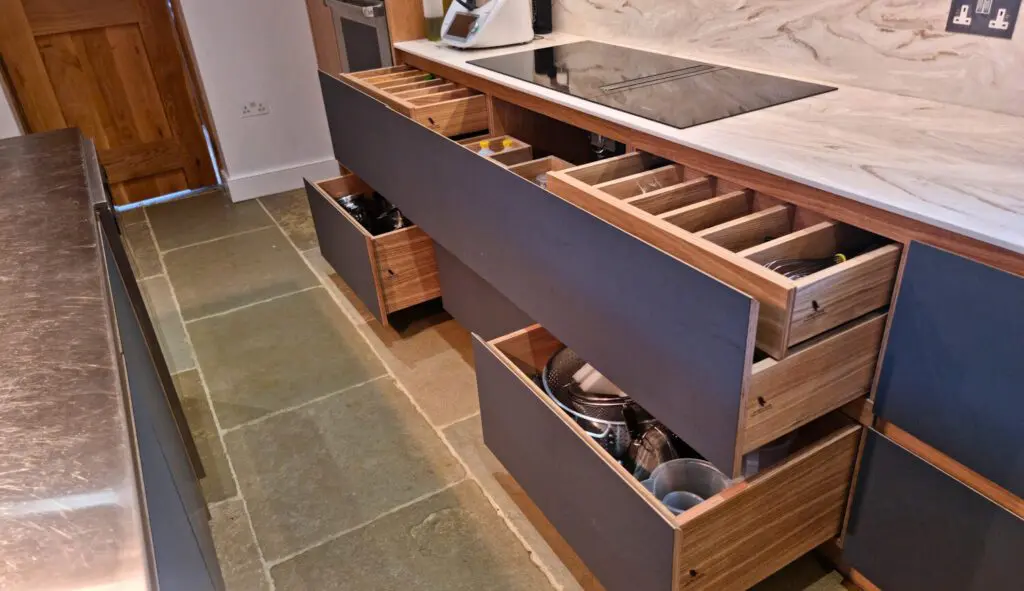
For heavy pans, crockery or appliances, discuss the intended loads with the maker. A properly designed plywood cabinet should not be ruled out simply because its contents are heavy. Shelf spans, board thickness and support need to suit the job.
Ease of maintenance
Day-to-day cleaning is largely determined by the finish. A laminated surface, a painted front and clear-coated plywood may require different products and care. Follow the guidance supplied for the selected finish, wipe up spills promptly and avoid leaving water around edges and joints.
A practical kitchen also allows access to fittings and plumbing when maintenance is needed. Ask how hinges, runners or an individual damaged front could be adjusted, repaired or replaced.
Cost-effectiveness
Plywood can offer good value, but it is not automatically the cheapest cabinet material. Board quality, finish, machining, hardware, bespoke dimensions and fitting all contribute to the price. A high-specification plywood kitchen can cost more than a simpler kitchen built with another board.
Compare quotations with equivalent layouts, finishes, hardware and installation scope. That gives a more useful picture of value than a blanket claim that plywood always costs less than solid wood.
Versatility in design
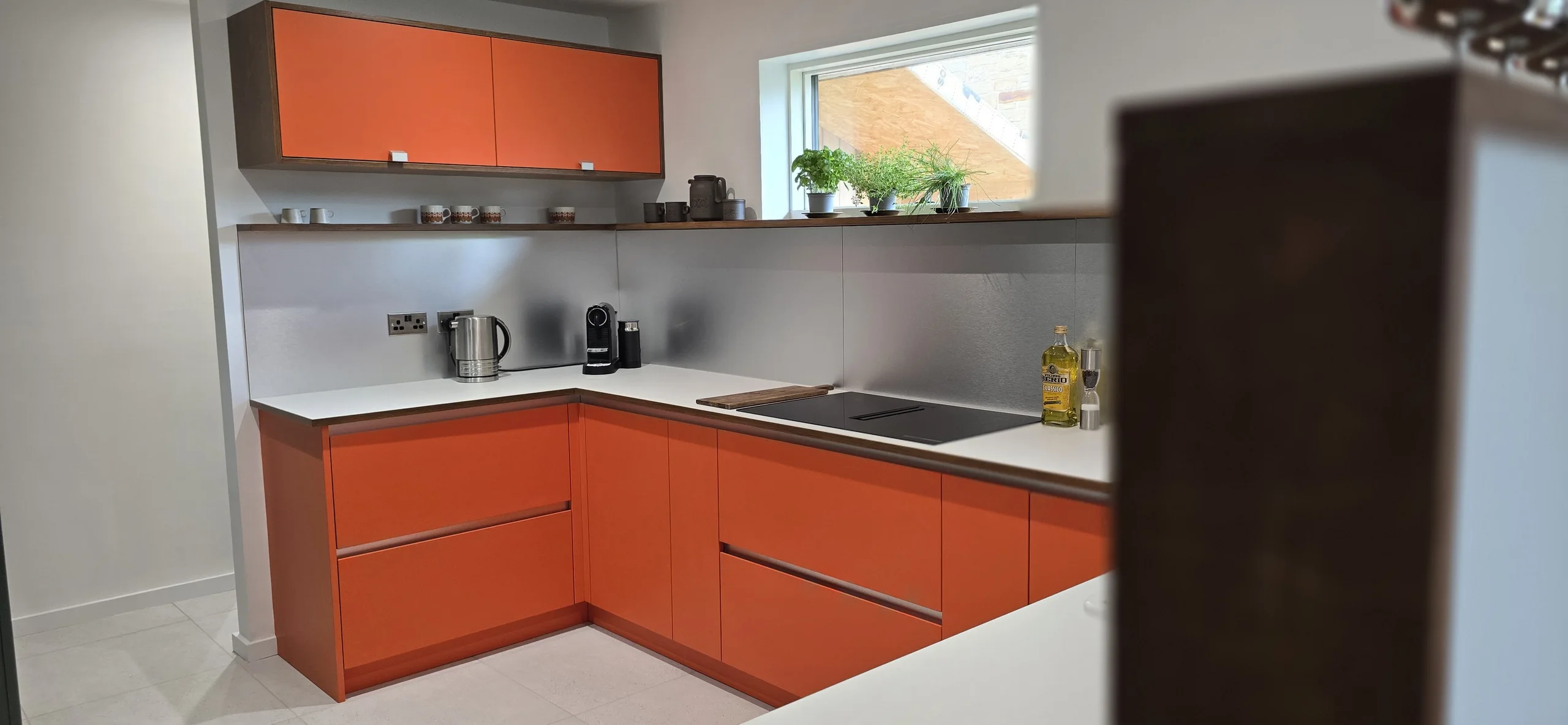
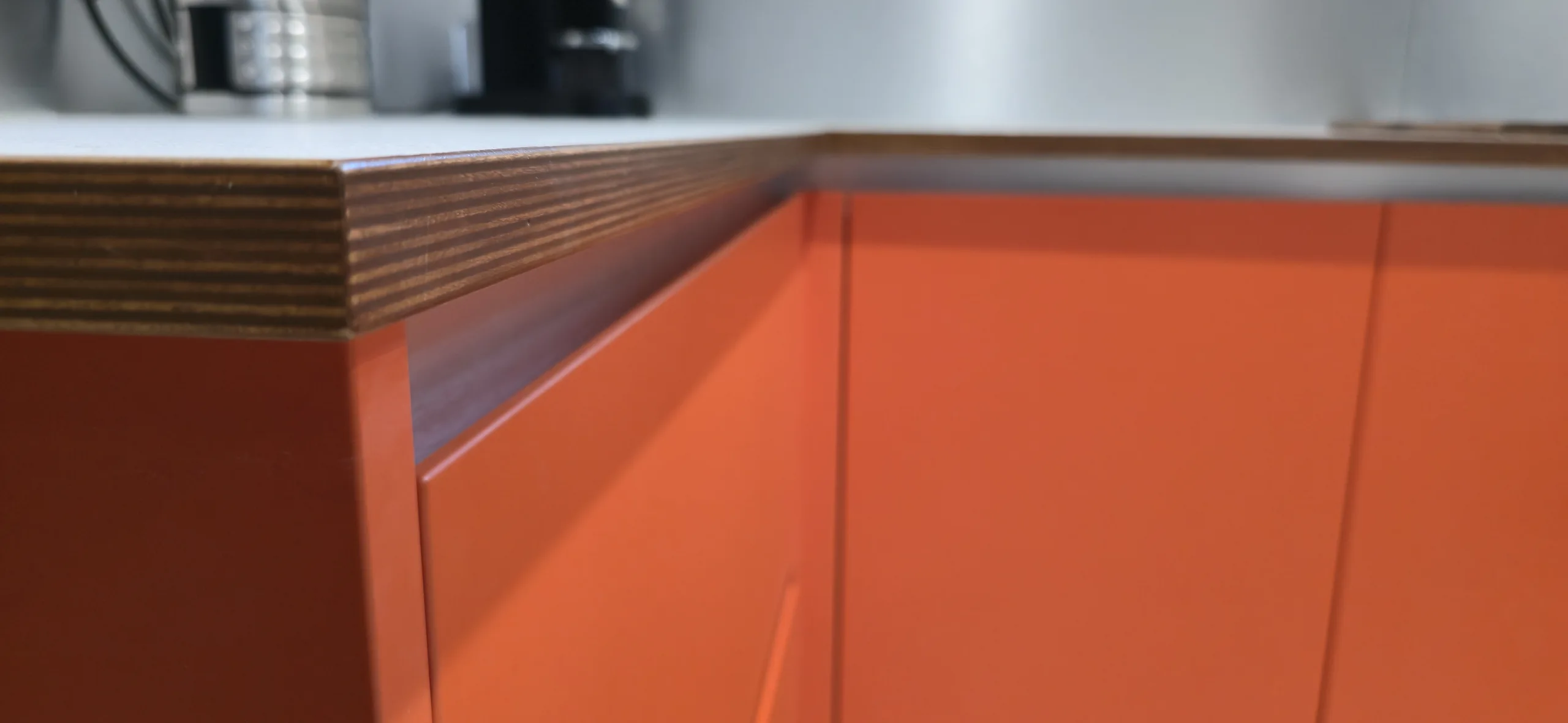
Plywood can sit within contemporary or traditional kitchen designs. Its layered edges may be expressed as a feature, or the board can sit beneath a different surface treatment. The fronts, handles, worktop and layout often have more influence on the visible style than the cabinet core alone.
Review physical samples before making a choice. Check colour, texture, edge treatment and how a proposed finish looks alongside the other materials in your room.
Cons and Limitations of a Plywood Kitchen
The most useful concerns to consider are moisture exposure, the protection of faces and edges, the actual board quality, and the design of shelves and cabinets. These are specification questions, rather than reasons to assume every plywood kitchen will fail.
Susceptibility to moisture
Moisture resistance varies between plywood products. A durable glue bond does not make the wood itself waterproof. Persistent leaks, standing water or exposed cut edges can damage a panel, so areas around sinks, dishwashers and plumbing deserve particular attention.
Ask which board is proposed, how edges and cut-outs will be protected, and what care is required. Solid wood also responds to moisture; it should not be presented as unaffected by water in comparison.
Sealing, finish and maintenance requirements
Exposed plywood needs an appropriate finish for its use, while veneered, painted and laminated surfaces have their own protection and repair requirements. The maintenance schedule should follow the chosen system. There is no single rule that every finished plywood kitchen needs regular resealing.
Check damaged coatings, edges and joints promptly, and investigate leaks rather than repeatedly wiping away their effects. If veneer layers begin to separate, ask the maker to assess the cause and repair options.
Warping, bowing and shelf support
Plywood’s layered construction helps with stability, but long or poorly supported shelves can still deflect under load. Moisture exposure and an unsuitable board specification can also affect performance.
The answer is to design the furniture around its use: suitable board thickness, sensible spans, appropriate supports and compatible fixings. Ask the maker how the proposed construction accommodates your storage requirements.
Factors to Consider When Choosing a Plywood Kitchen
Quality of the plywood
Thickness alone does not define quality. Ask about the species and construction of the panel, its grade, bonding specification, surface quality and suitability for the intended use. Birch and softwood plywood are different products; the finish may also require a particular face grade.
WISA’s guide to birch plywood explains how surface grades can suit different finishes. It is product guidance, not evidence that every plywood kitchen uses that manufacturer’s boards.
Type of finish
Compare the complete finish specification, including faces, exposed edges, internal surfaces and any cut-outs. Timber veneer offers a wood surface over the core; paint changes the colour and appearance; laminate provides another finished surface option. Their costs and care requirements depend on the particular products and application.
Where useful, agree a finished sample, including an edge or joint, to answer the material questions that drawings or photographs cannot resolve. Agree how the surface should be cleaned and what repair or replacement options are available if it is damaged.
Professional installation
Accurate fitting matters whichever cabinet material you choose. Units need to be level and securely fixed, doors and drawers adjusted, and service openings properly finished. Discuss who is responsible for fitting, plumbing connections and any worktop or edge sealing.
If installation is included, check its scope. If you appoint a separate fitter, make sure they receive the cabinet and finish information needed to complete the work correctly.
- Cabinet constructionIdentify the plywood species, grade and thickness specified for the cabinet boxes.
- Visible finishCompare the face, edge and joint samples with the appearance you want.
- Storage and supportAgree shelf spans, loads and suitable fittings around what you will store.
- Fitting and careConfirm the fitting responsibilities and care instructions for the selected finish.
Balancing the Pros and Cons
Plywood can be a worthwhile choice when you value the construction, finish options and flexibility it offers. The limitations become easier to assess once the proposal explains the board, moisture protection, shelf support, hardware and fitting.
Making an informed decision for your home
Start with your room, storage needs, preferred appearance and available budget. Then compare the finished kitchen specifications, rather than deciding from the material name alone.
Before committing, ask which parts are plywood, what finish and edge protection will be used, how heavy storage is supported, what installation includes, and how the kitchen can be maintained. Clear answers help you judge whether a particular proposal suits your home.
Questions about plywood kitchen construction
Does every part of a plywood kitchen need a visible wood finish?
No. The plywood cabinet construction can be combined with real wood veneer, painted fronts or a decorative surface such as FENIX. Confirm the cabinet core and visible finish separately.
Can premium veneered MDF be used alongside plywood?
Yes. High-quality real-wood-veneered MDF is a premium door option alongside plywood carcases. It serves a different role from the structural cabinet boxes.
Does plywood need the same care with every finish?
No. Cleaning and maintenance should follow the specified clear coating, veneer, paint or laminate system. The exposed edges and any service cut-outs form part of that specification.
Is plywood right for your kitchen?
The board, finish, storage and installation need to work as one specification. Explore our plywood kitchen approach and completed projects to see how those choices come together.

Plywood kitchens, built around your room
See construction and finish options, practical storage and real kitchens made in our Wakefield workshop.