Plywood kitchen cabinets: construction, interiors and finish details
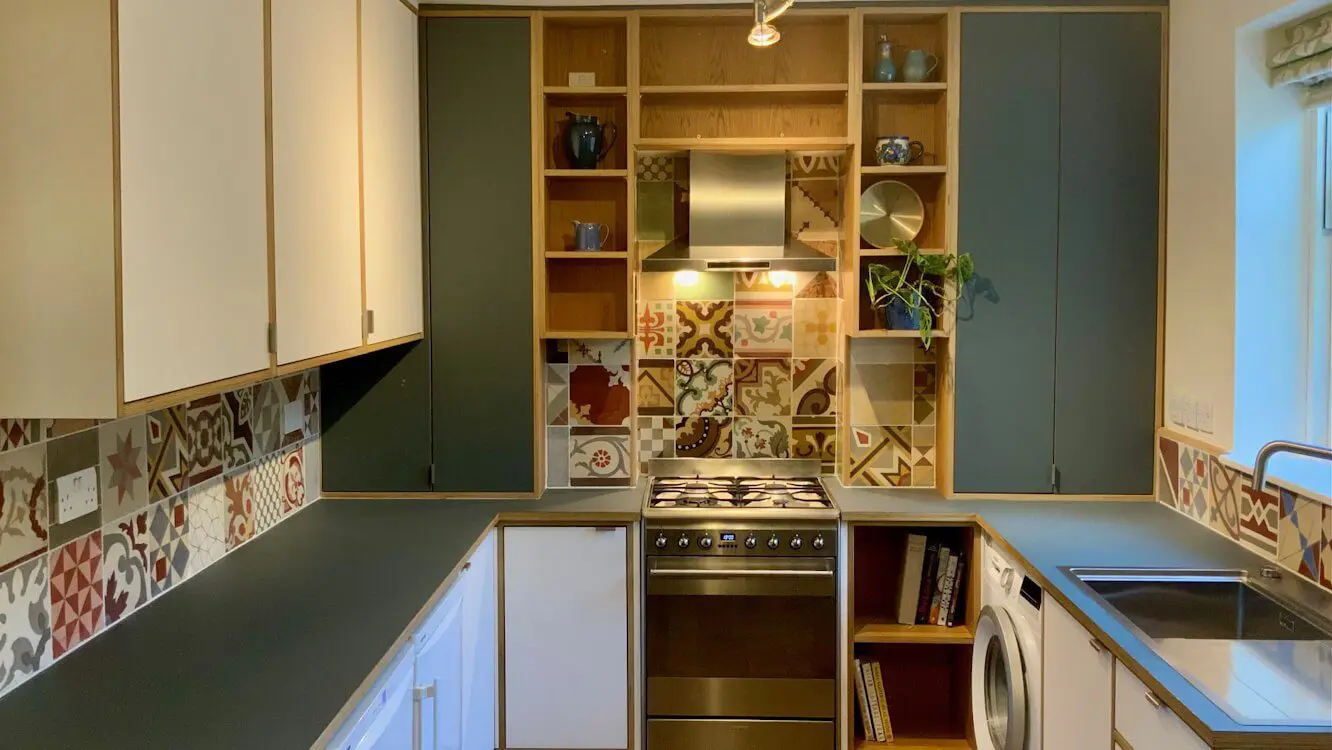
High-quality plywood gives a bespoke kitchen a strong construction material, attractive interiors and a distinctive layered edge. The benefit becomes clearer when you look beyond the closed doors: which panels form the cabinet, how the drawers are made and how the visible surfaces are finished.
At JS DECO, quality plywood cabinetry is a premium starting point. This guide helps you read a cabinet specification and recognise the details worth discussing, whether you want exposed timber or a matt, coloured or veneered front.
Start with what the cabinet is made from
Plywood consists of bonded timber veneers, commonly arranged with the grain of adjacent layers crossing. Quality birch plywood offers useful strength and stiffness for furniture while keeping a recognisable timber character. The actual panel grade, thickness, joints and cabinet design still matter: “plywood kitchen” should describe a specification, rather than just a visible edge.
WISA’s birch plywood guidance explains the material’s furniture applications and differences in surface grades. It is a useful manufacturer reference for understanding plywood, not a claim that every JS DECO project uses that brand.
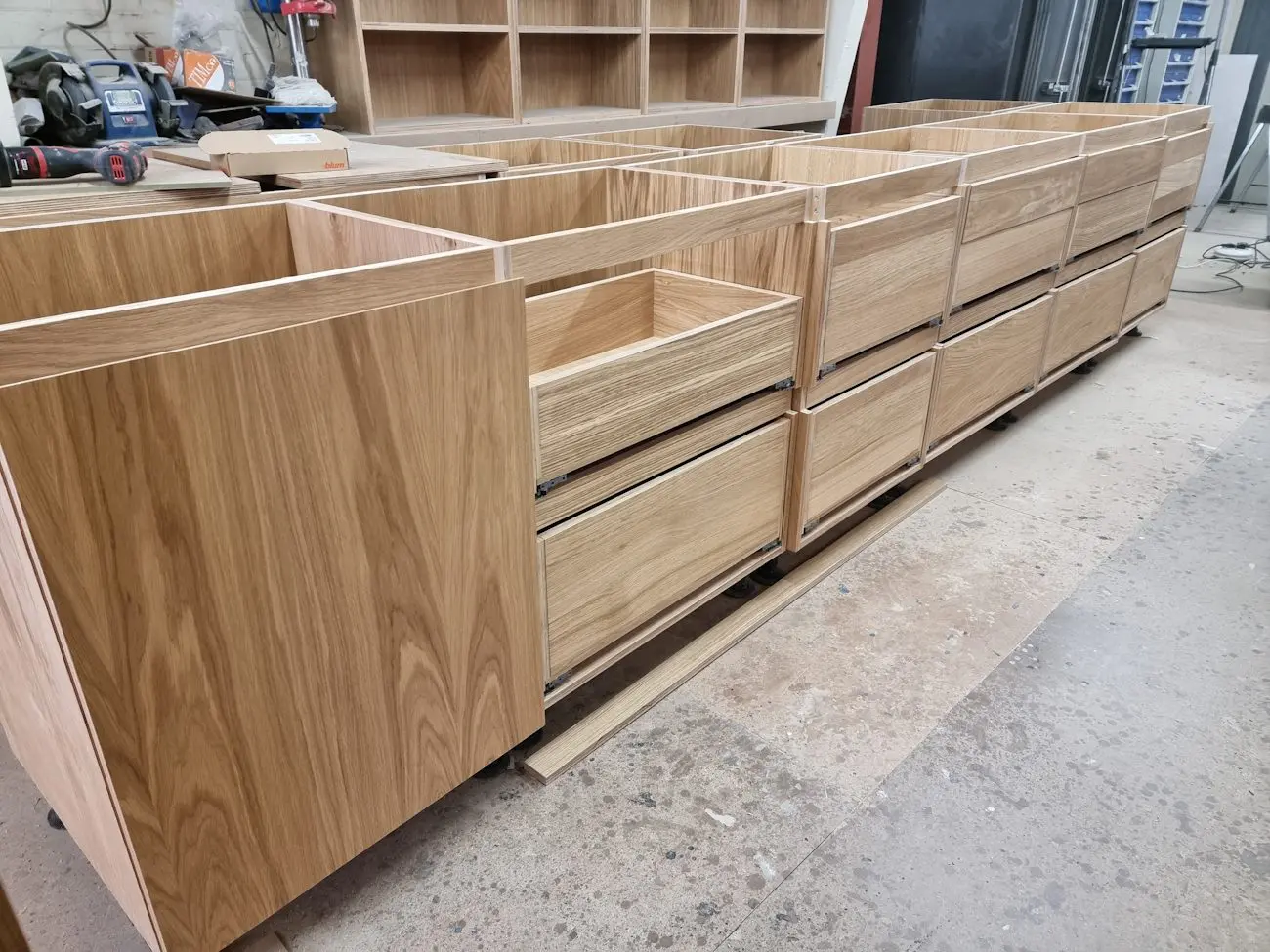
The West Yorkshire chef’s kitchen uses 18 mm oak-veneered plywood for the majority of its cabinetry, with satin lacquer and selected FENIX fronts. Workshop photography makes the cabinet panels and internal arrangement visible before installation.
Give the interiors the same attention as the fronts
Cabinet interiors are part of the furniture you use every day. Consider shelf spans, supports, drawer depth and the equipment each unit will hold. Strong panels work alongside correctly specified hardware and thoughtful proportions; the material name alone cannot establish a shelf or drawer load.
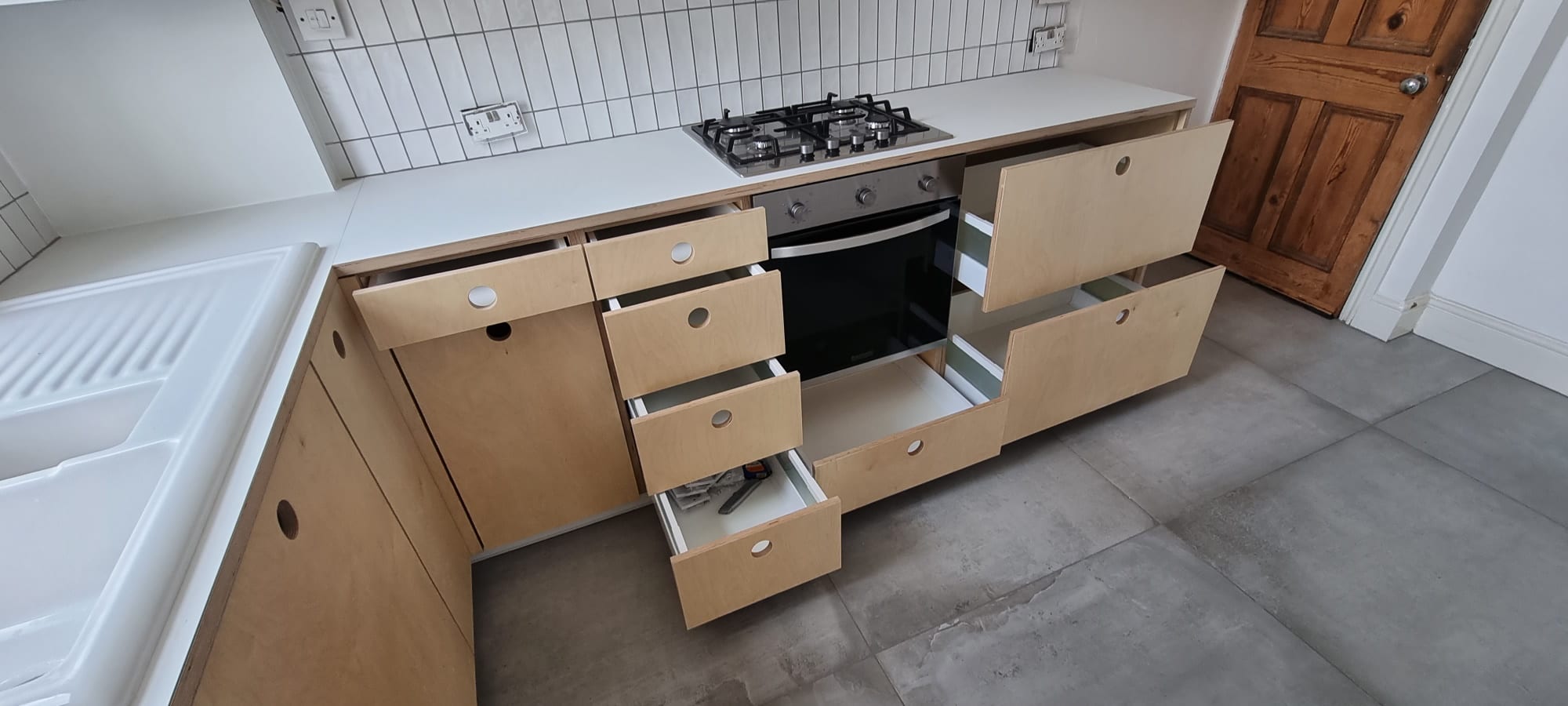
A shallow drawer can keep utensils in view, while a deeper one accommodates larger cookware. The best arrangement follows your contents and preparation areas. At Cawthorne, wide drawers and narrow pull-outs were developed around the hob, with separate drawers shaped around the sink plumbing.
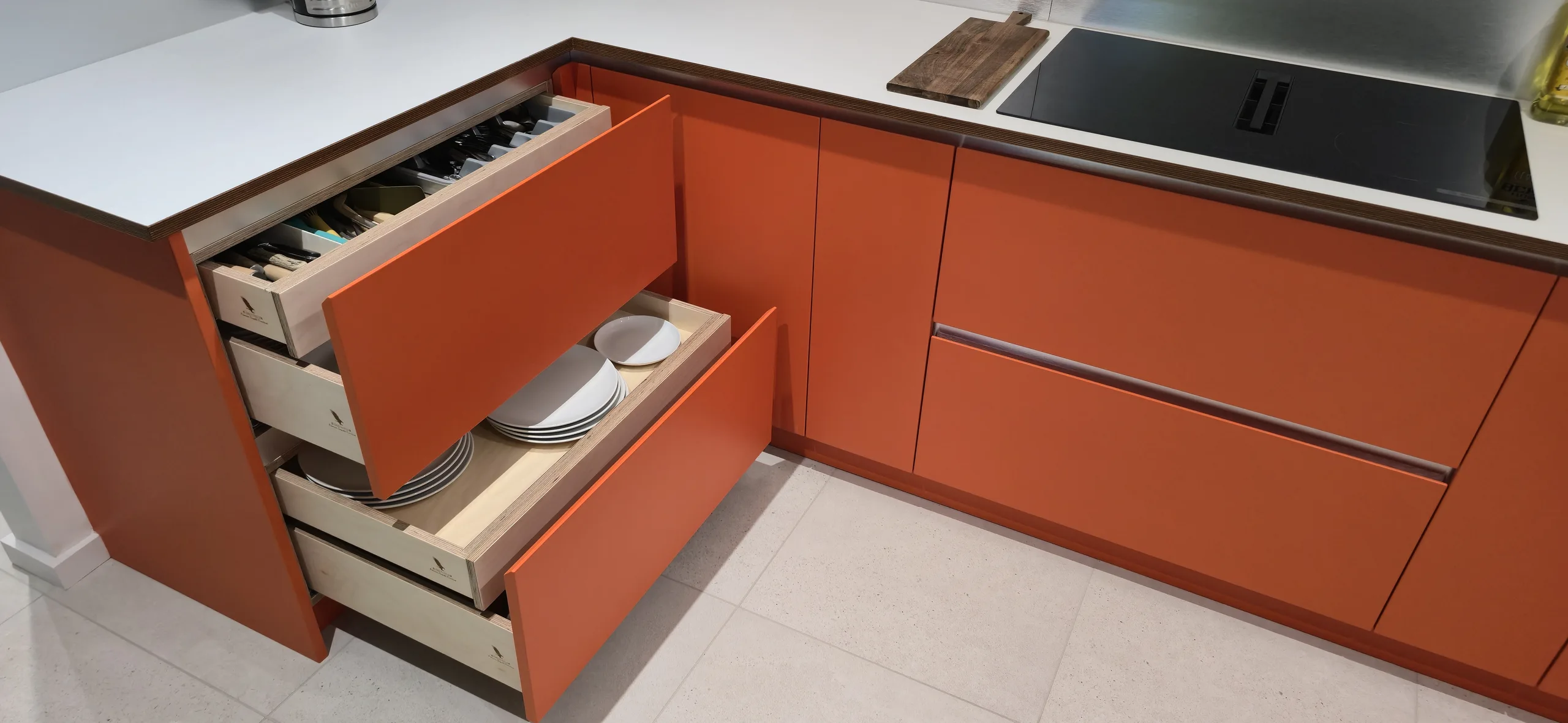
Our kitchen storage guide explores these choices in more detail. Confirm the drawer hardware and its specified load class for your project, together with the cabinet construction that supports it.
Choose the front finish and edge treatment separately
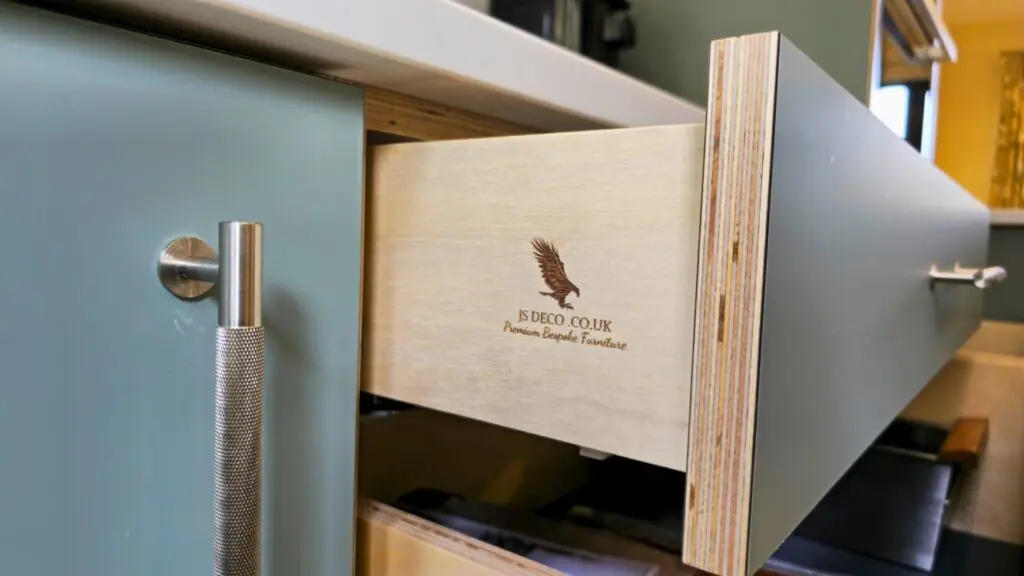
Plywood cabinetry can support several appearances. A laminate front can provide colour and a consistent surface; real wood veneer brings grain; an exposed plywood edge makes the layered construction a visible detail. A plywood kitchen does not need to look rustic or use bare timber throughout.
- Visible plywoodAgree which edges and interiors will be exposed and how they will be finished. These details can become part of the kitchen’s character.
- Laminate frontsCoordinate the laminate, edge detail and cabinet interior. FENIX kitchen finishes show one premium approach to matt colour.
- Real wood veneerChoose the timber appearance and discuss grain planning across the fronts. High-quality veneered MDF can be a deliberate door-only option with plywood carcases.
- Painted frontsDevelop the colour and door detail around the room. Historical projects such as Cawthorne use painted MDF fronts with birch plywood cabinets.
We favour quality plywood for cabinetry and avoid MFC in our preferred specification. The door material has its own job: specifying high-quality veneered MDF for doors does not mean substituting MDF for the cabinet boxes. See the grain-matching guide when a coordinated timber elevation is important.
Finish the furniture for kitchen use
The panel, coating and edge details need to be considered together around sinks, appliances and other areas exposed to spills or humidity. Quality plywood is a strong foundation for kitchen furniture, but it is not automatically waterproof. The agreed finish protects the timber surface and determines its care routine.
Clear spills promptly, keep leaks from remaining unnoticed and follow the instructions for the supplied finish. Lacquer and natural oil have different maintenance needs; our plywood furniture care guide explains the distinction. Avoid assuming that every timber surface should be re-oiled.
Compare the complete cabinet specification
- Panels and constructionIdentify the cabinet sides, shelves, backs and drawer boxes, with the intended grade, thickness and assembly details.
- Surface and edge finishConfirm the visible veneer or laminate, interior finish, exposed edges and detailing around wet areas.
- Hardware and contentsMatch hinges, runners, organisers and shelf supports to the intended use and actual cabinet dimensions.
- Sourcing and scopeCheck documentation for the supplied panel, then compare manufacture, delivery, fitting and appliance provisions on the same basis.
Responsible sourcing, a useful design and suitable care all belong in the value discussion. Our sustainable material specification guide helps assess the evidence. Plywood’s premium value comes from the quality of the actual furniture: its construction, useful interiors and carefully finished details.
Frequently asked questions
Does plywood need to be visible for it to be worthwhile?
No. It can form the cabinet construction behind coloured or veneered fronts. Visible edges and interiors are additional design choices, rather than the only reason to specify it.
Can plywood cabinets have veneered MDF doors?
Yes. High-quality real-wood-veneered MDF is a door-only option alongside plywood carcases. The quotation should distinguish the cabinet core, door substrate, veneer and finish.
Are all plywood cabinets the same strength?
The panel grade, thickness, joints, dimensions and hardware affect the finished cabinet. Compare the actual specification and intended storage, rather than the material name alone.
Which details matter near a sink?
Consider the supplied panel, coating, edges, joints and cut-outs together with access to the plumbing. Follow the agreed care guidance and deal promptly with spills or leaks.
See how plywood becomes finished furniture
Use the cabinet specification to connect the construction you value with the kitchen appearance you want.
Explore bespoke plywood kitchens
Look at plywood construction, visible edge details and front finishes through completed JS DECO projects.
Explore plywood kitchens