Environmental Impact of Plywood: Understanding the Benefits of Plywood Kitchens
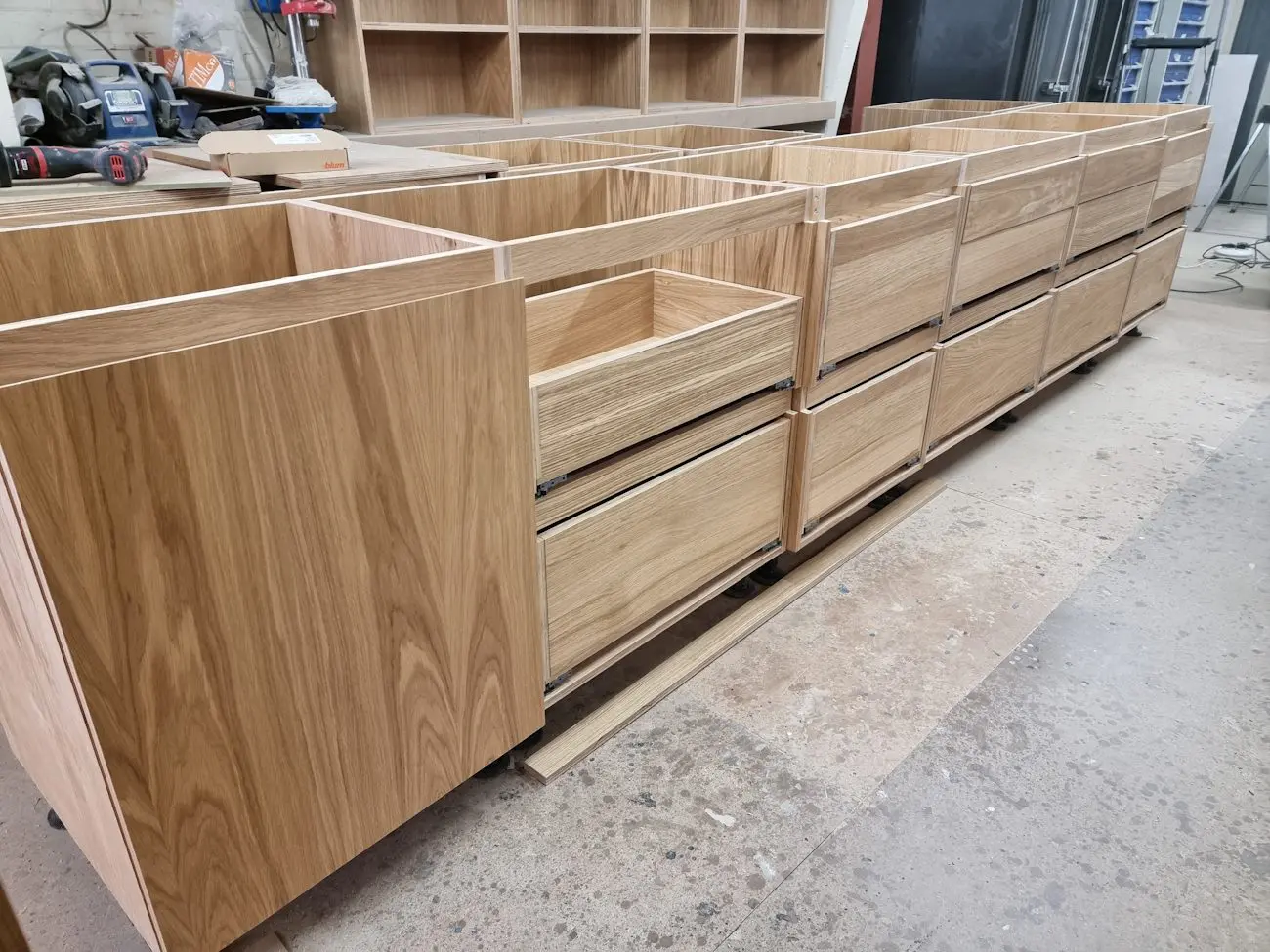
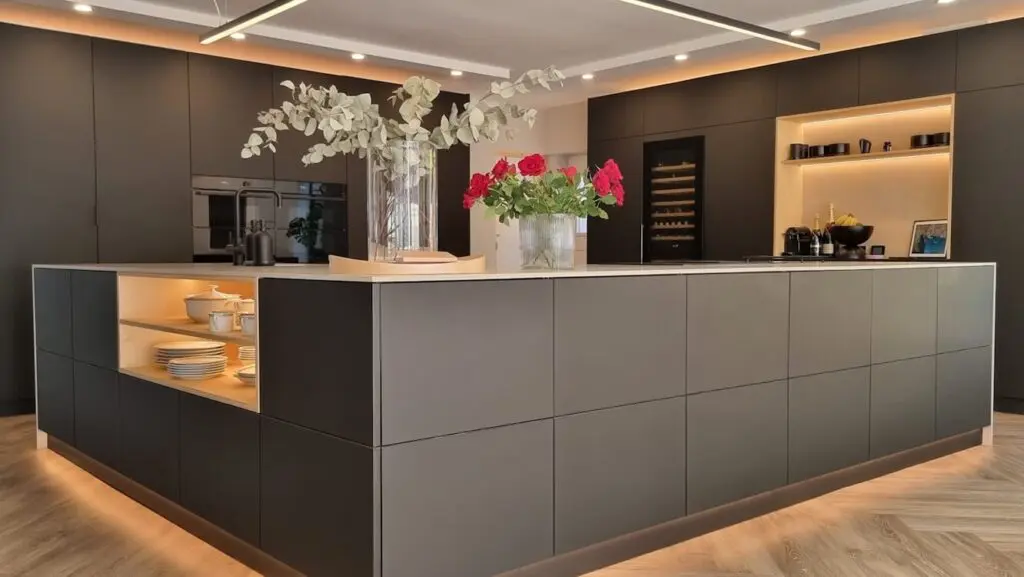
What makes a plywood kitchen a responsible choice? A practical guide to sourcing, certification, finishes and longer service life, illustrated with real JS DECO workshop and project photographs.
Sustainable Sourcing of Sustainable Plywood
Plywood can be sourced from responsibly managed forests, with certification schemes such as the Forest Stewardship Council (FSC) and the Programme for the Endorsement of Forest Certification (PEFC) providing a way to check sourcing claims. Responsible management considers forest regeneration, biodiversity and the people who depend on forests.
Wood is a renewable resource, but renewability depends on how forests are managed. Reforestation, appropriate harvesting and protection of ecosystems matter alongside the choice of timber species. Unsustainable logging can contribute to deforestation, soil erosion and habitat loss.
For a kitchen, ask which plywood will actually be supplied: the manufacturer, species, board grade and evidence of origin. The environmental impact should be considered across the whole life cycle, from sourcing and manufacture to use and eventual disposal. The word “plywood” alone does not establish sustainability.
Forest Management Certification
Forest management certification is an important part of assessing sustainable plywood. Check the claim for the particular product and its supply chain rather than assuming every board from a supplier is certified.
FSC labels distinguish between FSC 100%, FSC Mix and FSC Recycled. They do not all describe the same material content. FSC’s explanation of its labels is a useful starting point when comparing documentation.
What to ask: Which certification claim applies to the proposed board, and what supporting documents are available? Certification of a board should not be presented as certification of the entire finished kitchen unless that claim is separately supported. The project photographs in this guide illustrate our construction and design work; they are not certification evidence.
Reduced Environmental Impact and Carbon Footprint
The emissions associated with plywood production, including transport and processing, contribute to its total environmental footprint. Adhesives, energy use, finishes and the amount of material required all affect the result.
Wood stores biogenic carbon during its useful life, but this is not a reason to call every plywood kitchen carbon-neutral. Manufacturing emissions, forest management, transport, service life and end-of-life treatment need to be considered together. A lower-carbon comparison needs evidence for the products and applications being compared.
Where available, request a product-specific Environmental Product Declaration (EPD). This plywood EPD entry shows the type of product information available; it is an example, not a declaration for the boards in our photographed projects. Compare equivalent units, life-cycle stages and assumptions before drawing conclusions.
In kitchen planning, a practical priority is to avoid replacing sound furniture unnecessarily. Consider what can be retained, how the layout will remain useful and whether individual components can be serviced.
Renewable Resources
One potential environmental benefit of plywood is its wood-based construction. Plywood uses layers of veneer, usually arranged with alternating grain directions, to produce a stable sheet suitable for many furniture applications.
Different species and grades serve different purposes. Softwood plywood and birch plywood should not be treated as interchangeable specifications simply because both are renewable wood products. For bespoke kitchen cabinetry, strength, surface quality, fastening, moisture exposure and the intended finish all matter.
Material efficiency also depends on design and cutting. Ask how cabinet dimensions, sheet layouts and offcuts are considered during manufacture. Using an appropriate board well is more meaningful than assuming one material automatically creates less waste in every project.
Durability and Longevity
Plywood’s layered construction can provide strength and stability, helping cabinets withstand daily use when the board and joinery are correctly specified. Longevity also depends on the hinges, drawer runners, installation and protection of vulnerable edges.
A kitchen is exposed to water, heat and repeated movement. Plywood is not automatically waterproof: leaks, standing water and unprotected cut edges still need attention. Choose the board grade and surface treatment for the intended location, especially around sinks and appliances.
Designing for long service means considering the parts you may need to replace. Accessible hardware, practical storage and a layout that suits the household can help the kitchen remain useful rather than being replaced for avoidable functional problems.
Eco-Friendly Adhesives and Finishes
Adhesives and finishes are part of the specification of bespoke plywood kitchens, not an automatic environmental benefit of every plywood product. Ask for the selected board’s emissions information and the finish manufacturer’s technical guidance.
Terms such as “low-VOC”, “water-based” and “no added formaldehyde” describe particular properties; they should not be treated as interchangeable promises or proof of zero emissions. Assess the actual product, application and curing instructions rather than relying on an “eco-friendly” label alone.
Consider maintenance as well as appearance. An exposed plywood edge, a veneered surface and a laminate face need different care. Match the finish to the demands of the room and follow its cleaning instructions.
Design Flexibility and Cost-Effectiveness
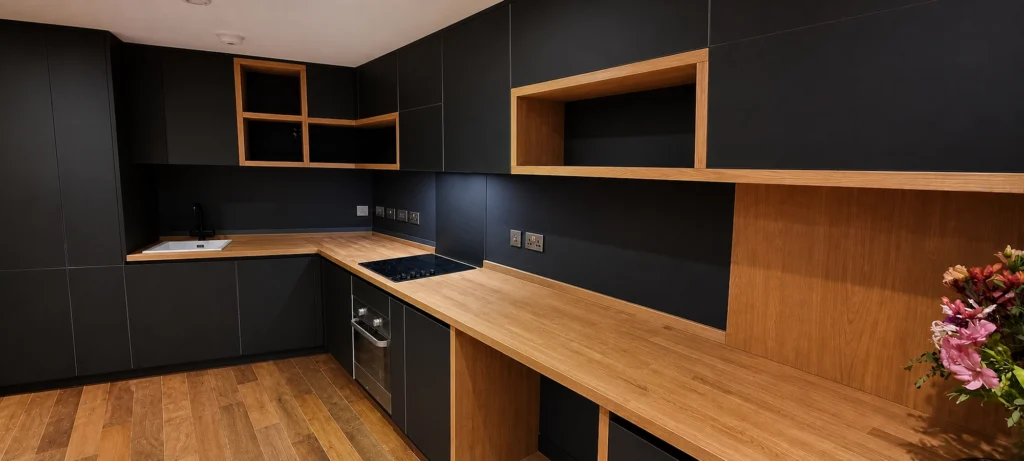
Plywood can be cut and assembled into a wide range of cabinet sizes and shapes, allowing furniture to suit the room rather than forcing the room around standard units. Veneers, laminates and selected finishes offer different visual treatments.
It can be a cost-effective alternative to some solid-wood constructions, but a bespoke plywood kitchen is not automatically a budget option. Board quality, fronts, hardware, worktops and manufacturing time all influence the quotation. Compare complete specifications and likely service needs rather than material names alone.
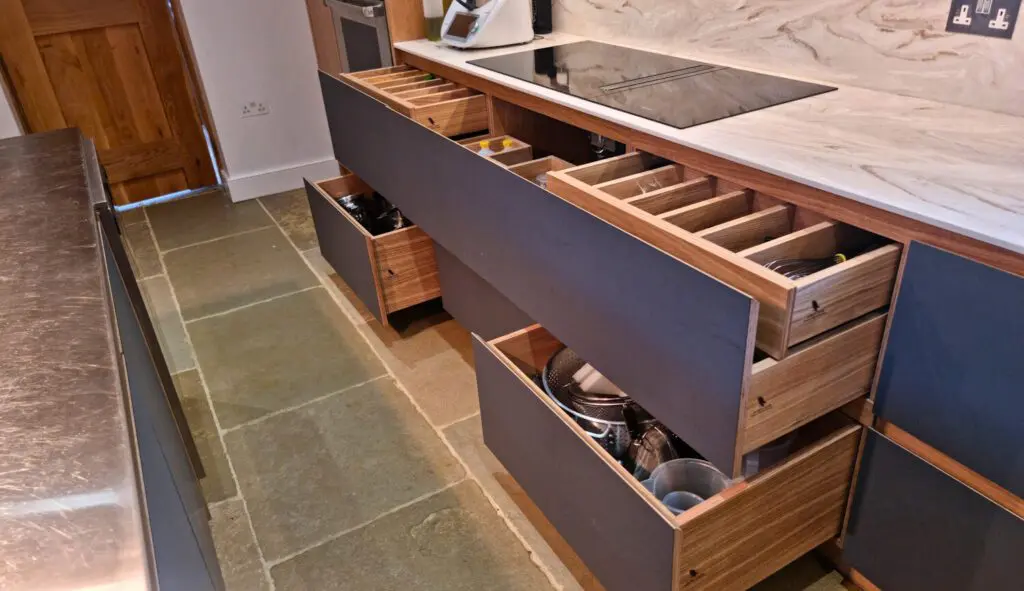
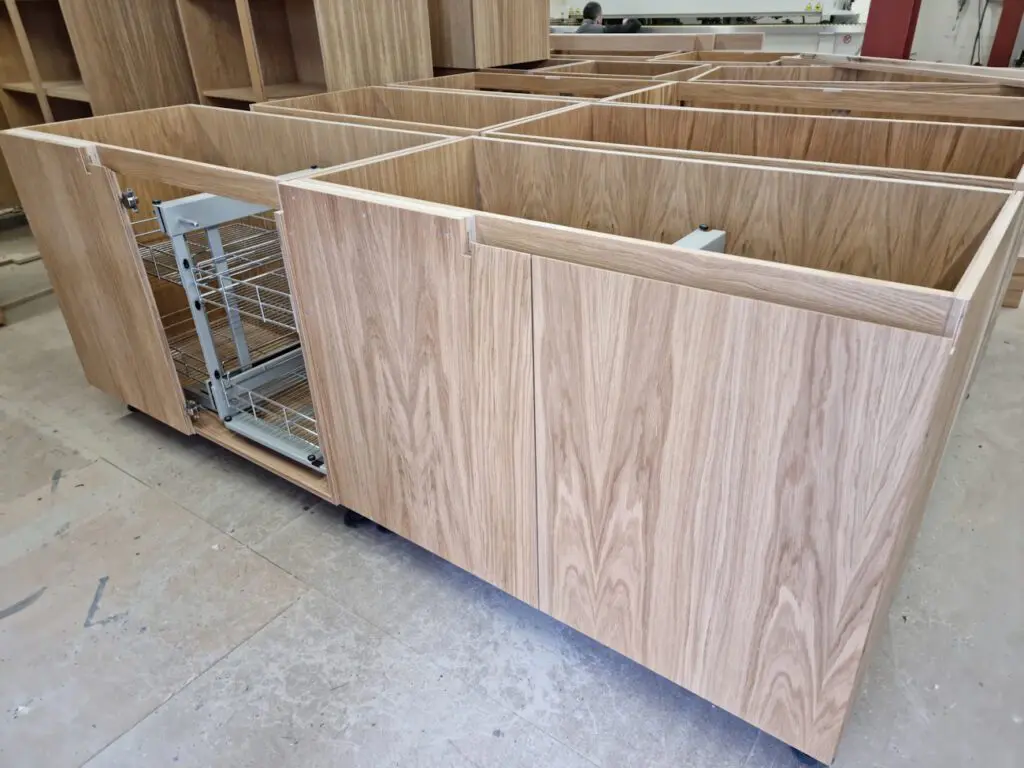
The workshop image below shows storage hardware fitted into oak-veneered cabinetry before installation. Planning the internals early helps make the available space useful; the linked case study shows the same project in more detail.
Maintenance and Repair
Proper maintenance and timely repair can extend the useful life of plywood furniture. Clean using the guidance for the chosen surface, dry spills promptly and investigate leaks rather than allowing moisture to reach edges and joints.
Attend to loose hinges, misaligned drawers and damaged seals early. Before replacing a cabinet, ask whether the affected fitting, front or surface can be repaired or replaced on its own. Some finishes can be renewed; others require a different repair approach.
Keep a record of the board, finish and hardware specification for future maintenance. If a kitchen eventually needs to be removed, explore reuse before disposal and check local acceptance requirements for bonded or laminated wood products. Do not assume all plywood can go into the same recycling stream.
Conclusion
Plywood kitchens can offer environmental benefits through responsible sourcing, appropriate material use and a long working life. Those benefits depend on the actual board and the finished kitchen’s specification, care and end-of-life options.
When comparing proposals, ask for sourcing evidence, product information, suitable finishes and a practical repair plan. Combine those answers with a layout you will want to keep. That is a stronger basis for an environmentally conscious choice than a general claim that one material is always greener.
Considering plywood for your kitchen?
The board specification, finish and cabinet construction all influence how a kitchen performs over time. Explore our plywood kitchens, then discuss sourcing documentation and the material choices available for your project.
Bespoke plywood kitchens
Look beyond the surface: explore construction, finishes and real kitchens made in our workshop.