Bespoke furniture as a long-term choice
Bespoke furniture can be a worthwhile long-term choice when its dimensions, storage and materials solve a problem that matters in your home. Its value is best assessed through the way you will use it and the specification you receive. A bespoke label does not guarantee a resale increase, a fixed lifespan or lower ownership cost in every project.
Identify the problem a standard arrangement leaves unresolved
An awkward wall, a long elevation or a particular storage requirement may justify furniture made for the room. Record what needs to fit, what will be stored and how the furniture will be reached. The benefit of precise dimensions is most meaningful when it creates usable space rather than merely fills a gap.
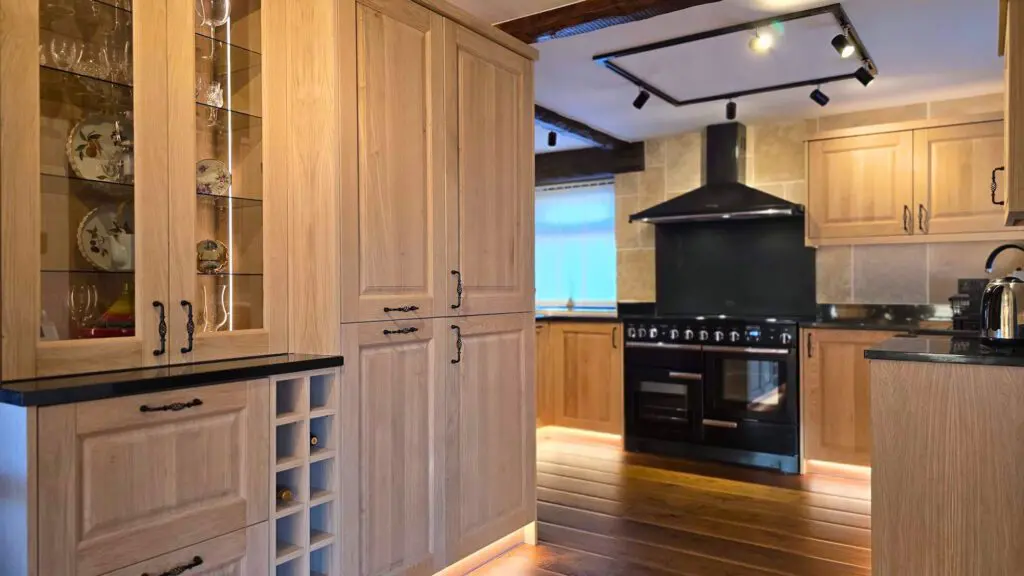
The Leeds oak kitchen coordinates a long wall run, island and concealed breakfast cabinet. Cabinet divisions and final sizing were developed for that room. The useful lesson is to name the fit and function you want before comparing prices.
Examine what is being made
Quality depends on the actual cabinet construction, fronts, finish, hardware and installation. High-quality plywood is our preferred premium cabinet material. A veneered appearance should identify the real wood veneer and substrate; high-quality veneered MDF is a door-only option alongside plywood cabinetry.
Ask for the specification rather than accepting 'luxury' as a substitute. The plywood kitchen page explains our preferred construction, while the wood selection guide considers the roles of visible timber, veneer and the board beneath them.

Consider the years of everyday use
Think about comfortable opening, useful storage, cleaning and access for adjustment. A design that suits your routine and a finish you understand are more relevant to ownership than a claim that a particular style will never date.
- Fit and usefulnessDoes the proposed arrangement solve the room's actual dimensions, storage and access needs?
- Specified qualityAre the construction, visible finishes and fittings named clearly enough to compare with another proposal?
- Care and maintenanceDo you understand the finish's cleaning requirements and how adjustments or future changes would be assessed?
- Personal valueWill you enjoy the appearance and use the features you are paying for over the period you expect to keep the furniture?
Treat resale value as uncertain
Well-considered fitted furniture may appeal to a future buyer, but an individual style, room layout and property market all affect that response. There is no reliable universal amount to add to a home's value because a kitchen or wardrobe is bespoke.
Choose primarily for the home you are creating and the time you expect to use it. The custom furniture selection guide helps translate that purpose into a brief without treating furniture as a guaranteed financial return.
Compare budgets on the same scope
Separate the cabinetry from appliances, worktops, delivery, installation and building work when comparing proposals. A figure that includes several of these cannot be compared directly with a furniture-only quotation. The cabinet count, drawers, materials, fittings and complexity all influence the project.
Agree which work is included and what remains provisional. Avoid relying on an old article's price range as a current quotation. The project-start guide explains the information that helps establish a suitable scope and next step.
Ask what supports the sustainability claim
Longer useful service is a reasonable design aim, but a bespoke product is not automatically lower-carbon or zero-waste. Consider documented sourcing, the selected materials, maintenance and how the furniture is manufactured. Local manufacture does not mean every material was locally harvested.
The sustainable home furniture guide explores those evidence-based choices. A credible decision connects the furniture's practical value with the information available for its actual specification.
Questions about long-term value
Will bespoke furniture definitely increase my property's value?
No fixed resale gain can be promised. Judge the specification, fit and usefulness for your own home.
Does a higher price always mean better furniture?
No. Compare what is included and the named construction, finish and fittings rather than price or a luxury label alone.
What should I bring to the first discussion?
Room photographs or drawings, the problems you want to solve, preferred details and a realistic budget with its intended scope.
Decide whether bespoke is right for your project
Read how bespoke furniture works
Understand the design, specification and manufacture process before assessing the investment in your own furniture.
Read how bespoke furniture works