
Smart kitchen planning: useful technology and well-designed cabinetry
A smart kitchen is most useful when a feature makes a real task easier. Connected controls, lighting settings and assisted-opening furniture can contribute, but a well-planned layout and good cabinet construction remain the foundation. Begin with the tasks you want to improve and check the selected product's actual functions before building the kitchen around them.
Separate integration from connection
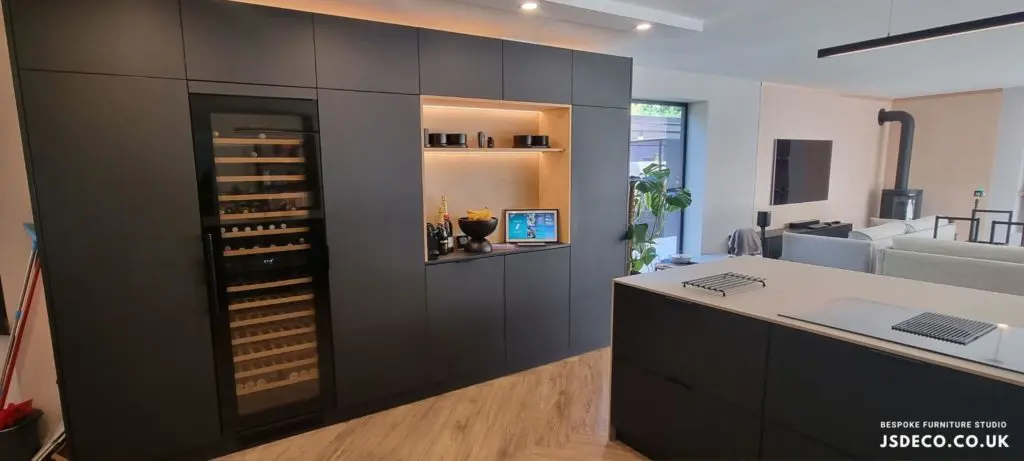
An integrated appliance fits within the furniture or cabinet elevation. A connected appliance offers particular network or app functions. One does not establish the other. A kitchen can be well integrated with conventional controls, and a connected appliance still needs a suitable housing and installation.
In Manchester, the appliance wall brings several functions into the tall cabinetry. Its value as an example is the arrangement of the housings and fronts. The exact capabilities of a new appliance should come from its manufacturer's current specification.
The Bertazzoni kitchen-planning article considers the relationship between appliance choices and cabinetry. Our appliance planning page explains their place within the wider project.
Start with a useful function
Some models offer remote monitoring, cooking programmes or connected controls; availability and operation vary. Ask what the feature does in your routine, what equipment or service it depends on, and how the appliance works without the app. Avoid buying a function only because it appears in a general 'future kitchen' description.
- Daily benefitIdentify the actual task: checking a programme, selecting a lighting scene or opening a particular drawer more conveniently.
- CompatibilityConfirm the chosen appliance, app, network and any other required equipment from the manufacturer's documentation.
- Ordinary controlCheck the accessible manual controls and what happens if the network or linked service is unavailable.
- Future accessPlan access to power supplies, connections and components that may need servicing, without dismantling unrelated cabinetry.
Resolve appliance dimensions and services early
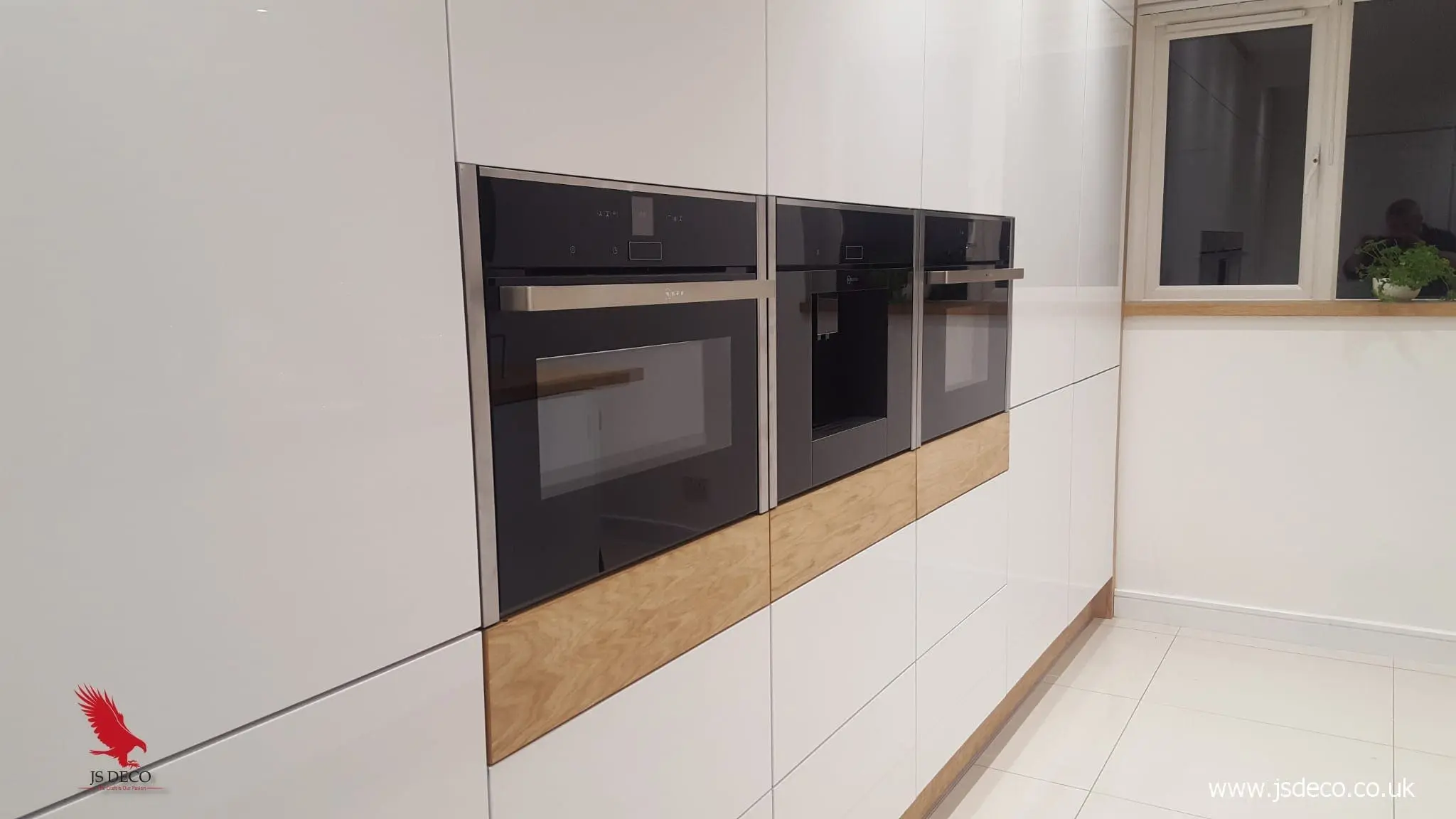
Cabinet cut-outs, ventilation, door swings and clearances come from the chosen models. Specify these before manufacture, including any service access behind or beside the housing. A product described as compact or integrated still has exact installation requirements.
The Halifax kitchen groups cooking and coffee-making appliances within the tall furniture. The arrangement shows how cooking and coffee-making functions can be grouped in one elevation. For connected features, check the specifications of the appliance models you select.
Discuss the electrical and plumbing requirements with the appropriate trades as part of the overall project. Furniture design provides the housing and access; it does not replace the installation instructions or specialist connections.
Give lighting a practical arrangement
Task lighting should illuminate working surfaces. Dining and evening light can be controlled separately where this suits the room. Dimming or scene selection may be useful, with the fittings, drivers and controls specified as a compatible system.
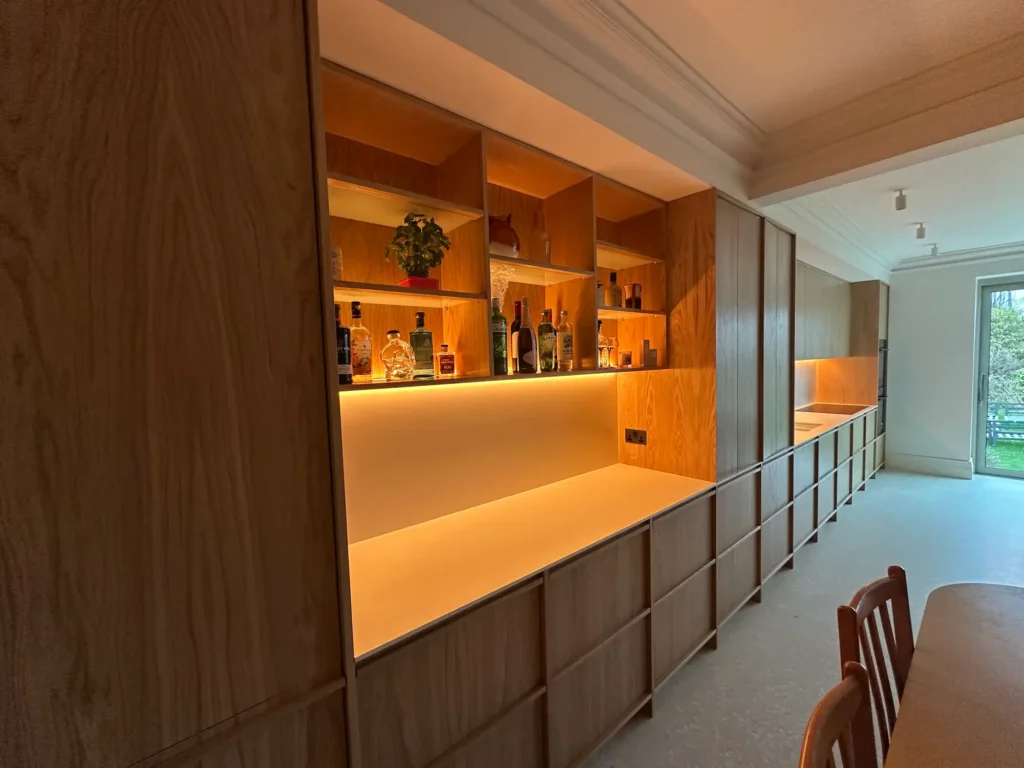
At the Leeds oak kitchen, lighting beneath the wall cupboards makes the working run visible while reinforcing its lines. The project photograph demonstrates the lighting position, not an app or automation capability.
Choose cabinet hardware for the exact job
Soft closing, mechanical push-to-open and electrical opening assistance are distinct hardware functions. They can improve particular doors and drawers without making the whole kitchen internet-connected. Check the mechanism, access and appropriate fitting load with the cabinet specification.
The Blum guide and storage planning article are useful when the question is everyday furniture access rather than connected appliances. High-quality plywood cabinetry provides our preferred premium construction behind those fittings and visible finishes.
Judge energy and sustainability claims carefully
Connected controls do not automatically reduce energy use. Compare the selected appliance's documented performance and the way you will operate it. A feature that is rarely used may add complexity without serving the room.
Keep longer-term maintenance and the durability of the furniture in the discussion. The sustainable material guide considers the supporting evidence for material choices; a technology label alone does not establish a lower environmental impact.
Questions about smart kitchen features
Does an integrated kitchen need connected appliances?
No. Integration concerns the relationship to the furniture. Connected functions are separate choices that depend on the appliance model.
Is push-to-open the same as electrical opening?
No. Mechanical opening and electrical assistance work differently. Choose the appropriate mechanism and check any power and access requirements.
Should I choose appliances after the cabinets are made?
The relevant models and installation requirements need to be confirmed before their housings and openings are manufactured.
Plan appliances within the complete kitchen

Explore appliance planning
Consider appliance choices, housings, access and services alongside the cabinetry rather than as a separate technology package.
Explore appliance planning