
Why high-quality plywood is worth choosing for a bespoke kitchen
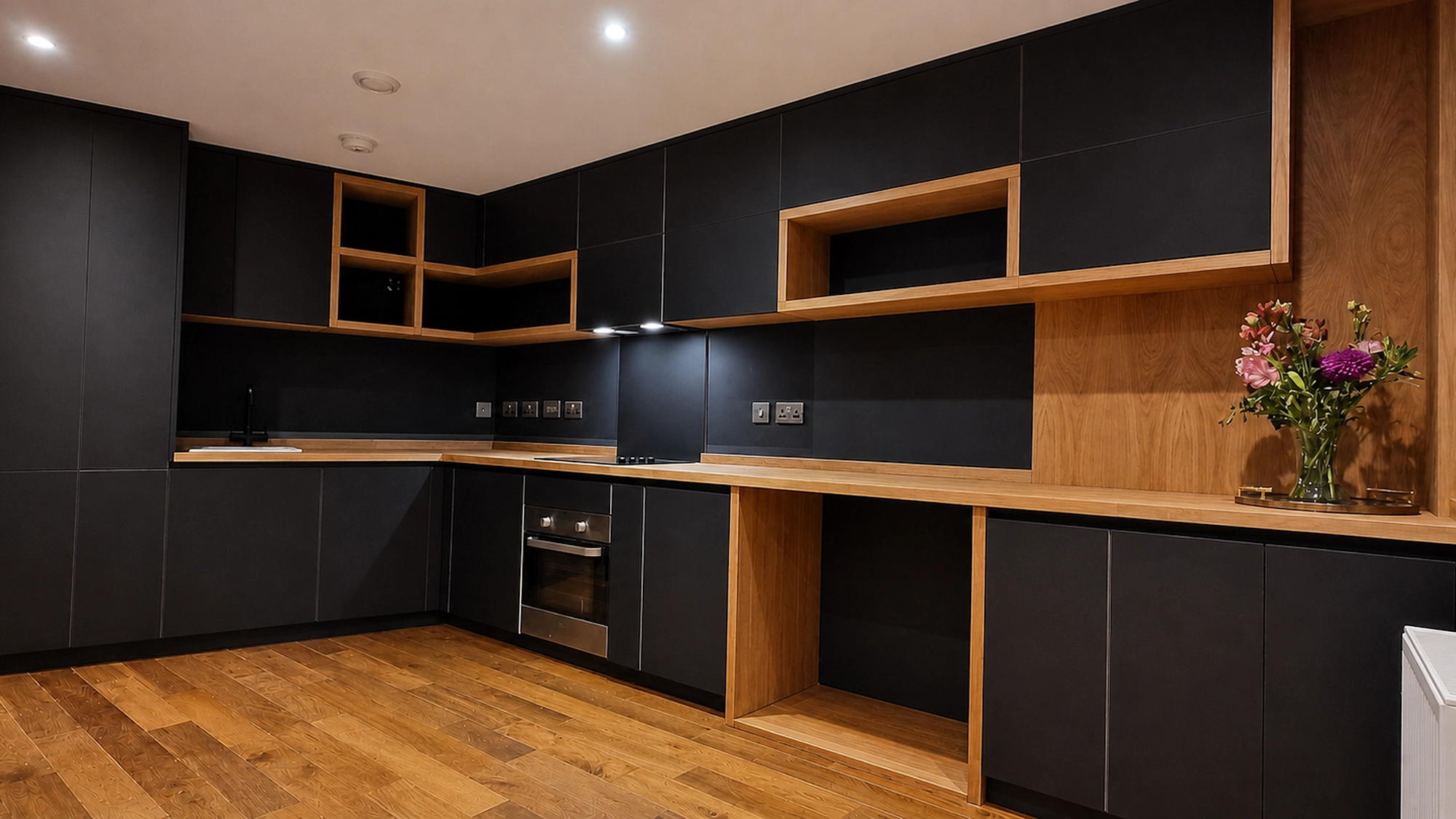
High-quality plywood is a core part of JS DECO’s premium kitchen construction. Its cross-bonded wood veneers provide strength and stiffness, while carefully finished interiors and layered edges bring the quality of the cabinet into view. A well-made kitchen should feel considered when you open a door or drawer, as well as when you look across the room.
We favour quality plywood for cabinet construction and avoid MFC in our preferred specification. High-quality real-wood-veneered MDF can be a deliberate premium choice for doors, paired with plywood cabinet boxes; it is not a substitute for that cabinet construction. This guide explains the benefits to look for, with examples from JS DECO projects. Our plywood, MDF and MFC guide covers the material differences in more detail.
Why the cabinet core matters as much as the fronts
Plywood is built from bonded wood veneers, usually arranged with grain directions crossing between layers. That construction is central to its strength and stiffness. WISA’s birch plywood guidance explains these properties and dimensional accuracy for its products. The grade, thickness and quality of the supplied panel still matter: the name “plywood” alone does not describe a complete cabinet specification.
MFC is melamine-faced chipboard; MDF is made from wood fibres. A similar-looking decorative face does not make these cores the same as plywood. For doors, high-quality veneered MDF offers a smooth, accurately machined substrate beneath real wood veneer. The European Panel Federation’s kitchen-door guidance describes MDF’s machining and veneering applications. Door substrate, veneer selection, edge treatment and finish should be specified alongside the plywood carcases.
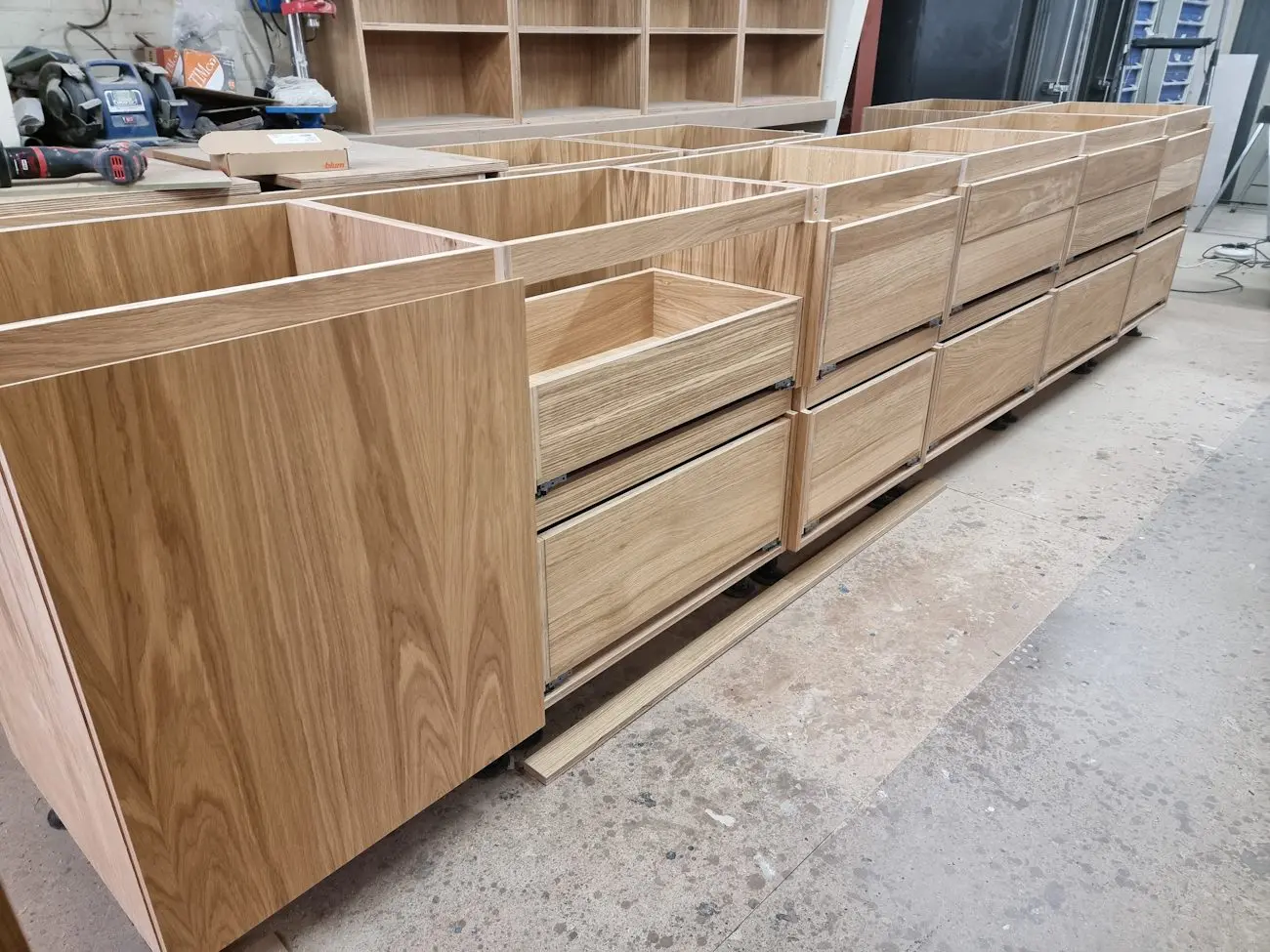
The chef’s kitchen project shows oak-veneered plywood cabinet manufacture as well as the finished room. The workshop photographs make the premium construction visible before the fronts are fitted: quality is carried through the cabinet, rather than confined to its outer face.
What premium plywood brings to the kitchen
- A strong cabinet foundationQuality cross-bonded plywood brings strength and stiffness to the cabinet core. Appropriate thickness, joints and back construction turn that panel into a well-made cabinet.
- Considered interiors and drawersPlywood cabinet interiors and drawer boxes carry the material quality through to everyday use. Coordinate their construction, divisions and runners with what the kitchen needs to store.
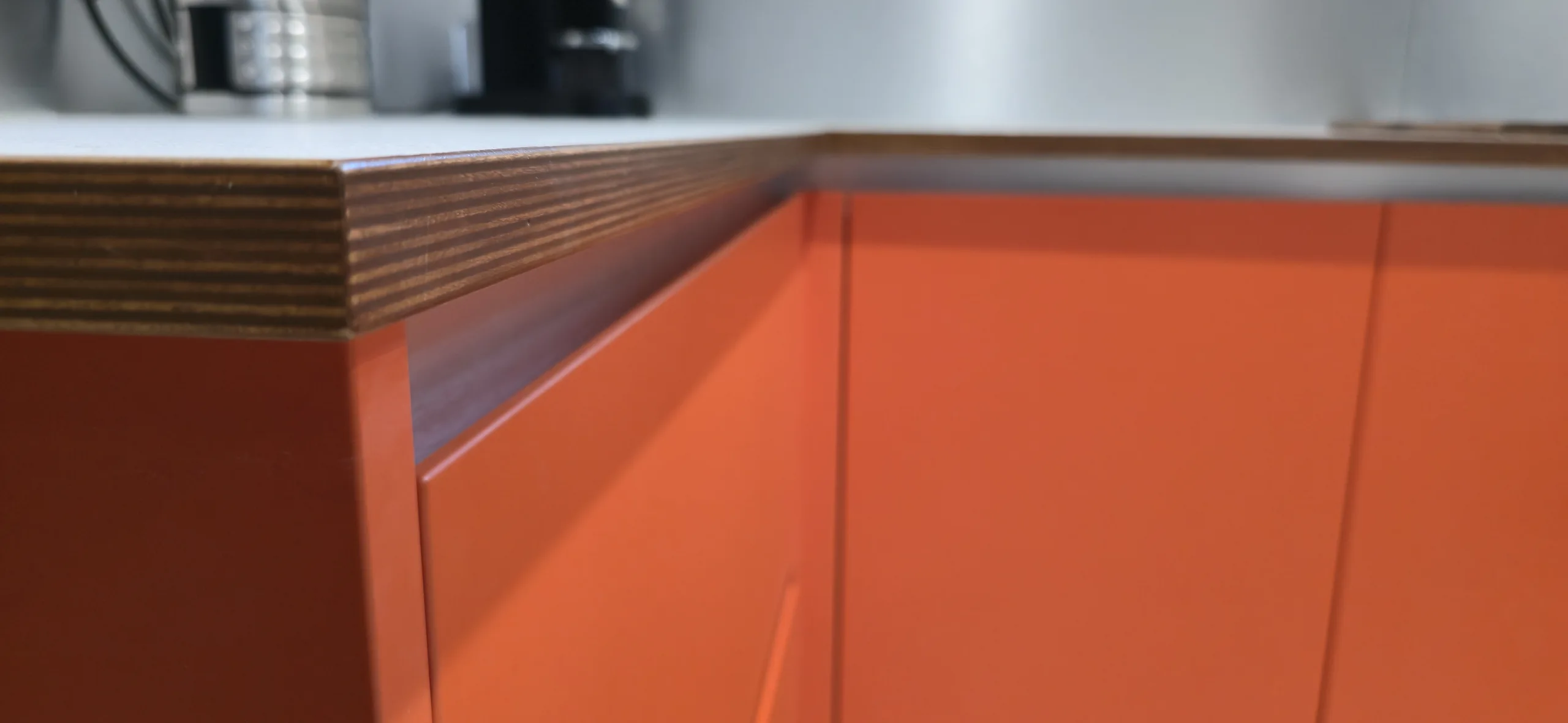
- A distinctive visible detailExposed layered edges and finished open shelves can make the construction part of the design. Carefully chosen edge treatments keep that detail intentional and consistent.
- Premium fronts over quality carcasesCombine plywood cabinets with suitable plywood-core fronts or high-quality real-wood-veneered MDF doors. Select the visible finish for the design while keeping the cabinet core clearly specified.
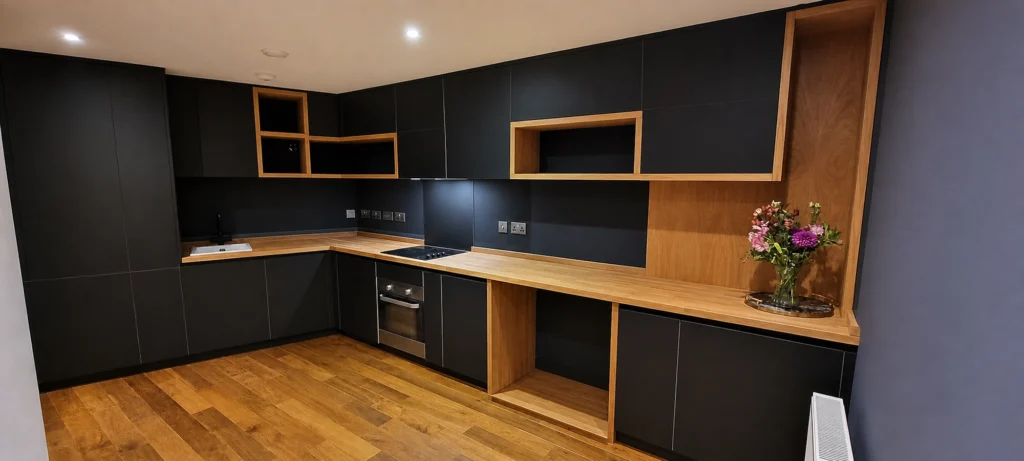
At Lambarde Square, birch plywood forms the cabinet boxes, drawer boxes and door cores, with dark FENIX on the fronts and solid oak worktops and shelves. The plywood provides the construction behind the finished appearance; the other materials add their own surface and design qualities.
Protect the finish and the construction
A premium plywood kitchen deserves a finish and edge detail suited to daily use. Choose the panel grade, coating and protection around joints, cut-outs and wet areas as part of the specification. Suitable protection and prompt cleaning of spills help preserve the furniture; plywood is not automatically waterproof.
A door needs its own appropriate substrate and finish. Where moisture-resistant MDF is specified for a painted door, MEDITE’s guidance for its MR product distinguishes humid-interior suitability from waterproofing. Protection remains important for doors as well as plywood cabinet boxes.
The Cawthorne kitchen uses birch plywood cabinets and drawers with painted moisture-resistant MDF fronts. That combination allowed Traffic Orange and Olive Green to be specified for the visible surfaces while retaining plywood internally.
Natural oils, lacquers, veneers and laminates need their own care routine. Agree the finish before manufacture, and follow the guidance for the supplied product. Our plywood furniture care guide explains the distinction between lacquered and oiled surfaces.
Make premium construction a considered long-term choice
The environmental case for a quality plywood kitchen starts with the actual material and a design worth keeping. Check the supplied panel’s timber sourcing, certification and technical information, then consider the finish, useful storage, maintenance and how the kitchen will serve the household over time.
For example, WISA-Birch’s product information provides technical and certification documents for that particular birch plywood. Use equivalent evidence for the panel actually specified in your kitchen; this example does not identify WISA as the supplier for every JS DECO project.
- Documented panel qualitySpecify the named panel or grade, suitable thickness and relevant sourcing information. These details make the quality of the proposed construction clear.
- A kitchen worth keepingInvest in a useful layout, well-made storage and a finish you want to maintain. Practical suitability supports the long-term value of the furniture.
- Thoughtful material planningCoordinate sheet sizes, cutting plans and visible grain before manufacture. Consider the material allowance alongside the appearance and construction you want.
- Verified product informationUse documentation for the actual board, adhesive and finish when assessing sourcing or emissions. Product evidence supports a credible environmental choice.
Our environmental guide to plywood kitchens explores these decisions further. Quality construction can support furniture you want to keep using; a specific lifespan or carbon saving still needs product-level evidence and a defined use scenario.
Understand what the premium specification includes
The investment in plywood is not just a change of surface colour. It is a choice about the material inside the cabinets, the quality of the interiors and the construction behind daily use. High-quality veneered MDF doors can complement that investment by providing the desired real-wood appearance over a suitable door substrate.
Compare cabinet sizes, plywood grade and thickness, backs, drawer boxes, door substrates, veneer or laminate, edge finishes, hardware and fitting scope. Plywood and MFC carcases represent different core constructions even when their fronts look similar. Our preferred specification is quality plywood cabinetry, coordinated with the right premium doors and a layout that works for the room.
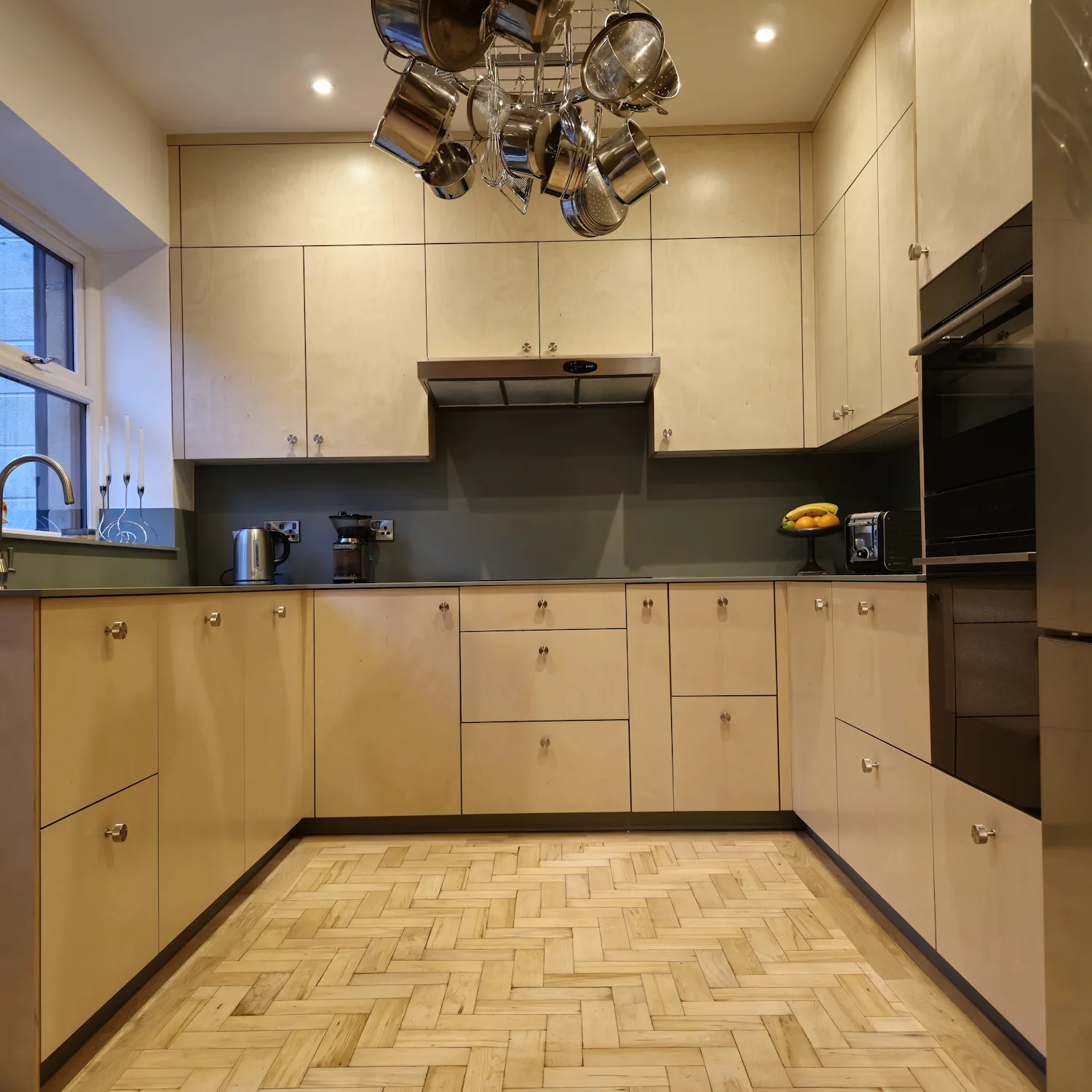
The principles also apply to fitted wardrobes and other furniture: identify which parts are structural, which are decorative, and what the piece must do. Kitchen cabinets remain the focus here. Use the material comparison guide when you need the broader differences between plywood, MDF and MFC.
Frequently asked questions
Why does JS DECO favour plywood over MFC for cabinets?
Quality plywood’s cross-bonded wood veneers bring strength and stiffness to the cabinet core, with interiors and layered edges that can become part of the design. We favour this premium construction and avoid MFC in our preferred specification. The panel grade, thickness and cabinet manufacture are important parts of that choice.
Can high-quality veneered MDF doors complement plywood cabinets?
Yes. High-quality MDF can provide a smooth, precisely machined door substrate beneath real wood veneer. Veneer selection, edge treatment and finish complete the door specification. It is a deliberate door option alongside plywood cabinet boxes, rather than a cheaper replacement for the cabinet core.
What supports the long-term value of a plywood kitchen?
Quality panels, sound cabinet manufacture, useful storage, suitable finishes and hardware, careful installation and appropriate maintenance work together. We specify the complete furniture rather than promise a fixed lifespan from the board name alone.
What should the premium quotation specify?
Look for the plywood components, grade and thickness; drawer construction; door substrate and veneer or laminate; visible-edge and wet-area finishes; hardware; and delivery and fitting scope. These details explain what you are investing in.
Choose premium construction inside and out
Explore how quality plywood cabinetry and carefully selected fronts can come together in a kitchen designed around your room and daily use.
Bespoke plywood kitchen furniture
Explore construction, finish choices and completed projects before developing your own specification.
Explore plywood kitchens