
Office furniture and employee comfort: plan the workstation as a whole
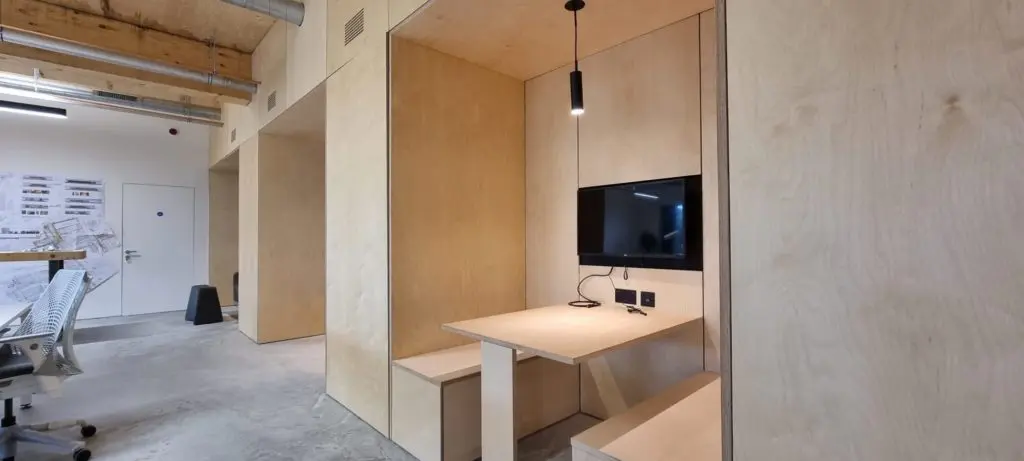
Comfortable office work depends on the complete workstation and the way it is used. Bespoke furniture can help provide suitable space, accessible storage and coordinated equipment positions, but a custom cabinet or desk is not a health or productivity guarantee. Begin with the users and tasks, then bring the findings into the furniture and room proposal.
Assess the workstation before specifying the joinery
Consider the actual equipment, work, user needs and surrounding conditions. In the UK, relevant DSE workstations need assessment; furniture purchasing does not replace that process. Refer to HSE's workstation assessment guidance for the applicable framework.
Any identified needs should be given to the designer or maker before dimensions are fixed. A workplace with shared desks may require different provision from one with a dedicated user and stable equipment.
Coordinate desks, seating and equipment
A fitted surface needs to work with the intended chair and equipment positions. Check usable depth, movement underneath, access and the relationship to storage. Avoid a desk arrangement that looks efficient on plan but leaves the user constrained by nearby drawers or an equipment cabinet.
Adjustable furniture or equipment may be needed for particular users or shared setups. Where it is part of the proposal, confirm its actual mechanism, space and services rather than assuming that bespoke manufacture supplies every adjustment automatically.
Bring the findings into the design brief
- User requirementsRecord the identified access or adjustment needs and who will review the proposed arrangement.
- Working equipmentConfirm screens, input devices and other equipment, including the usable surface they require.
- Storage accessPlace everyday items without obstructing seating, movement or open drawers and cupboards.
- Room conditionsConsider light, reflections, surrounding activity and the work routine alongside the furniture.
The small-business office guide addresses the wider project scope, including shared functions and fitting responsibilities.
Clarify the designer's and maker's roles
The designer or architect can coordinate the furniture with the office layout. The maker develops the specified cabinetry and dimensions. Relevant assessments and specialist services remain with the responsible parties; a finished interior photograph does not prove those requirements have been satisfied.
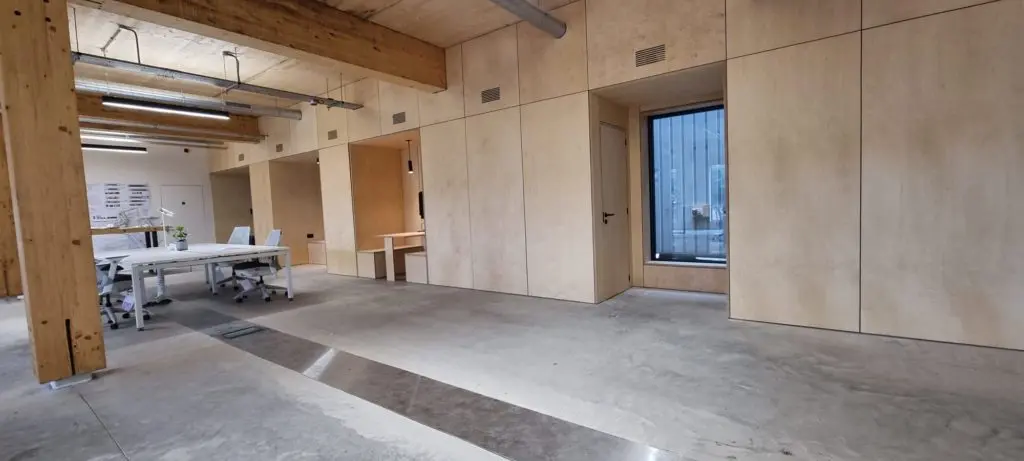
The CITU service wall is a real example of commercial joinery integrated with the building. Use it to discuss the relationship between fitted elements and the office, rather than copy its workstation dimensions for every user.
Specify quality and sustainability separately
High-quality plywood is our preferred premium cabinet material. Door finishes, working surfaces and fittings should be named separately. Real-wood-veneered MDF can be a premium option for doors only.
Material sourcing and environmental claims require their own evidence; a comfortable-looking workspace or natural finish is not proof of a lower environmental impact. The sustainable furniture guide considers that documentation. Maintenance and access for future equipment changes should also remain part of the brief.
Verify the completed arrangement in use
Review the furniture with its actual users and equipment after it is installed, and deal with identified issues through the responsible project and assessment process. Furniture, equipment positions and working conditions can change, so the original design should not be treated as a permanent assessment for every future use.
Our collaboration guide helps define the relevant decision and handover responsibilities.
Questions about workplace comfort
Does buying ergonomic-labelled furniture complete a workstation assessment?
No. The assessment considers the complete setup, work and user needs, not only the product label.
Can every desk be made at the same height?
The proposal should reflect the users, equipment and any identified adjustment needs. A universal dimension should not be assumed.
Will custom furniture reduce absence or increase output by a fixed amount?
No such universal outcome is established. Judge the furniture on the requirements it resolves and review the actual workstation.
Discuss the fitted furniture within your workplace brief

Explore fitted office furniture
Coordinate desk space, storage, equipment and access with the requirements of the users and the wider office.
Explore fitted office furniture