Classic kitchen ideas: Shaker fronts, timber and practical details

A classic kitchen can use framed fronts, visible timber, painted colour and traditional lighting without giving up organised drawers or carefully planned appliances. Its character comes from the combination of details and their relationship to the home. Choose the features you want to live with, rather than trying to reproduce every element of a period style.
Start with the door proportions
Shaker-style fronts use a frame around a centre panel. The frame width, drawer divisions, handles and surrounding panels all affect how restrained or decorative the furniture appears. Glass-fronted cupboards and open shelves can provide a lighter area within a substantial run of cabinetry.
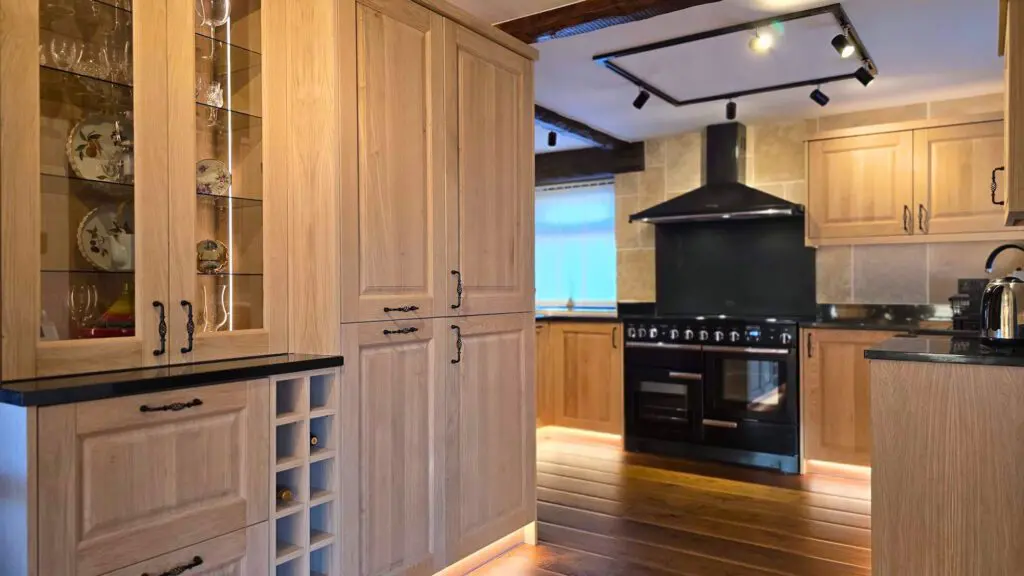
The Huddersfield oak kitchen was developed around the existing timber beams and wall finishes. Its solid European oak doors have a matt lacquer finish, retaining the visible grain. Glazed storage brings another scale of detail into the same room.

Consider painted and natural timber directions
Paint can bring a consistent colour across framed fronts, while clear-finished timber keeps more of the grain visible. Compare the actual samples and specify the finish method: hand painting and spray finishing should be described accurately, even when the finished appearance is related.
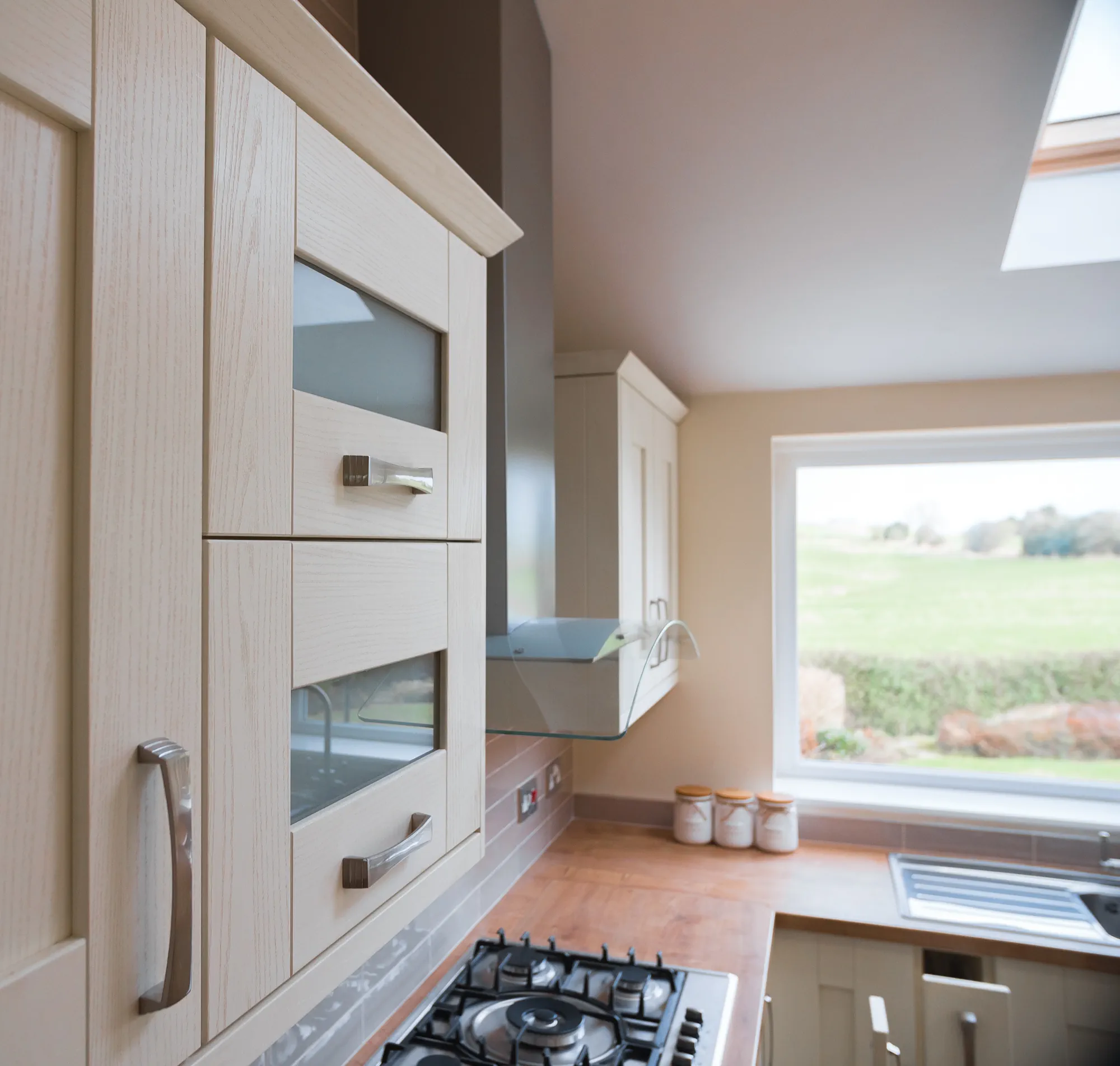
The Pudsey classic kitchen uses spray-painted oak doors and Egger laminate worktops. This is a documented historical project, with oak-veneered MDF carcases; it illustrates its particular appearance and storage arrangement. For a new kitchen, high-quality plywood is our preferred cabinet construction.
Explore painted kitchen options or the guide to solid wood kitchens for the next material question. A visible finish alone does not identify the cabinet core.
Choose worktops and tiles for daily use
Marble can create a strong veined feature, but it requires a realistic care routine. Acids can etch marble, and sealing does not make it proof against etching. Use pan stands, chopping boards and the care instructions for the particular stone and finish. The Natural Stone Institute's care guidance is a useful starting point alongside your fabricator's instructions.
Granite, quartz, ceramic and laminate have different characteristics and appearances. Assess samples, joints, edges and care with the proposed cabinetry; no single surface is mandatory for a classic kitchen. Our worktop guide helps connect the material to its intended use.
Rectangular tiles laid in a simple pattern can suit a framed kitchen. There is no compulsory 'subway tile' dimension: compare the size, grout colour and layout against the worktop length and wall-cabinet positions. A slab splashback can also work within a classic scheme.
Add traditional details where they have a purpose
- LightingPendants, wall fittings or a more decorative light can establish the character, with separate task lighting for preparation surfaces.
- HandlesCompare brass, bronze, iron or quieter finishes beside the door and worktop sample, then check comfortable opening.
- FlooringWood can bring warmth; select the actual product and finish for kitchen use, with its moisture and care requirements in mind.
- Open and glazed storageChoose items you want to display and keep the remaining storage practical. A few open areas can be more useful than a whole wall of shelves.
Keep the internal layout useful
A traditional exterior can contain contemporary drawers, waste segregation and accessible pull-outs. In Huddersfield, drawers beside the cooker bring cookware forward, while the tall cupboard includes internal pull-out storage. The position and contents matter as much as the mechanism.

An island should still leave room to walk, sit and open nearby cabinets. Look at the kitchen island planning guide and test the proposal with the room dimensions rather than assuming a classic kitchen needs a large central island.
Questions about classic kitchens
Can a classic kitchen include modern appliances?
Yes. Appliance dimensions and clearances can be coordinated with framed doors and traditional materials. The appearance and technical layout should be planned together.
Is every painted Shaker kitchen hand-painted?
No. Framed doors can be hand-painted or spray-finished. Agree the substrate, finish system and method in the specification.
Is marble essential for a traditional appearance?
No. Natural timber, painted fronts, handles and proportions can establish the character with several different worktop materials.
Develop a classic kitchen around your home
Explore bespoke kitchens
Explore how bespoke cabinetry brings door proportions, materials, storage and room-specific details into a complete kitchen.
Explore bespoke kitchens