
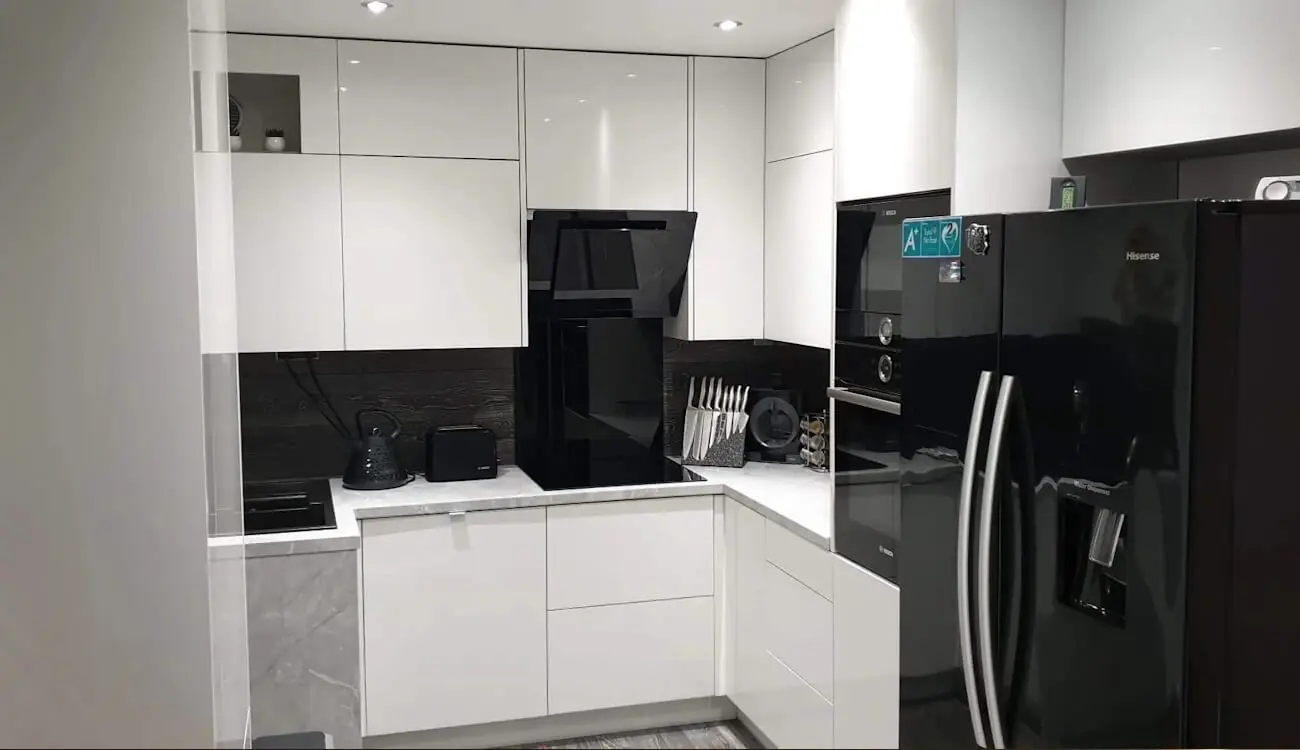
High gloss white handleless kitchen in Normanton, West Yorkshire
High gloss white handleless custom made kitchen furniture designed, manufactured, and installed for our customer based in Normanton, West Yorkshire. The brief was clear: maximise storage and usable worktop space in a relatively small room, while using reflective white surfaces to help the space read brighter and visually larger. The second objective was structural: design cabinet construction that adopts the available volume with minimal dead space, while keeping proportions light so the kitchen does not dominate the room.
This project is a good example of what fully bespoke manufacturing enables in compact kitchens. Cabinet heights and internal zoning can be engineered specifically around the room and the client’s daily use, rather than forcing compromises to match fixed factory modules. You can see the broader build standards behind our luxury hand made bespoke kitchen furniture on our main kitchen pages.
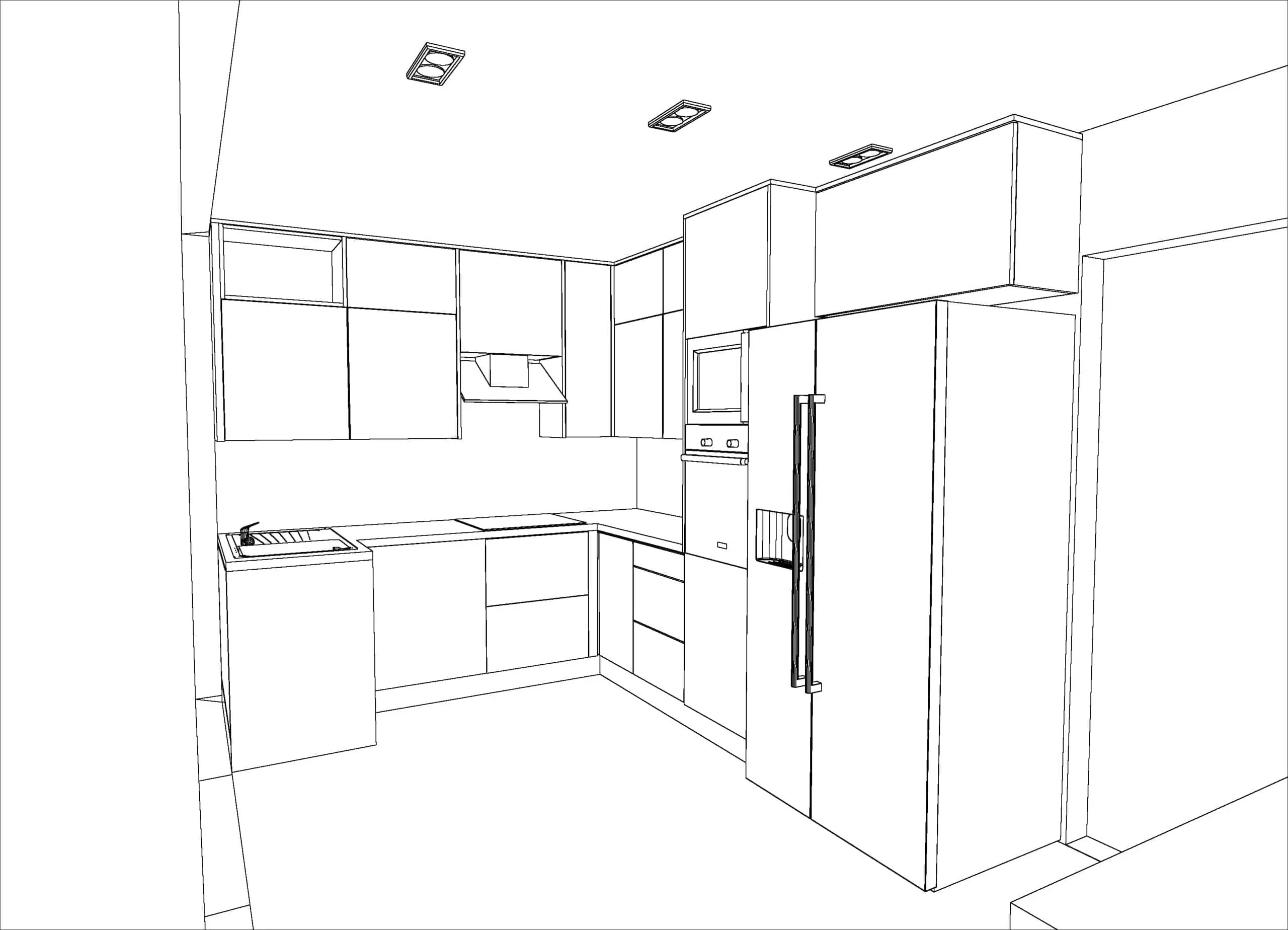
Project overview
Problem. The kitchen was compact, and the investor wanted the room to feel more open without removing functional storage. Standard sized cabinets would have introduced wasted voids at the top, around services, and in awkward corners, while the combination of base units, tall housings and wall cabinets needed to stay visually calm.
Design decision. We planned the layout to keep storage as close as possible to the main working zones and to avoid unnecessary visual breaks. The design uses high gloss slab doors for reflectivity, while concrete effect carcase surfaces bring depth so the kitchen does not read as flat white. The plan also included a compact island, adding a dining perch and additional storage without expanding the main runs.
Engineering solution. The wall units were designed as 1000 mm high (except the unit over the extractor). This increased vertical storage and reduced the top void that often appears in small kitchens. Internally, wall cabinets were split into two functional zones: a lower section with vertically placed soft close hinges and two shelves, and an upper section with a horizontal push to open system. The upper compartment was left undivided to accommodate larger items, which is often more practical than multiple small shelves.
Result. The kitchen gained storage volume in the same footprint, and the reflective door finish supports the original objective of making the room feel visually larger, while the cabinet construction keeps the room proportionate and uncluttered.
Design and planning
Problem. In small kitchens, planning errors usually show up as compromised corner access, reduced landing zones, and lost storage to service runs and boiler boxing. If these constraints are handled with off the shelf cabinetry, the result often includes filler panels, mismatched heights, and inaccessible voids.
Design decision. We surveyed and designed the cabinet envelope first, then allocated internal zoning around daily use. That means drawers and pull outs sit where they are used, tall housings support appliance ergonomics, and the wall unit height is chosen for storage and proportion rather than catalogue limits.
Engineering solution. The final scheme uses a controlled set of door lines and mechanisms, with handleless operation maintained throughout using push to open, tip on, and suitable hinge configurations. This allows clean surfaces and consistent reveals, while still keeping the kitchen comfortable to use. The island size was held at 900 mm x 900 mm to retain circulation space in the room while adding worktop area and storage.
Outcome. The room reads clean and minimal, but the storage is engineered to suit real kitchen use rather than being dictated by standard module constraints. If you want a clear explanation of how this kind of room specific planning works, read how bespoke furniture really works.
Furniture specification
Cabinet engineering
Core materials. After consultations, we used ultra high acrylic coated slab doors in high gloss white, paired with Boston concrete effect carcase material from the Egger MFC board range. The worktop is a 38 mm Egger Light Grey Valmasino Marble effect laminate. You can find out more about the materials used to manufacture cabinets and worktops on this page.
Mechanisms. Base units incorporate multiple tip on soft close drawers, and the hinges, lift systems and runners used for this project are by Blum. In practical terms, this improves daily feel and long term durability because runners stay consistent under repeated loading and drawers extend fully for better visibility.
Wall unit construction. The 1000 mm wall cabinet height is a functional decision, not a decorative one. It reduces wasted top volume and allows better separation of everyday storage and occasional storage. The lower section uses soft close hinged access with shelves for daily items. The upper push to open section is kept open plan for larger pieces.
Appliance integration
Problem. Integrated appliance runs can easily create awkward gaps above, below or beside housings in compact kitchens. Those gaps waste storage and break the visual line of handleless doors.
Design decision. We grouped tall housings to keep the main cooking and prep areas clear, and we used one primary tall unit as a structured appliance tower.
Engineering solution. The tall larder unit houses the Bosch integrated oven and microwave. We developed additional storage below and above the appliances, so the tower remains useful beyond just appliance housing. This approach keeps everyday trays, baking items, and small appliances close to the cooking zone while preserving clean door lines.
Outcome. The integrated stack reads as part of the furniture, not as appliances inserted into a generic cabinet. Ventilation and access clearances are maintained according to manufacturer requirements, while storage remains continuous around the housings.

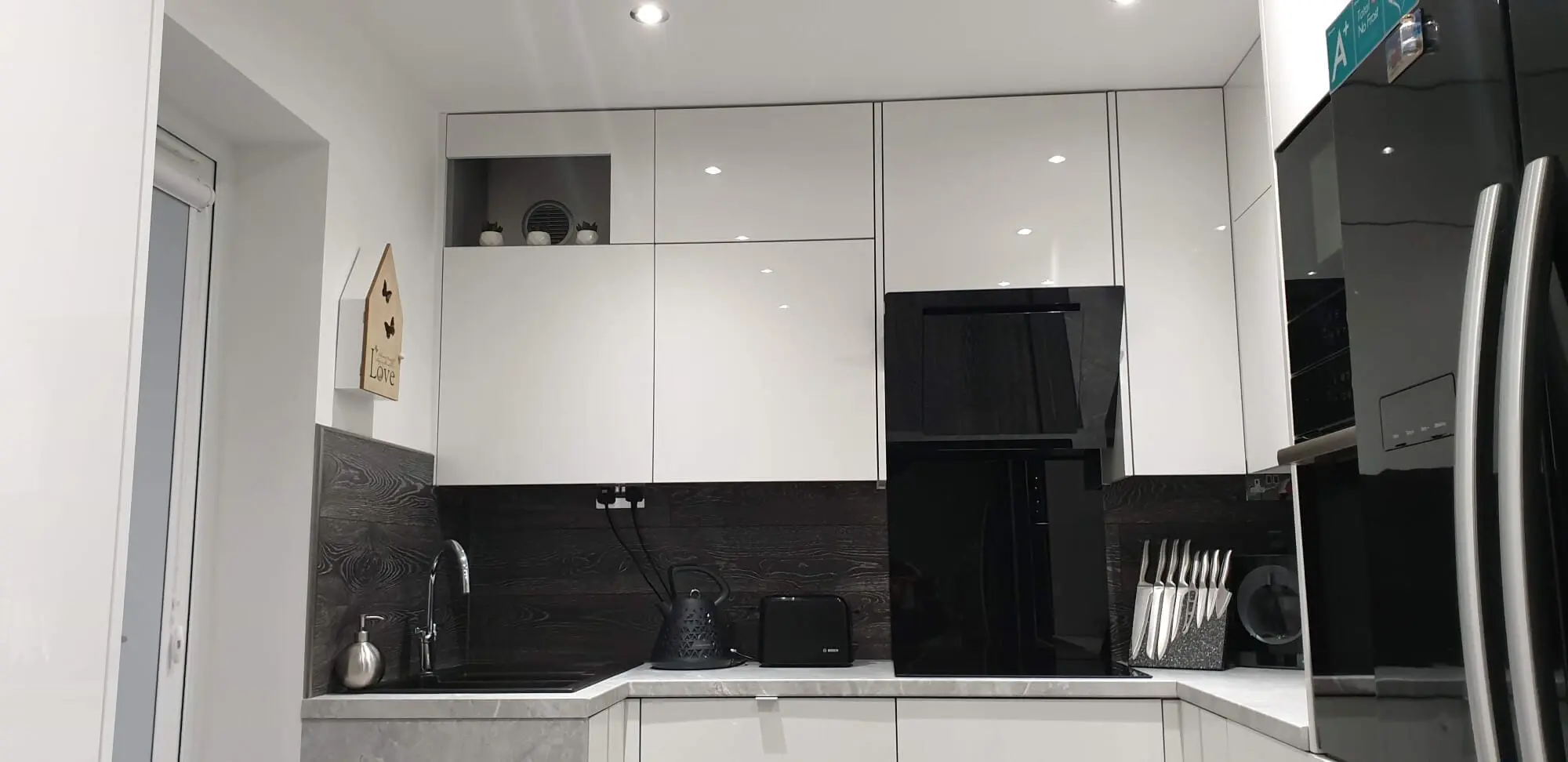
Smart storage
Problem. In compact kitchens, storage is often present but inefficient because shelves create deep dead zones and the most useful items end up on worktops. Corner areas and tall housings frequently become poorly planned voids.
Design decision. We used drawers where access speed matters, shelves where volume matters, and we avoided building cupboards that exist only to hide services. Each zone was designed around a practical use case.
Engineering solution. In base units, the drawer banks use Blum tip on soft close runners to keep handleless fronts functional while still controlled on closing. In tall zones, the appliance tower includes storage above and below the Bosch oven and microwave, turning the housing into a working pantry style unit rather than a single purpose cabinet.
Outcome. The worktops stay clearer, and storage stays organised because drawers and shelving are aligned with how the kitchen is actually used. This is one of the key advantages of true bespoke manufacture in rooms where every centimetre matters.
Boiler housing with additional storage
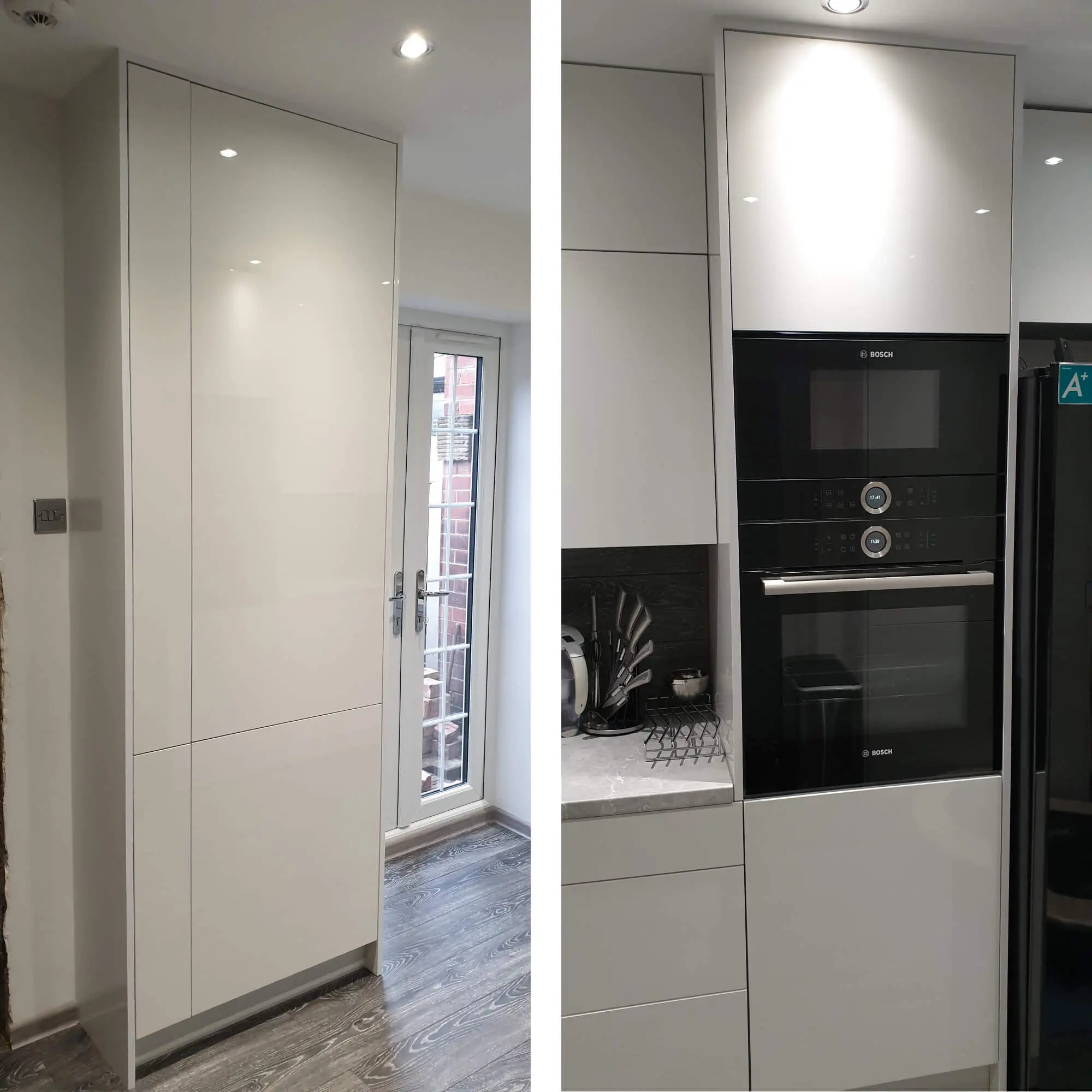
Problem. A combi boiler placed on the left hand side of the room introduced a typical constraint: services and pipework need to be concealed, but a small boiler box often wastes the surrounding space and looks like an afterthought.
Design decision. Instead of making a minimal cupboard only to cover the boiler, we designed a full height structure that integrates the service zone and adds useful storage.
Engineering solution. The housing fills the vertical space from floor to ceiling to avoid a dead void above, but it is kept as shallow as possible so it does not consume unnecessary room depth. This balances two competing goals: concealment of services and preservation of circulation space in a compact kitchen.
Outcome. The boiler and pipework are hidden, and the surrounding volume becomes functional storage, while the overall kitchen elevation stays clean and consistent.
Kitchen island with drawers
Next steps are simple.
Problem. The investor wanted a dining point for quick meals, but adding an island in a small kitchen can easily block circulation and create a bulky object in the centre of the room.
Design decision. We kept the island compact and storage led, and used it as a combined dining surface and working zone.
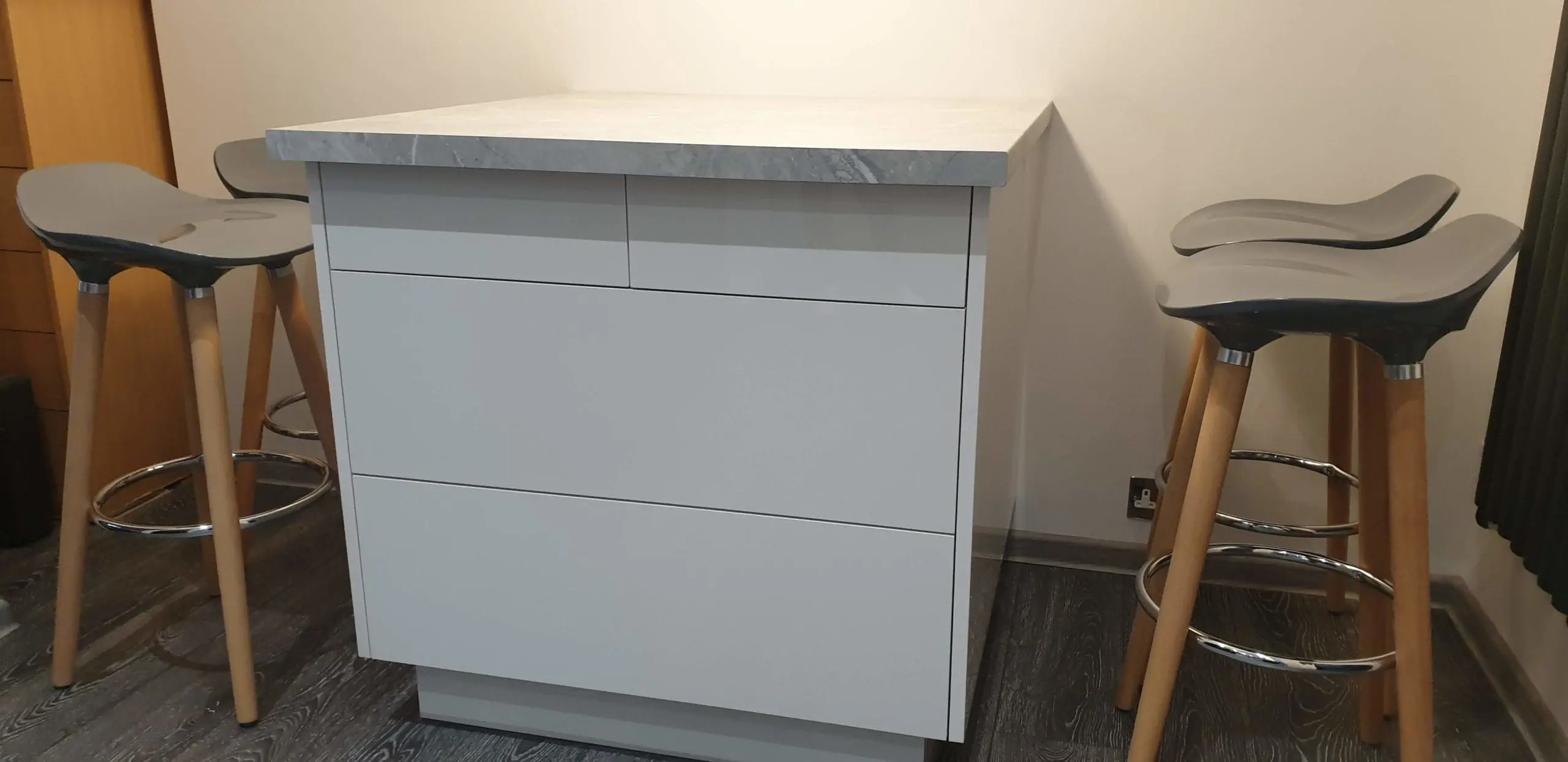
Engineering solution. The island is a 900 mm x 900 mm construction containing a broad drawer chest plus two shelved units, so practically there is no wasted space inside. This gives the household a usable dining perch and a secondary prep surface without increasing the footprint of the main cabinet runs.
Outcome. Additional drawers and shelves are gained in the centre of the room, while the island remains proportionate to the kitchen size and does not overwhelm the space.
Materials and finishes
Problem. High gloss kitchens can look impressive, but they can also feel cold or overly clinical if the composition is not balanced, and they can show inconsistencies in alignment more clearly than matt finishes.
Design decision. We combined white high gloss door fronts with Boston concrete effect cabinet material to add visual depth. The worktop in Light Grey Valmasino Marble effect maintains a neutral tone and supports the reflective objective without making the room feel sterile.
Engineering solution. Handleless operation is maintained through a controlled set of mechanisms: push to open for upper zones and tip on soft close for drawers. This keeps surfaces flat and continuous, which is critical in gloss kitchens because broken lines and mixed handle positions become visually louder.
Outcome. The kitchen stays bright and reflective in normal light, but the concrete effect and marble effect surfaces add character, keeping the room balanced rather than purely white.
Before and after analysis
Before. The space needed more usable storage without visually shrinking the room. Standard height wall cabinets and small boiler boxes typically introduce top voids and uneven lines, and shelves in base units often reduce accessibility.
After. The cabinet envelope was engineered to use more of the available vertical space, including 1000 mm wall units and a full height boiler housing that remains shallow. The kitchen gains additional drawer led storage through the island, sized at 900 mm x 900 mm, without sacrificing circulation. The tall housing integrates the Bosch oven and microwave while adding storage above and below, improving the working efficiency of the main cooking zone.
Measured improvements we can point to in this build. Increased vertical storage via 1000 mm wall units. Reduced wasted volume through full height service housing. Added storage and dining function in a compact 900 mm x 900 mm island. Clearer zoning through a tall appliance stack with additional storage above and below.
Final results and how to start
This fully bespoke handleless kitchen in Normanton, West Yorkshire was designed to make a small room work harder without looking overloaded. By combining high gloss white acrylic slab doors with Boston concrete effect cabinet material and a 38 mm laminate worktop, the kitchen stays bright and reflective while still having depth and contrast.
From an engineering perspective, the key outcomes come from room specific sizing and zoning: 1000 mm wall units for additional storage, an appliance tower with integrated Bosch oven and microwave plus storage above and below, a shallow full height boiler housing that hides services while adding useful volume, and a compact 900 mm x 900 mm island that provides drawers, shelving, and a dining point.
If you want to discuss a similar project and understand what information we need to quote and design accurately, see how to start your project with us. You can also learn more about our workshop background and the way we manufacture in house on our about page.
Furniture specification summary
Style Modern contemporary
Location Normanton, West Yorkshire
Materials and components
- 38 mm Egger laminate worktop in Light Grey Valmasino Marble effect
- Ultra high gloss acrylic coated slab doors in white
- Boston concrete effect Egger MFC carcases
- White ultra high gloss plinths
- Blum tip on soft close drawers, hinges and lift mechanisms
- Integrated Bosch oven and microwave in tall housing
Booking section
Next steps are simple.
Send your room measurements, drawings, or a basic plan
- Share a few inspiration images and your preferred material direction
- Confirm if you need supply only or supply and installation
We will then propose a practical layout direction and specification baseline, and if it fits your expectations we can book a site survey and move into detailed design.
