
3D veneered fronts: texture, proportion and construction
A three-dimensional veneered front adds texture as well as timber colour. Ribs, grooves or a shaped pattern change how a surface catches the light, making an island face, tall cupboard or selected bank of doors a distinct feature. The most convincing result comes from choosing the pattern alongside the cabinet proportions, adjoining materials and the construction behind the surface.

What makes a veneer surface three-dimensional?
A flat veneer creates character through colour and grain. A 3D surface adds a shaped profile, so the pattern has depth and casts shadows. The spacing and direction of that profile influence how a large elevation reads, especially in side light.
Havwoods' Elegante range includes Costato, Fresato and Ondato pattern families, alongside coordinating flat-sheet options. Use the supplier's current product information and physical samples to shortlist an actual pattern and finish; an older collection image does not establish current availability.

Specify the surface and the cabinet core separately
The appearance of a veneer does not identify the whole board. A product's decorative name may describe a colour or timber effect rather than confirm that it is made from that species of solid timber. Check the veneer type, substrate, reverse face, panel thickness and finishing requirements in the chosen product's documentation.
The current Elegante catalogue includes reconstituted veneer and composite MDF constructions. Those should be described accurately, rather than calling every illustrated panel solid oak, walnut or ebony. A sample and product code make the discussion more useful than a broad wood name alone.
For JS DECO kitchens, high-quality plywood is our preferred premium cabinet construction. A carefully selected textured or flat veneered door can sit alongside that construction. High-quality real-wood-veneered MDF is an option for doors only, with its actual veneer, substrate and finishing system agreed as part of the specification.
Our material comparison guide explains the difference between the visible finish and the board beneath it, while plywood kitchens sets out the wider cabinet approach.
Choose where the texture should lead
A patterned surface is often most effective where it has a clear role. Assess the main view into the room, the island and the tall cabinets together. A selected textured area can bring character while leaving the working run or other elevations calmer.
- Island faceLook at the island from the dining or living area. Consider how the profile meets the worktop, corners and adjoining end panels.
- Tall cupboard doorsAssess the pattern over the full door height, including appliance openings, handles and the relationship to neighbouring fronts.
- A selected cabinet bankChoose a defined group of fronts so the texture reads as a deliberate feature within the wider kitchen.
- Adjoining flat surfacesCompare a quieter veneer, painted colour or matt finish beside the texture, using actual samples in the same light.

A textured veneer feature and grain matching are different design decisions. Agree both the profile direction and the intended grain coordination where neighbouring fronts are seen together. A ribbed appearance does not automatically establish pattern continuity.
Develop edges, openings and care with the pattern
Compare the sample with the proposed worktop, handles and other door finishes. Look from the front and from an angle, and assess it in daylight as well as the planned room lighting. A texture that looks subtle on a small sample can become much stronger over a large area.
The edge treatment, door thickness, handle position and opening clearance need to be developed for the selected panel. Agree how the pattern finishes at a corner or interrupted elevation. These are part of the furniture design, rather than details to settle after the material has been cut.

Follow the cleaning and maintenance guidance for the specified veneer and finish. Grooves introduce a different surface profile from a flat front, so discuss the practical care as well as the appearance. Fire performance and environmental certifications belong to the exact product and documentation; they should not be assumed for an entire decorative collection.
Use completed kitchens to judge the wider composition
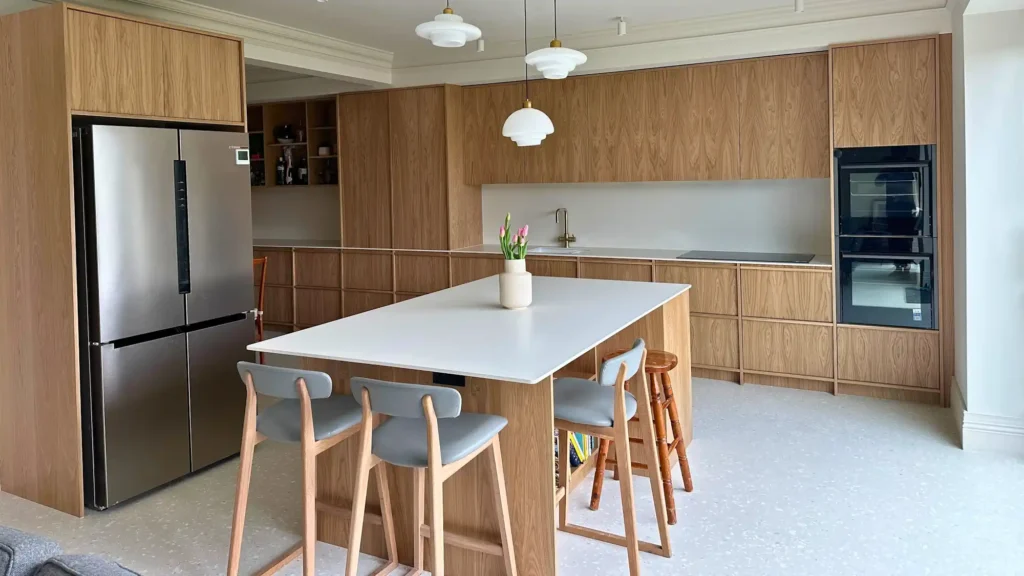
The Leeds Japandi kitchen shows how flat oak veneer, solid oak details and carefully planned front divisions work across a long elevation. It provides a useful reference for cabinet proportions and the role of timber within a room. It is a flat-veneered kitchen, rather than a project using the illustrated 3D collection.
When considering a textured alternative, start with that wider relationship: which surfaces should connect, where a feature belongs and what needs to remain practical. Bring the sample into the actual elevation instead of choosing it as an isolated decoration.

Questions about 3D veneered fronts
Does a textured veneer mean the whole cabinet is solid timber?
No. Specify the decorative veneer, its substrate and the cabinet construction separately. The visible pattern does not reveal every component.
Does every front need the same texture?
No. A defined feature area can work alongside quieter flat fronts. The useful choice depends on the room, proportions and material palette.
Should the panel be selected before the layout is settled?
Explore them together. Pattern scale, panel sizes, openings and edges need to work with the actual furniture design.
Bring texture into a complete kitchen design
Explore bespoke kitchens
Explore how premium plywood construction, veneered fronts and selected surface details can work together around your room.
Explore bespoke kitchens