
Choosing sustainable kitchen materials
Choosing sustainable kitchen materials starts with a clear specification: what is the cabinet made from, what covers its visible surfaces and what evidence supports the sourcing and finish? A reassuring label such as “natural” or “eco-friendly” is less useful than knowing the actual product and how it will serve your kitchen.
For JS DECO, high-quality plywood is a premium cabinetry choice. Thoughtful front finishes, documented sourcing and furniture designed for continued use help turn that choice into a coherent project. Here is what to check before settling the materials.
Separate the cabinet core from the visible finish
The cabinet box, door, worktop and splashback do not have to use the same material. Quality plywood provides the construction we favour for cabinetry; real wood veneer, laminate or an agreed painted front gives the exterior its appearance. Make these components explicit when comparing proposals.
High-quality veneered MDF can be a premium door-only choice where a smooth substrate is wanted beneath real wood veneer, paired with plywood carcases. The European Panel Federation’s door guidance describes MDF’s use for veneered kitchen fronts. This does not extend our recommendation to MDF cabinet boxes or MFC as an equivalent cabinetry alternative.
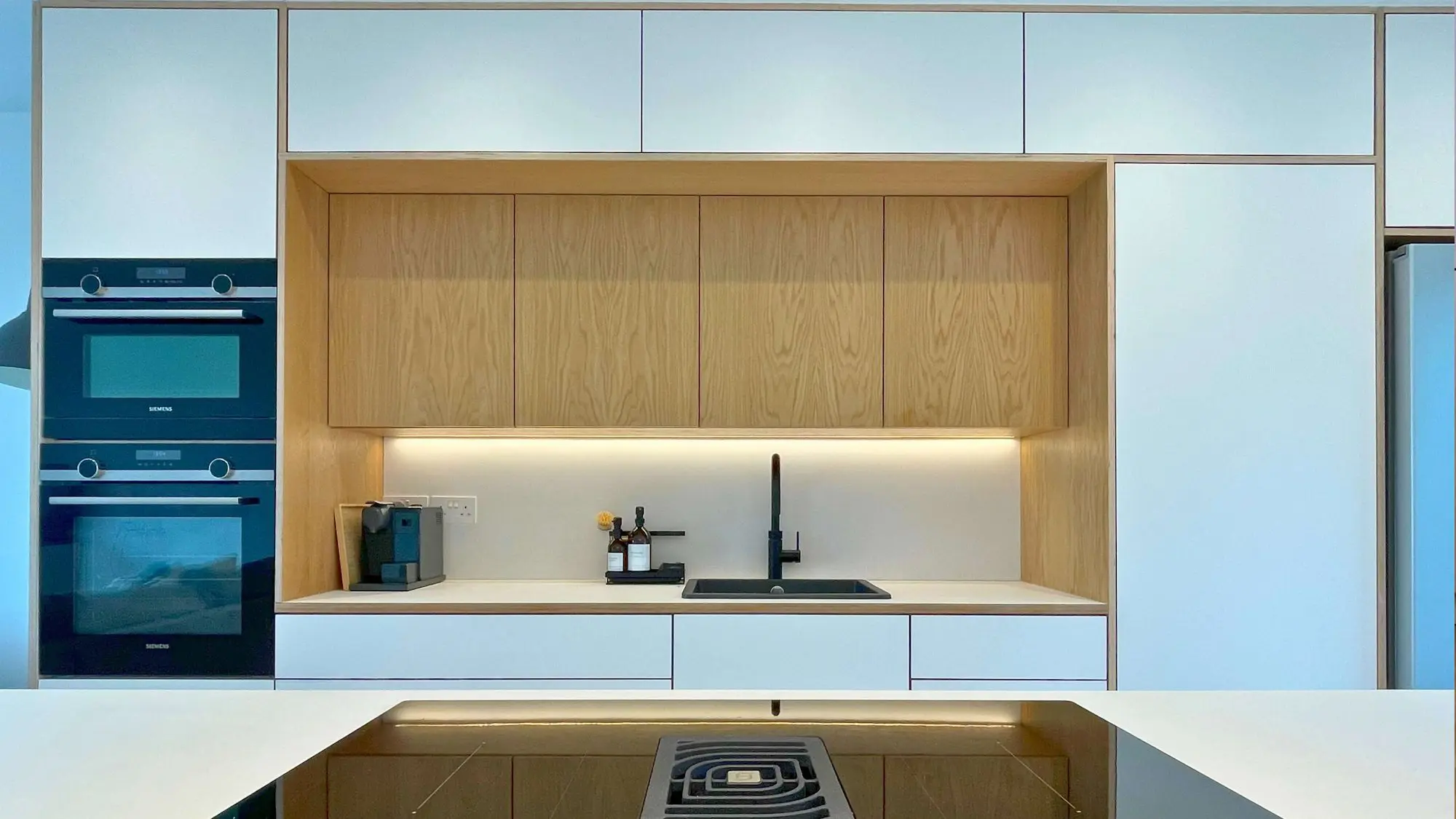
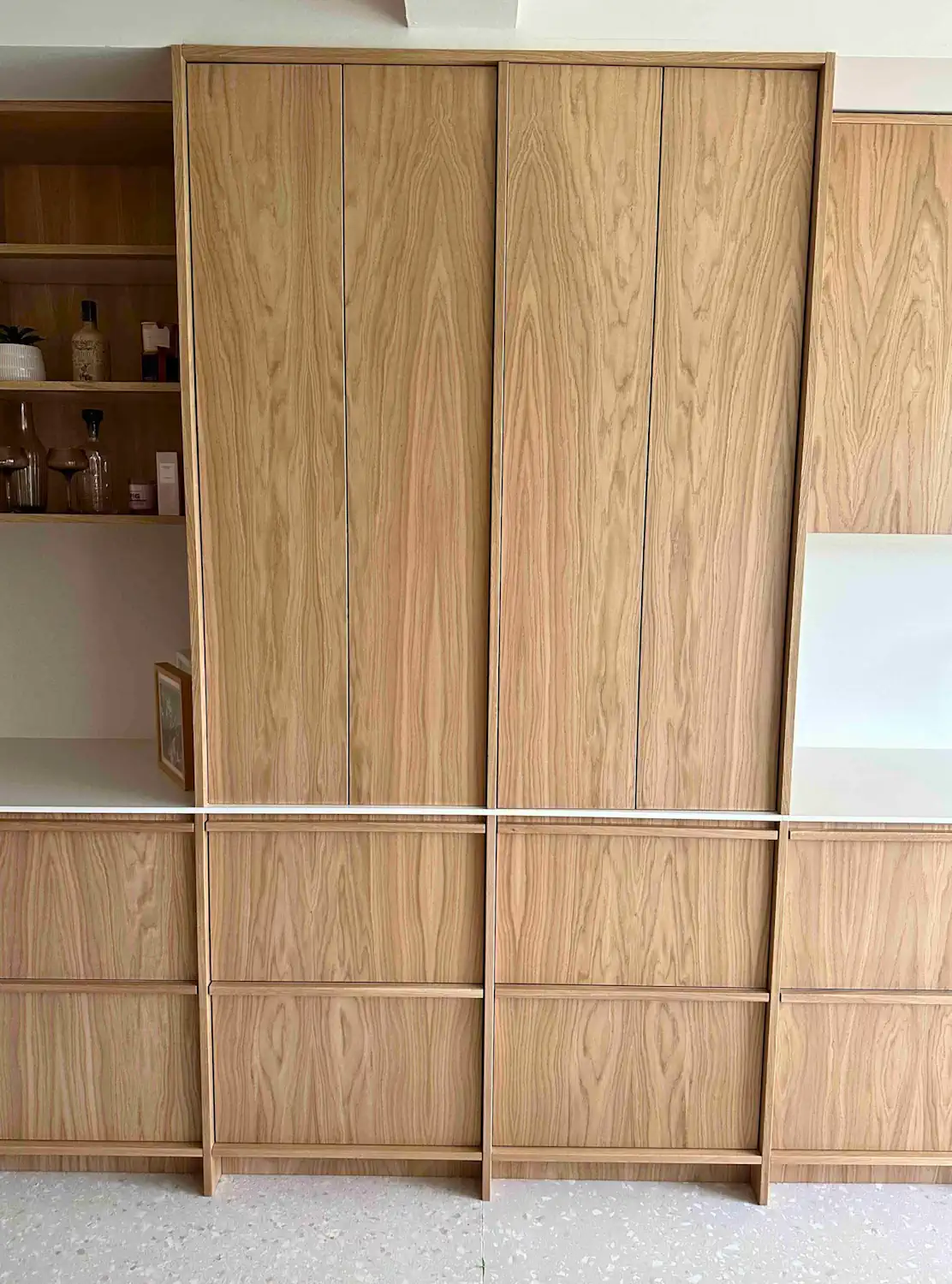
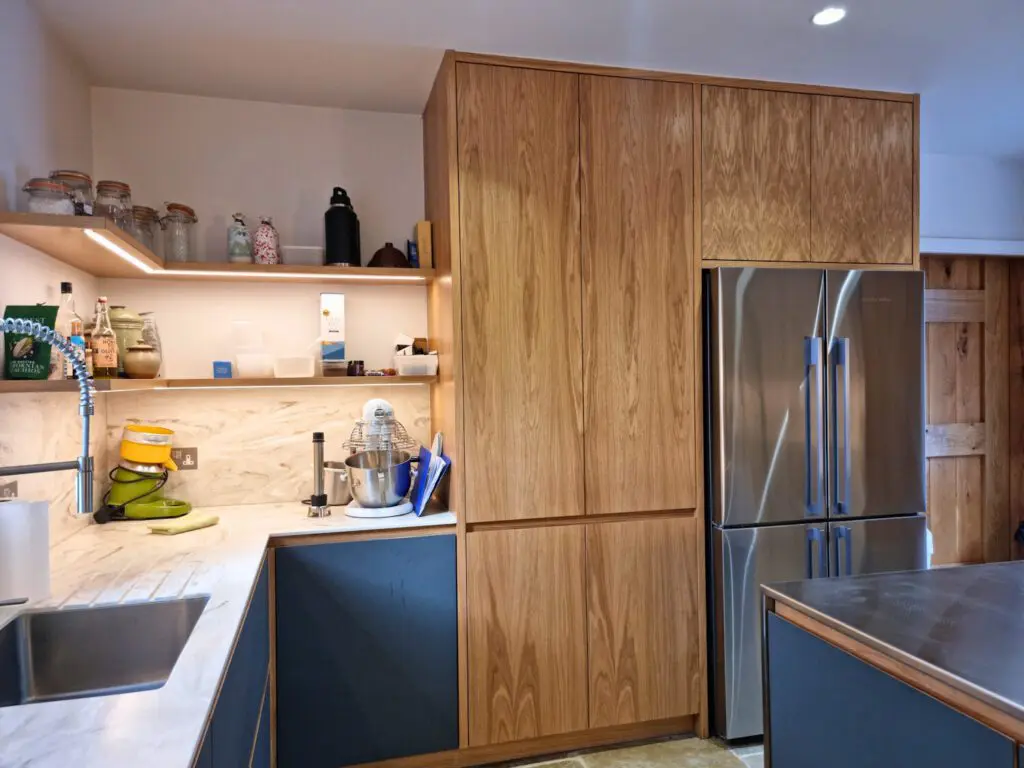
The oak in a photograph tells you about the visible finish, not necessarily the underlying board. In the Leeds Japandi kitchen, oak veneer and solid oak details define the appearance. For a new proposal, confirm the cabinet core and front substrate alongside the visible timber finish.
Check the evidence for the supplied product
Ask for the panel or timber product, its supplier information and any applicable certification claim. FSC labels describe different sourcing categories: FSC 100% identifies forest-based material from certified forests; FSC Mix can combine certified, recycled and controlled sources; FSC Recycled identifies verified recycled forest-based material. FSC UK explains the labels in detail.
Check the claim on the actual supplied product and relevant documentation. A company award, a quality endorsement or a general statement about responsible forestry does not establish that every kitchen or panel is FSC-certified.
Local manufacture makes it easier to discuss samples, dimensions and production with the workshop. It does not establish that all timber was grown locally or that transport emissions are lower in every comparison. JS DECO’s manufacture in Wakefield and the origin of an individual board are different pieces of information.
Assess the whole surface, including adhesives and coatings
A natural-looking surface is still a finished furniture product. Ask for the technical and care information for the specified board, veneer, adhesive and coating where relevant. Use actual emissions or environmental documentation when comparing products, rather than assuming that oil, paint or lacquer is automatically chemical-free.
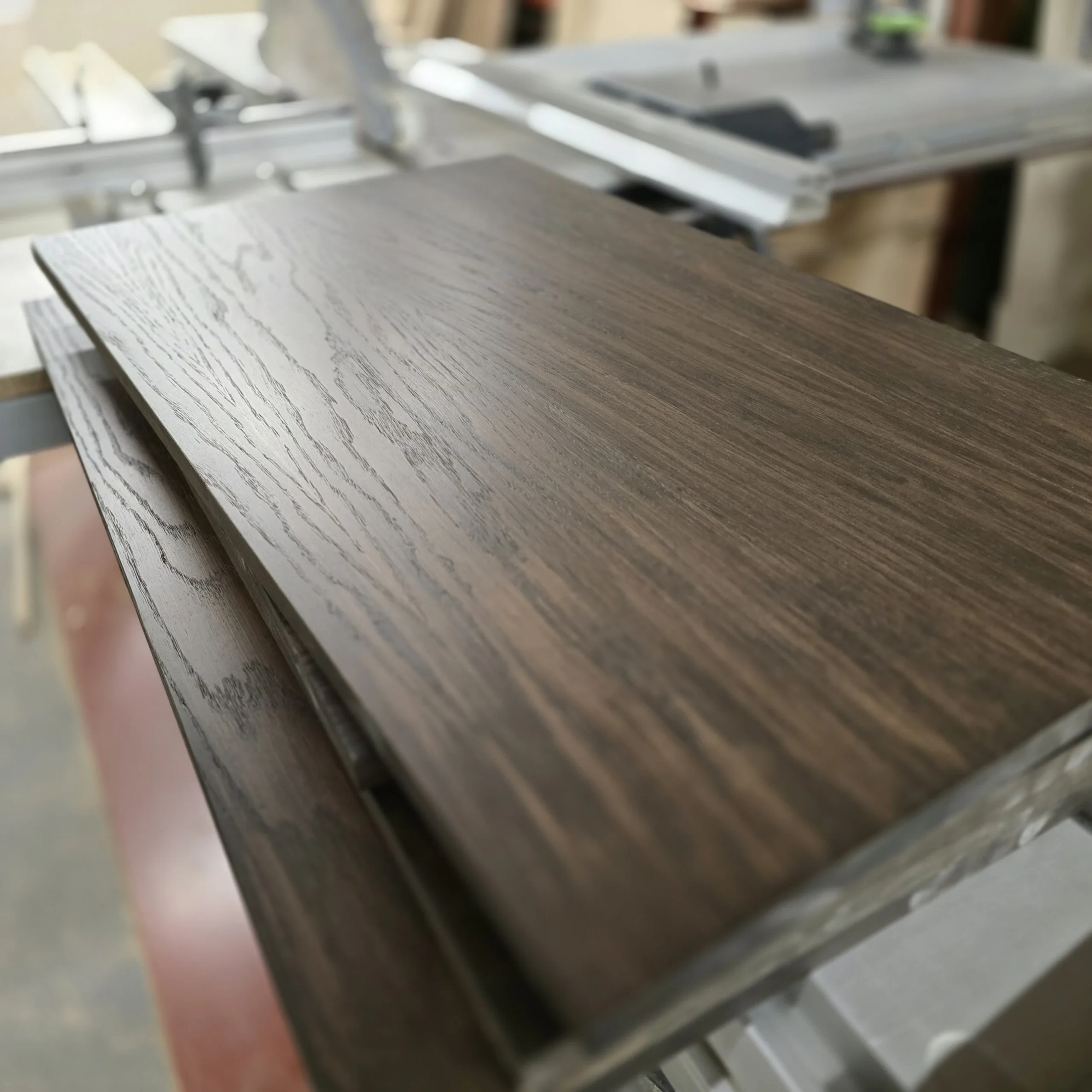
Finish samples also help you judge the colour and texture under your room’s light. In Cobham, the oak colour and lacquer treatment were developed through workshop samples before the final dark finish was agreed.
Bamboo and reclaimed wood are other categories found in the wider market. Assess their supply, processing, finish and suitability with the same care. JS DECO’s preferred approach centres on high-quality plywood cabinetry with thoughtfully specified fronts and finishes.
Choose materials you can use and maintain
A finish that suits your daily routine is a better starting point than one chosen only from a photograph. Consider spills, cleaning, direct light and the surfaces you will handle most. Confirm the care advice before manufacture, particularly when exposed plywood, real wood veneer or natural oil is part of the design.
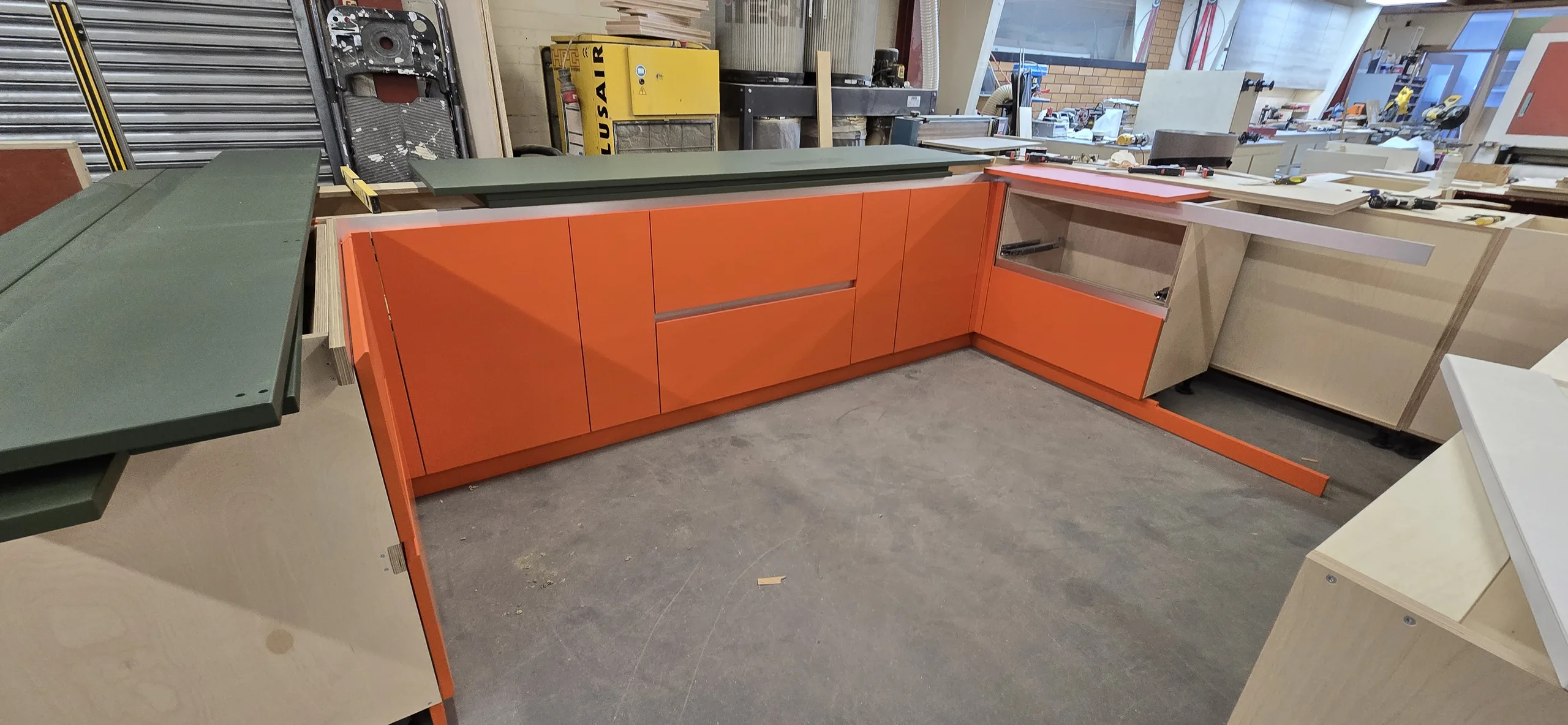
At Cawthorne, the material combination was developed around a strong colour preference: birch plywood cabinets and drawers, with painted moisture-resistant MDF fronts. This documented project keeps the plywood construction while allowing the fronts to carry Traffic Orange and Olive Green.
Our lacquer and oil care guide supports finish-specific maintenance. The wider sustainable kitchen design guide considers layout, storage and continued use alongside the material choice.
Turn the evidence into a useful specification
- Cabinet constructionName the plywood grade and intended components. Establish the construction behind the external appearance.
- Door and visible faceRecord the substrate, veneer or laminate and edge treatment. Keep veneered MDF as a door-only option.
- Sourcing evidenceIdentify the actual supplier claim and relevant certification documents. Avoid applying a general label to an entire kitchen.
- Finish informationReview the sample and relevant product documentation for the coating, adhesive and finished surface.
- Use and maintenanceChoose a care routine suited to the supplied finish and your household, including the most exposed working areas.
- Material allowanceDiscuss sheet sizes, grain planning and cutting requirements. Waste depends on the real design, not just the board category.
Frequently asked questions
Does an FSC label make every part of a kitchen sustainable?
It addresses the forest-based sourcing claim of the labelled product. The cabinet design, other materials, finishes, use and care need their own consideration.
Why prioritise plywood for the cabinet construction?
Quality plywood combines a timber-based construction with useful strength and stiffness, attractive interiors and visible edge options. We favour it for premium cabinetry while specifying the doors and surface finishes separately.
Is real wood veneer the same as wood-effect laminate?
No. Real wood veneer is a thin layer of timber; a wood-effect decorative finish reproduces a timber appearance. The specification should name the actual face material and its substrate.
Should all plywood furniture be maintained with oil?
No. Lacquer, natural oil and laminate need different care. Use the instructions for the supplied finish rather than treating every timber-looking surface in the same way.
Bring the material choices together
Once the core, front finish and sourcing evidence are clear, you can assess a kitchen as a complete piece of furniture.
Plywood cabinetry and premium finishes
Explore real applications of plywood, timber veneer and laminate, then discuss the specification that suits your project.
Explore plywood kitchen options