
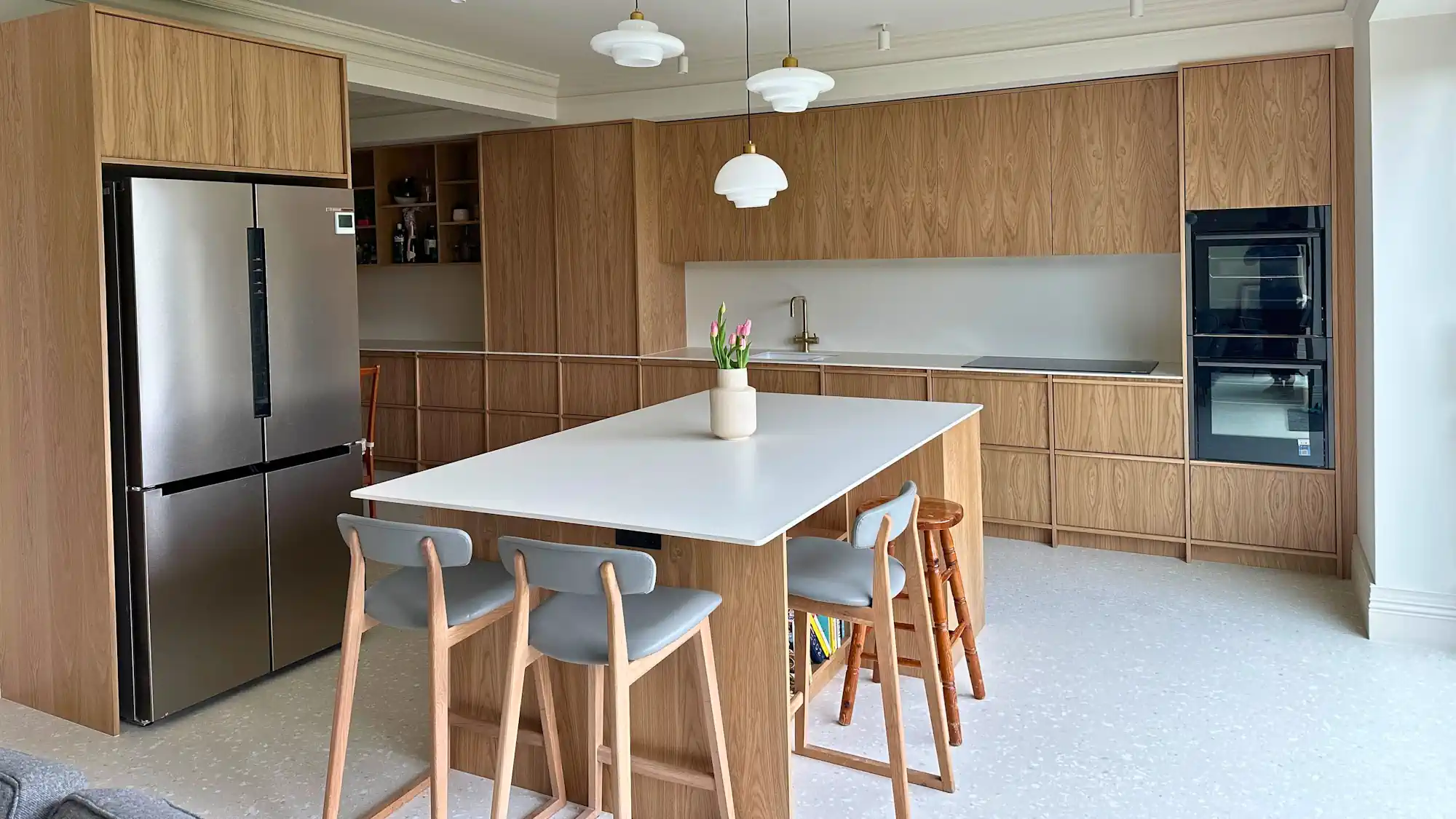
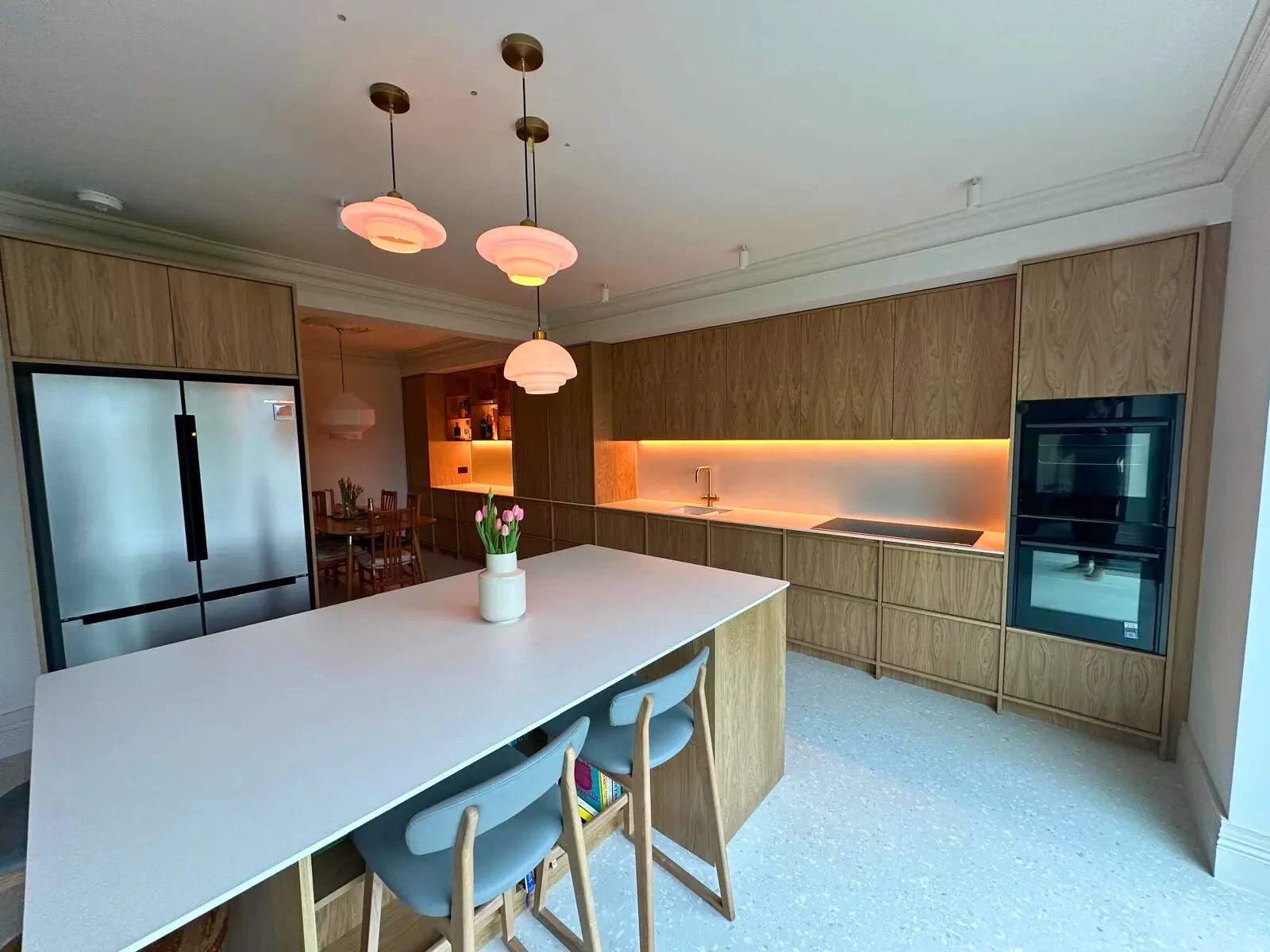
This bespoke Japandi style kitchen in Leeds was designed, manufactured and installed by JS DECO in close cooperation with the customer, who had a clear vision for a calm, architectural interior with strong Japandi influence. The finished room combines solid oak detailing with oak veneered fronts, a long 7.7 metre wall run, 2.4 metre tall cabinetry, 900 mm high wall units, and a 2.2 metre by 1.3 metre island. The main challenge was to keep a large kitchen elevation visually quiet while still delivering serious storage, integrated appliances, and a practical breakfast cabinet for daily use.
Japandi style kitchen specification
Location: Leeds
Property type: Large terraced house
Layout: 7.7 m wall run with tall storage, 900 mm high wall cabinets, breakfast cabinet zone, and 2.2 m x 1.3 m island
Fronts: Oak veneered fronts with solid oak vertical elements and full length routed solid oak handles
Carcase: Mixed construction using oak finished MFC and plywood where appropriate
Worktop: 12 mm solid laminate
Splashback / wall finish: Matching 12 mm solid laminate
Hardware: Blum mechanical systems with 25 year warranty
Key appliances: Neff appliances including 90 cm hob, two ovens and extractor fan, plus Bosch American style fridge freezer
Notable constraint solved: Large elevation, tall cabinetry, and room irregularities resolved through bespoke set out, grain continuity, and final size confirmation after plastering
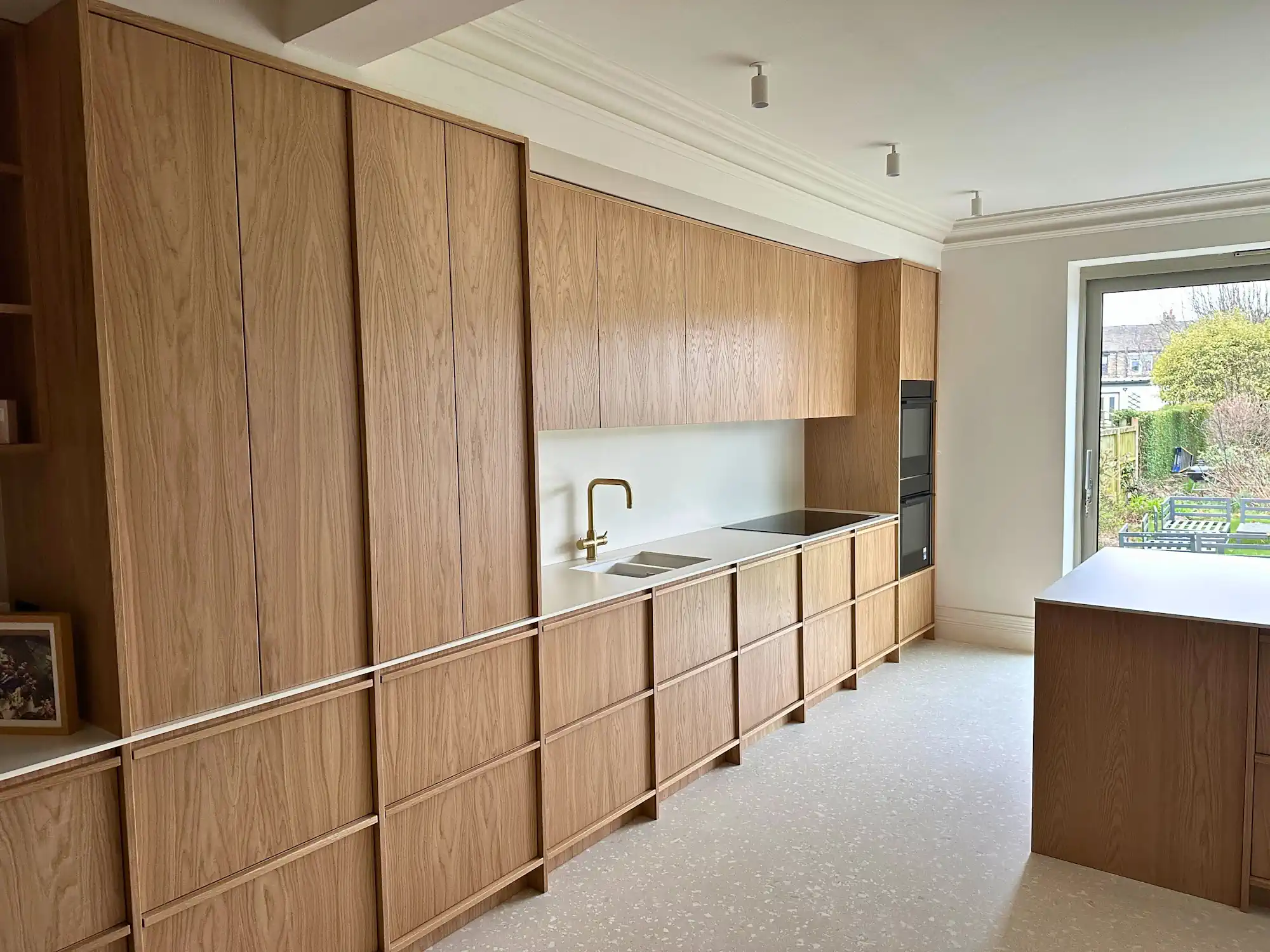
Project overview
This project was not based on fixed module sizes. From the beginning, the brief was shaped around a very specific visual direction and a strong requirement for calm, continuous lines across a long wall. The customer wanted a kitchen that felt architectural rather than over-equipped, with the material character of oak carrying the room instead of visible hardware or decorative detailing.
To achieve that, we developed a fully bespoke layout with tall storage, a long run of lower cabinets, and a separate island that could work equally well for preparation, casual dining, serving and everyday storage. The final composition uses a restrained palette and disciplined alignment, which is exactly the type of result that becomes possible when the furniture is set out for one room rather than adapted from a standard factory system. This is closely aligned with how bespoke furniture really works when the layout, proportions and final fit are all treated as part of the same design process.

Design and planning
The room offered generous width but also demanded control. A long run like this can quickly feel heavy or repetitive if the proportions, door divisions and appliance positions are not handled carefully. In this case, the tall cabinets, breakfast cabinet zone, sink run, cooking zone and island all had to work as one disciplined composition rather than as separate furniture blocks.
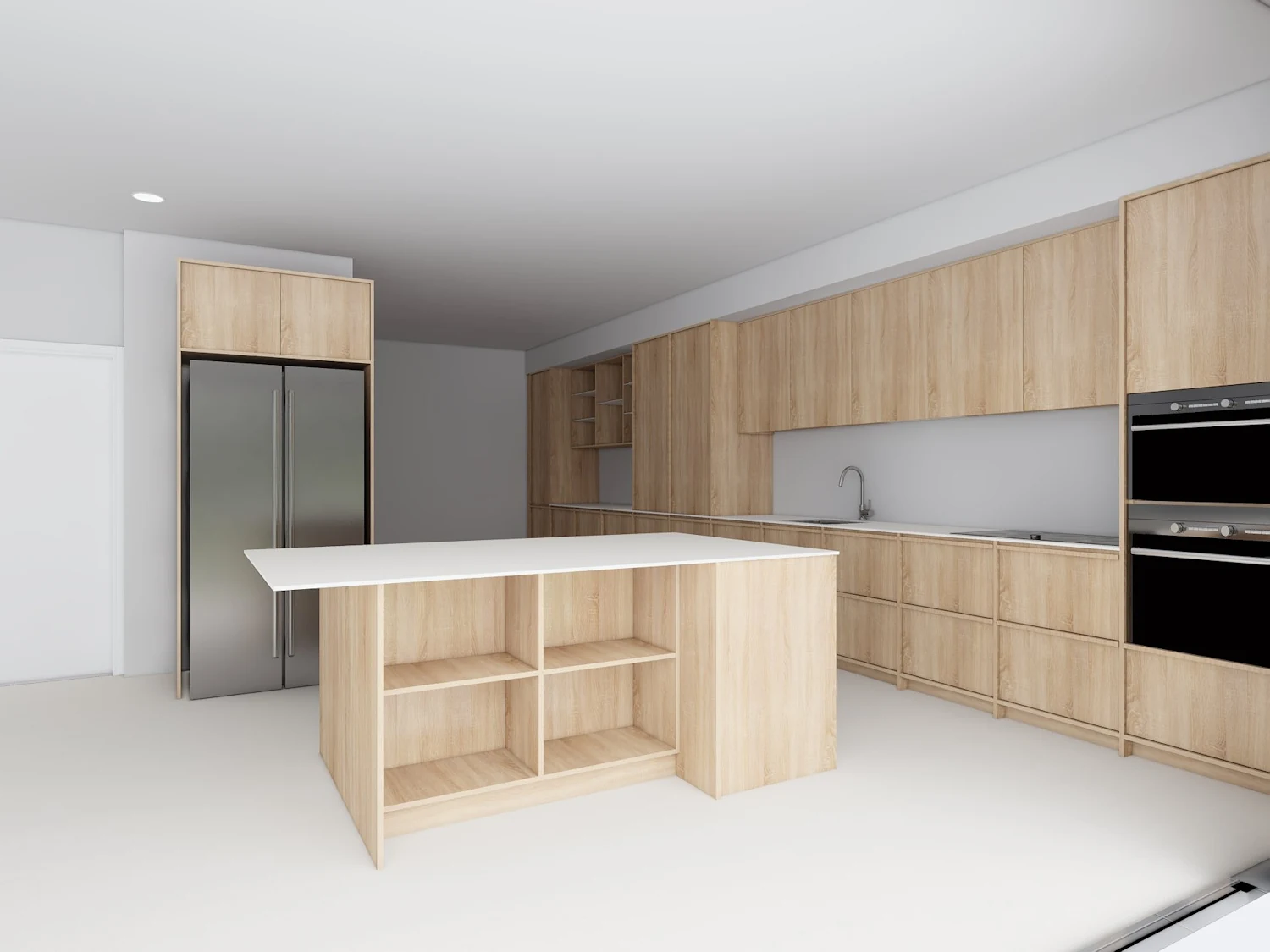
Because the kitchen was made on a fully bespoke basis, the initial set out could be developed from architectural measurements and then fine tuned after plastering, around two weeks before installation started. That extra confirmation stage allowed us to adjust the final cabinet sizing to the room reality rather than forcing the room to accept standard units. It also helped resolve site irregularities more precisely and keep the finished elevation consistent across the full run.
Another important part of the planning was visual zoning. The island provides a central working surface and informal seating point, while the main wall keeps the heavier storage and cooking functions consolidated in one place. The result is a room that still feels open and ordered, even though it contains a large amount of built in storage and appliance integration.



Furniture specification
Cabinet engineering
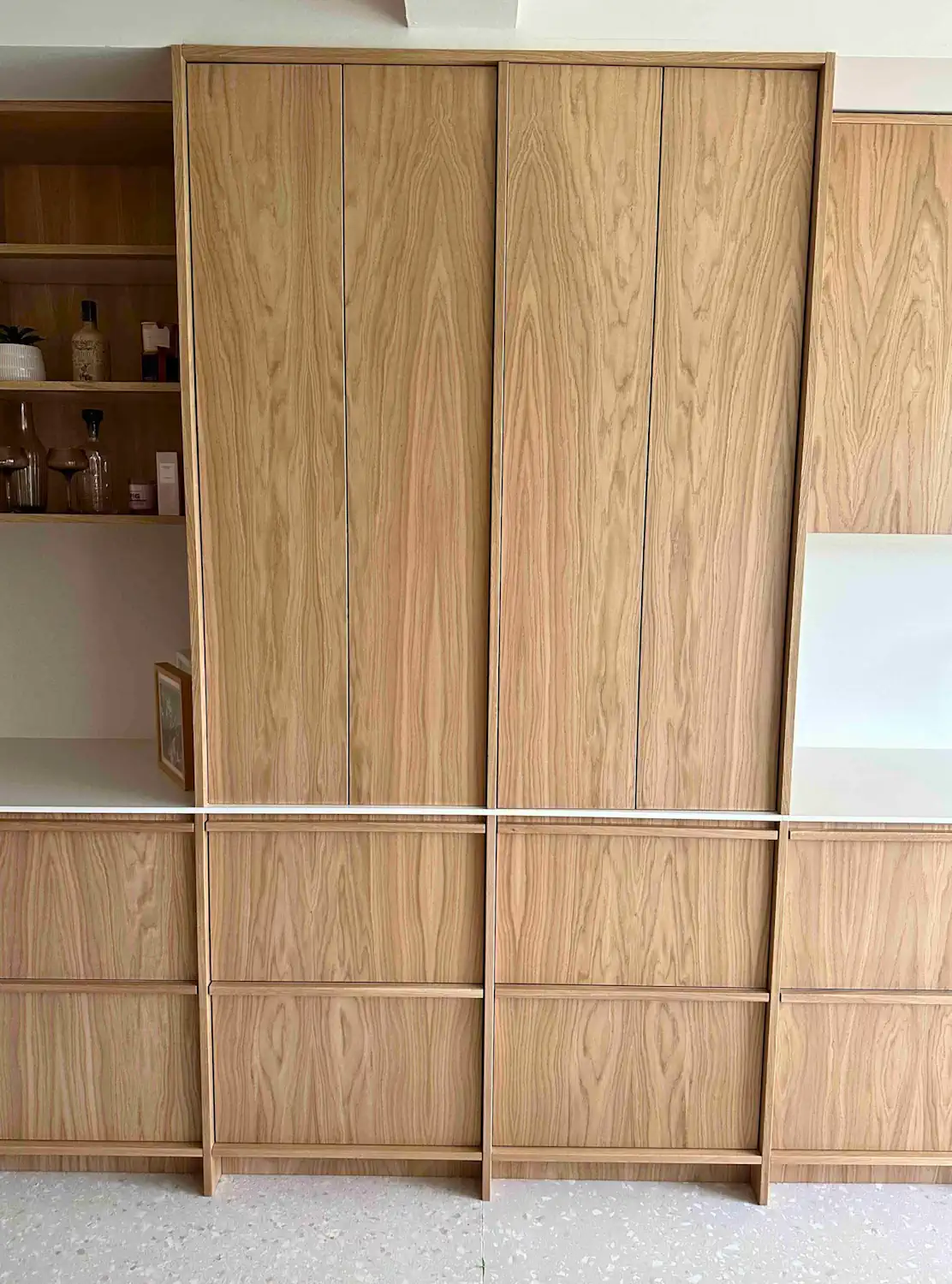
The kitchen combines oak veneered fronts with solid oak used on the vertical elements and routed handle details. That combination gives the furniture more tactile depth and helps the long run read as crafted joinery rather than flat panel cabinetry. Grain matching continues across doors and plinth lines, which was especially important on a project where the visual calm of the elevation was central to the brief.
The tall cabinets were manufactured to a maximum height of 2.4 metres, while the wall cabinets were taken up to 900 mm high. Those proportions make better use of the room height and give the composition a more deliberate architectural presence. They also increase usable storage compared with standard off the shelf sizes, which is one of the consistent advantages of our bespoke kitchen furniture approach when the room calls for more than a standard layout can offer.
The carcase construction on this project is mixed, using oak finished MFC and plywood where appropriate. That allowed us to balance visual consistency, technical suitability and cost control while keeping the visible parts of the kitchen aligned with the material character expected from the brief.

Appliance integration
The appliance set includes Neff ovens, a 90 cm hob and extractor fan, together with a Bosch American style fridge freezer. These elements were integrated into the cabinetry without breaking the quiet rhythm of the room. The oven housing sits within the tall run, while the cooking zone remains visually simple thanks to the clean worktop line and the continuity of the upper cabinet arrangement.
The sink and tap were supplied by the client. The sink is a Clearwater Siena 1.5 bowl undermounted model, which works well with the 12 mm solid laminate worktop because it supports the same restrained, easy to maintain surface language seen across the rest of the kitchen.
Smart storage and daily use
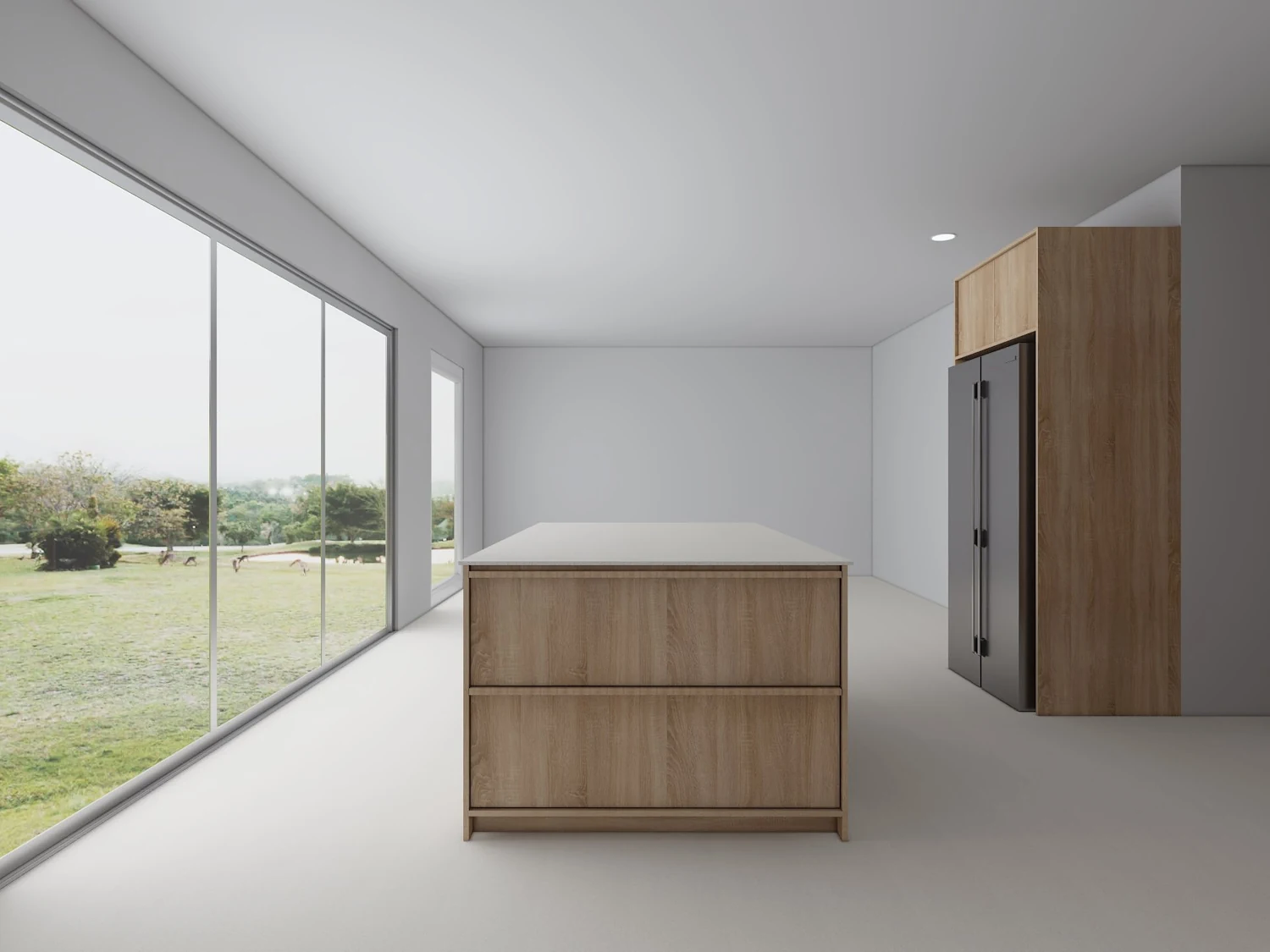
The large island was designed as a genuinely multi use element rather than a feature piece. It contains two large 1.2 metre drawer cabinets, open shelving and a seating area, so it can support prep, serving, everyday family use and casual dining without becoming visually over complicated. In practical terms, that means larger cookware, serving pieces or pantry overflow can sit in the island while the main wall remains focused on cooking and cleaning tasks.
Along the main run, the base cabinetry includes multiple internal and external drawers, integrated dishwasher provision and a pull out bin. The wall cabinets add extra storage while also housing the extractor, helping the cooking elevation stay clean and uncluttered. Tall units provide appliance housing and additional full height storage, which is particularly valuable in a family kitchen where dry goods, larger appliances and less frequently used items need to be kept close but out of sight.
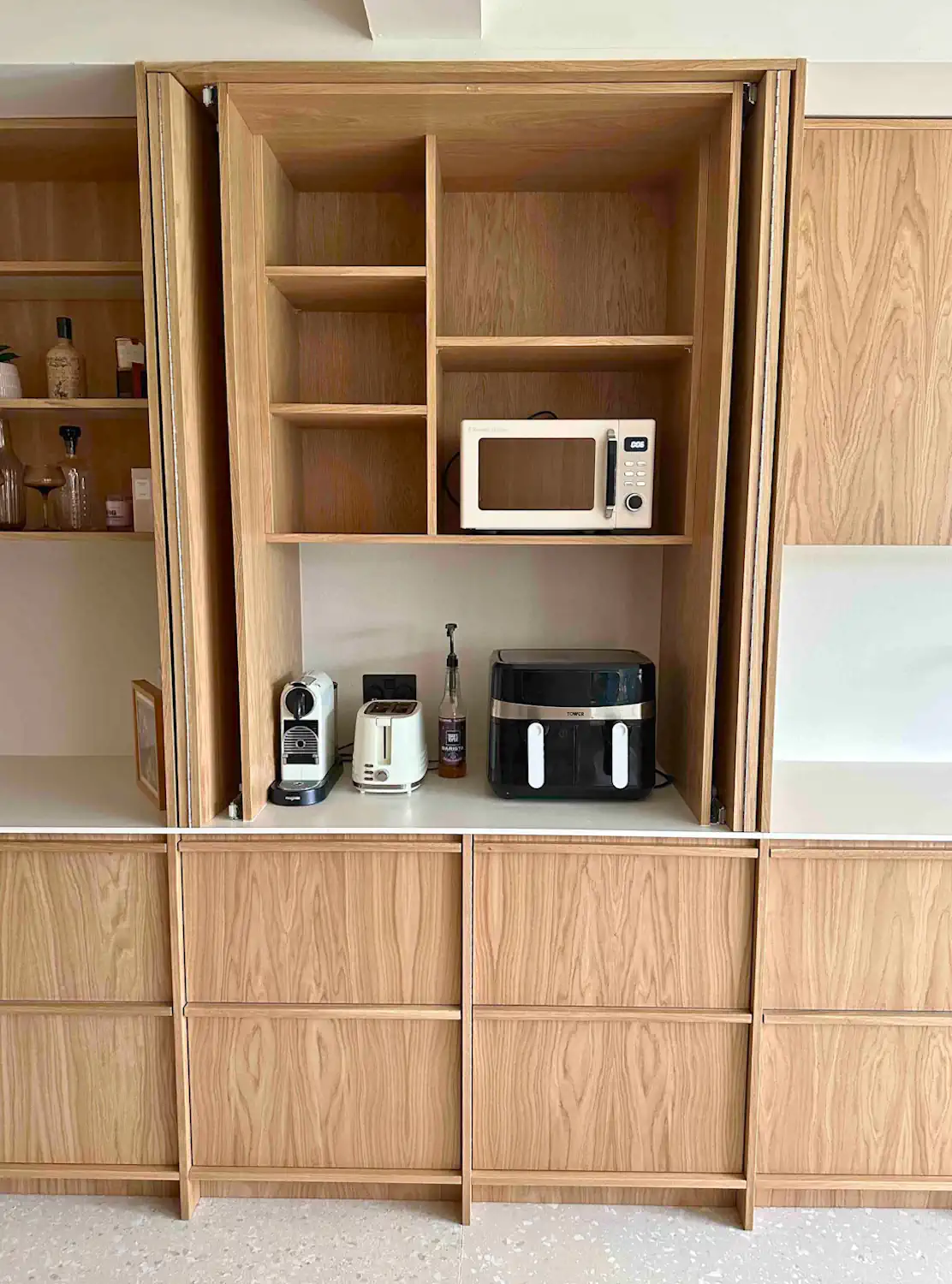
The breakfast cabinet is one of the key functional features of the whole project. It is fitted with bifold pocket doors and divided by a continuous internal work surface, creating a dedicated zone for the microwave, coffee machine and associated daily use items. Below, it includes four drawers plus one additional internal drawer, so the area works as a compact service station rather than just a cupboard with doors. When open, it supports the morning routine and small appliance use. When closed, it returns the wall to a much quieter architectural line.
Materials and finishes
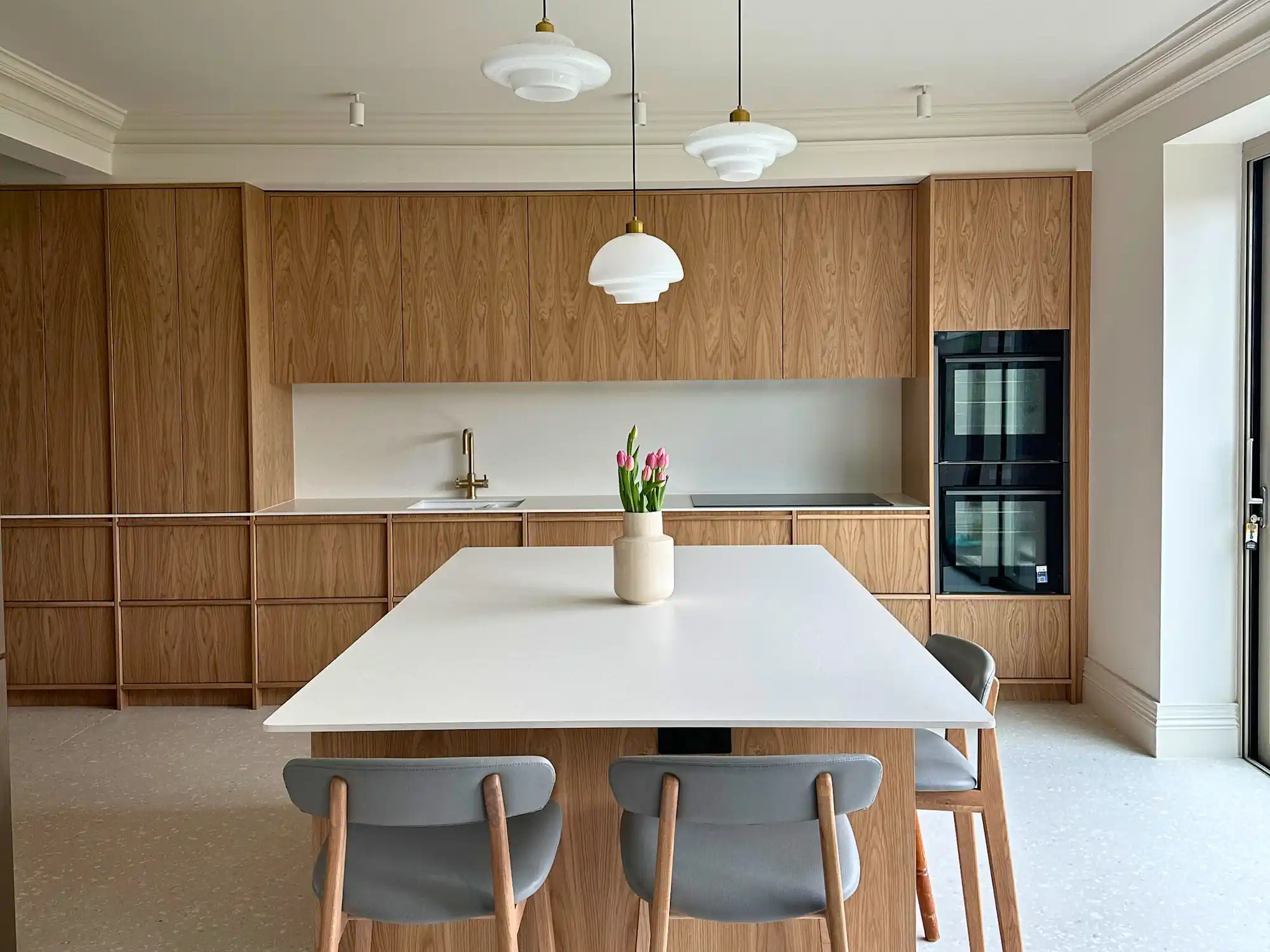
The material balance in this kitchen is deliberately controlled. Oak is the dominant visual element, but it is handled in a restrained way, without heavy ornament or unnecessary contrast. The combination of solid oak details and oak veneered fronts gives the room natural texture and warmth, while the handleless format keeps the cabinetry visually quiet and compatible with a Japandi influenced interior.
The 12 mm solid laminate worktop and matching wall surface help keep the room light and practical. Because the worktop and splashback use the same material logic, the kitchen avoids abrupt visual breaks around the sink and hob zones. This also supports easier maintenance in everyday use, especially in a space designed to remain clean lined and low noise in appearance.
Other custom details include integrated lighting, glass shelves with solid oak trim in the drinks area, and full length routed solid oak handles. These are the kinds of details that matter more in person than in specification sheets. They help the room feel resolved as joinery rather than assembled from unrelated components. This project also reflects the type of thinking we apply in our dedicated kitchen design service, where proportion, visual balance and practical use are developed together rather than treated separately.
Before and after analysis
The biggest improvement in this room was not simply the addition of storage. It was the way the final kitchen organised a large space into a more coherent working environment. Instead of reading as separate functional zones, the tall cabinets, breakfast cabinet, sink area, cooking area and island now work as one controlled arrangement with clearer circulation and better visual order.
The bespoke set out also reduced the usual compromises that come with fixed sizing. Alignment could be managed more precisely, awkward leftover voids were avoided more effectively, and the furniture could be proportioned to suit both the room and the desired style direction. On a project like this, those gains are more important than any single isolated feature, because they shape how the room feels and performs every day.
From design stage to workshop production
For a kitchen of this type, the finished result depends on more than the visible materials. Early design decisions, workshop preparation and final site verification all have direct impact on the quality of the installation. Because this project was developed in close cooperation with the customer, the design phase focused not only on appearance but also on how the room would be used day to day, how the tall elements should be proportioned, and how the long run could stay calm rather than visually fragmented.
Production stage imagery can strengthen this page further, especially where grain selection, handle routing, cabinet preparation and breakfast cabinet detailing are visible. For a flagship case study, showing the process helps explain that the final kitchen is not just selected from a range, but properly designed and manufactured around one room and one brief.
Final result
This Leeds kitchen is a strong example of what becomes possible when the room, the visual brief and the technical set out are treated as one joined process. The finished furniture delivers a calm Japandi character, substantial storage, better use of height, and a layout that supports both everyday use and a more architectural interior style.
For JS DECO, this is exactly the kind of project where bespoke manufacturing makes the most sense. The room proportions, the tall elements, the breakfast cabinet, the grain continuity and the final fit all depend on decisions that standard systems are not set up to resolve in the same way. If you are planning a similar project, the process usually starts with an initial discussion, followed by design development, survey confirmation, final sign off, manufacture, and then delivery or full installation. More detail about that process can be found on how to start your project with us.
